
Recombinant Macaca mulatta Tumor necrosis factor protein (TNF), partial, (Active)
In Stock-
中文名稱(chēng):恒河猴TNF重組蛋白
-
品名簡(jiǎn)稱(chēng):Recombinant Rhesus macaque TNF protein, partial (Active)
-
貨號(hào):CSB-AP003221MOW
-
說(shuō)明書(shū):
-
規(guī)格:¥852
-
圖片:
-
-
其他:
產(chǎn)品詳情
-
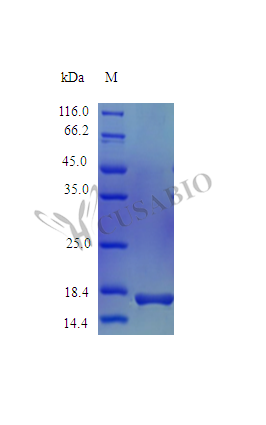
純度:>95% as determined by SDS-PAGE.
-
內(nèi)毒素:Less than 1.0 EU/μg as determined by LAL method.
-
生物活性:Fully biologically active when compared to standard. The ED50 as determined by a cytotoxicity assay using murine L929 cells is less than 0.05 ng/ml, corresponding to a specific activity of >2.0x10⁷ IU/mg in the presence of actinomycin D.
-
基因名:
-
Uniprot No.:
-
別名:TNF; TNFA; TNFSF2; Tumor necrosis factor; Cachectin; TNF-alpha; Tumor necrosis factor ligand superfamily member 2; TNF-a
-
種屬:Macaca mulatta (Rhesus macaque)
-
蛋白長(zhǎng)度:Partial
-
來(lái)源:E.Coli
-
分子量:17.3 kDa
-
表達(dá)區(qū)域:77-233aa
-
氨基酸序列VRSSSRTPSD KPVAHVVANP QAEGQLQWLN RRANALLANG VELTDNQLVV PSEGLYLIYS QVLFKGQGCP SNHVLLTHTI SRIAVSYQTK VNLLSAIKSP CQRETPEGAE AKPWYEPIYL GGVFQLEKGD RLSAEINLPD YLDFAESGQV YFGIIAL
-
蛋白標(biāo)簽:Tag-Free
-
產(chǎn)品提供形式:Liquid or Lyophilized powder
-
緩沖液:0.2 μm filtered PBS, pH 7.4, 5 % trehalose ,lyophilized
-
儲(chǔ)存條件:Store at -20°C/-80°C upon receipt, aliquoting is necessary for mutiple use. Avoid repeated freeze-thaw cycles.
-
保質(zhì)期:The shelf life is related to many factors, storage state, buffer ingredients, storage temperature and the stability of the protein itself.
Generally, the shelf life of liquid form is 6 months at -20°C/-80°C. The shelf life of lyophilized form is 12 months at -20°C/-80°C. -
貨期:5-10 business days
-
Datasheet & COA:Please contact us to get it.
產(chǎn)品評(píng)價(jià)

相關(guān)產(chǎn)品
靶點(diǎn)詳情
-
功能:Cytokine that binds to TNFRSF1A/TNFR1 and TNFRSF1B/TNFBR. It is mainly secreted by macrophages and can induce cell death of certain tumor cell lines. It is potent pyrogen causing fever by direct action or by stimulation of interleukin-1 secretion and is implicated in the induction of cachexia, Under certain conditions it can stimulate cell proliferation and induce cell differentiation. Induces insulin resistance in adipocytes via inhibition of insulin-induced IRS1 tyrosine phosphorylation and insulin-induced glucose uptake. Induces GKAP42 protein degradation in adipocytes which is partially responsible for TNF-induced insulin resistance. Plays a role in angiogenesis by inducing VEGF production synergistically with IL1B and IL6.; The TNF intracellular domain (ICD) form induces IL12 production in dendritic cells.
-
基因功能參考文獻(xiàn):
- These interactions result in the induction of the TNF signaling pathway, activation of apoptosis, and DNA-damage stress response. PMID: 24743303
- Findings showed that both mucosal compartments harbor similar percentages of memory CD4(+) T cells and displayed comparable cytokine TNF-alpha responses to mitogenic stimulations prior to infection. PMID: 24610016
- Primary role for IL-1beta and TNF-alpha in the triggering of preterm labor associated with inflammation or infection. PMID: 17132473
-
亞細(xì)胞定位:Cell membrane; Single-pass type II membrane protein.; [Tumor necrosis factor, membrane form]: Membrane; Single-pass type II membrane protein.; [Tumor necrosis factor, soluble form]: Secreted.; [C-domain 1]: Secreted.; [C-domain 2]: Secreted.
-
蛋白家族:Tumor necrosis factor family
-
數(shù)據(jù)庫(kù)鏈接:
Most popular with customers
-
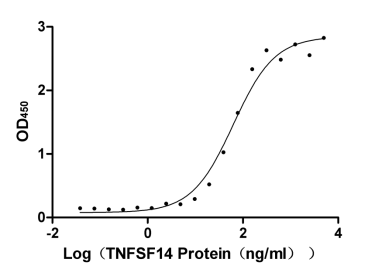
Recombinant Human Tumor necrosis factor receptor superfamily member 14 (TNFRSF14), partial (Active)
Express system: Mammalian cell
Species: Homo sapiens (Human)
-
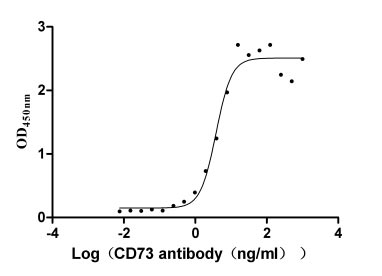
Recombinant Human 5'-nucleotidase (NT5E) (Active)
Express system: Mammalian cell
Species: Homo sapiens (Human)
-
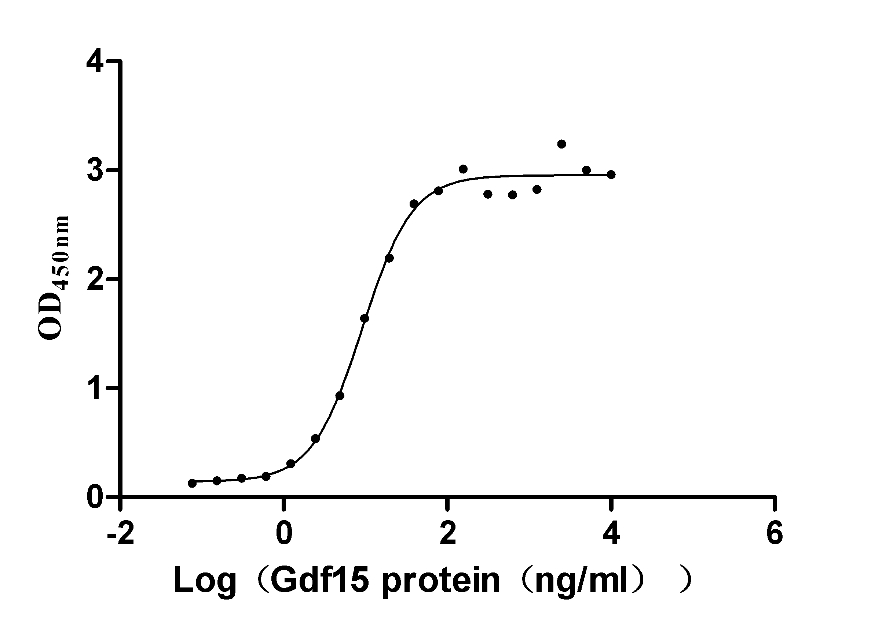
Recombinant Mouse GDNF family receptor alpha-like (Gfral), partial (Active)
Express system: Mammalian cell
Species: Mus musculus (Mouse)
-
-AC1.jpg)
Recombinant Human Interleukin-17A (IL17A) (T26A) (Active)
Express system: Baculovirus
Species: Homo sapiens (Human)
-
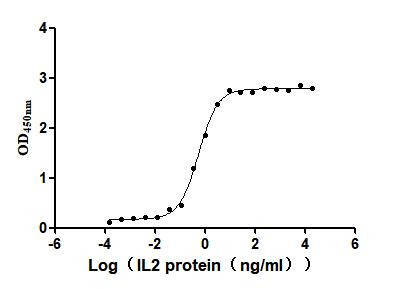
Recombinant Human Interleukin-2 (IL2) (Active)
Express system: Mammalian cell
Species: Homo sapiens (Human)
-
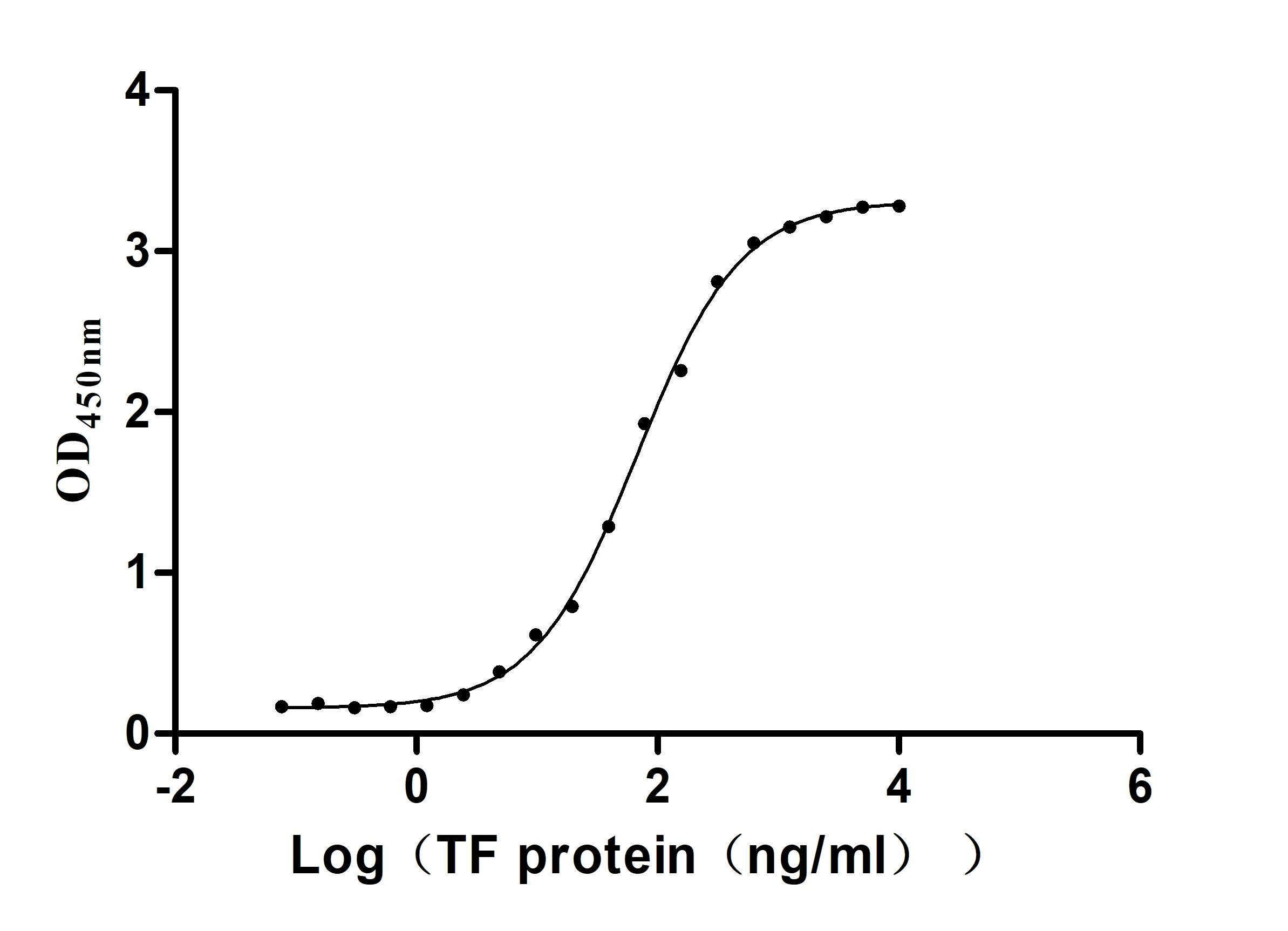
Recombinant Human Serotransferrin(TF) (Active)
Express system: Mammalian cell
Species: Homo sapiens (Human)
-
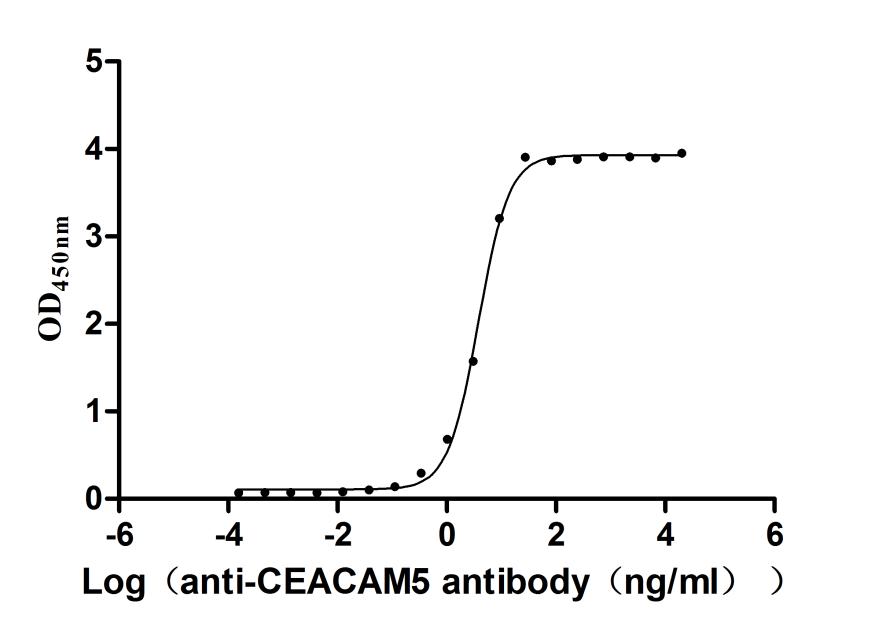
Express system: Mammalian cell
Species: Macaca mulatta (Rhesus macaque)
-
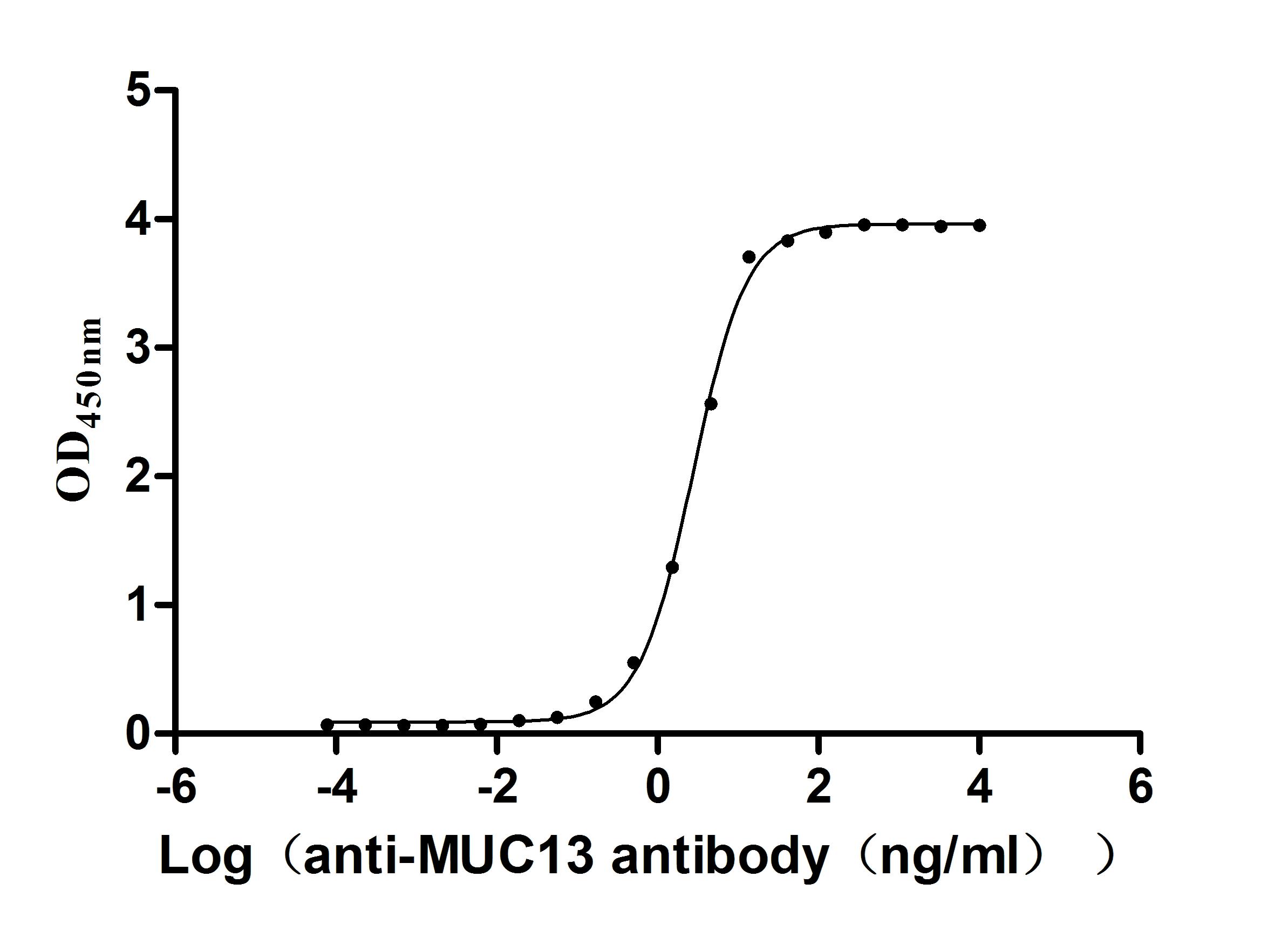
Recombinant Human Mucin-13(MUC13),partial (Active)
Express system: yeast
Species: Homo sapiens (Human)