Recombinant Rat Natriuretic peptides A (Nppa)
-
中文名稱:大鼠Nppa重組蛋白
-
貨號:CSB-YP016020RA
-
規格:
-
來源:Yeast
-
其他:
-
中文名稱:大鼠Nppa重組蛋白
-
貨號:CSB-EP016020RA
-
規格:
-
來源:E.coli
-
其他:
-
中文名稱:大鼠Nppa重組蛋白
-
貨號:CSB-EP016020RA-B
-
規格:
-
來源:E.coli
-
共軛:Avi-tag Biotinylated
E. coli biotin ligase (BirA) is highly specific in covalently attaching biotin to the 15 amino acid AviTag peptide. This recombinant protein was biotinylated in vivo by AviTag-BirA technology, which method is BriA catalyzes amide linkage between the biotin and the specific lysine of the AviTag.
-
其他:
-
中文名稱:大鼠Nppa重組蛋白
-
貨號:CSB-BP016020RA
-
規格:
-
來源:Baculovirus
-
其他:
-
中文名稱:大鼠Nppa重組蛋白
-
貨號:CSB-MP016020RA
-
規格:
-
來源:Mammalian cell
-
其他:
產品詳情
-
純度:>85% (SDS-PAGE)
-
基因名:
-
Uniprot No.:
-
別名:NppaNatriuretic peptides A; Prepronatriodilatin) [Cleaved into: Atrial natriuretic factor; ANF; Atrial natriuretic peptide; ANP); Auriculin-B; Auriculin-A; Atriopeptin-1; Atriopeptin I); Atriopeptin-2; Atriopeptin II); Atriopeptin-3; Atriopeptin III)]
-
種屬:Rattus norvegicus (Rat)
-
蛋白長度:Cytoplasmic domain
-
表達區域:123-150
-
氨基酸序列SLRRSSCF GGRIDRIGAQ SGLGCNSFRY
-
蛋白標簽:Tag?type?will?be?determined?during?the?manufacturing?process.
The tag type will be determined during production process. If you have specified tag type, please tell us and we will develop the specified tag preferentially. -
產品提供形式:Lyophilized powder
Note: We will preferentially ship the format that we have in stock, however, if you have any special requirement for the format, please remark your requirement when placing the order, we will prepare according to your demand. -
復溶:We recommend that this vial be briefly centrifuged prior to opening to bring the contents to the bottom. Please reconstitute protein in deionized sterile water to a concentration of 0.1-1.0 mg/mL.We recommend to add 5-50% of glycerol (final concentration) and aliquot for long-term storage at -20℃/-80℃. Our default final concentration of glycerol is 50%. Customers could use it as reference.
-
儲存條件:Store at -20°C/-80°C upon receipt, aliquoting is necessary for mutiple use. Avoid repeated freeze-thaw cycles.
-
保質期:The shelf life is related to many factors, storage state, buffer ingredients, storage temperature and the stability of the protein itself.
Generally, the shelf life of liquid form is 6 months at -20°C/-80°C. The shelf life of lyophilized form is 12 months at -20°C/-80°C. -
貨期:Delivery time may differ from different purchasing way or location, please kindly consult your local distributors for specific delivery time.Note: All of our proteins are default shipped with normal blue ice packs, if you request to ship with dry ice, please communicate with us in advance and extra fees will be charged.
-
注意事項:Repeated freezing and thawing is not recommended. Store working aliquots at 4°C for up to one week.
-
Datasheet :Please contact us to get it.
產品評價

相關產品
靶點詳情
-
功能:Hormone that plays a key role in mediating cardio-renal homeostasis, and is involved in vascular remodeling and regulating energy metabolism. Acts by specifically binding and stimulating NPR1 to produce cGMP, which in turn activates effector proteins, such as PRKG1, that drive various biological responses. Regulates vasodilation, natriuresis, diuresis and aldosterone synthesis and is therefore essential for regulating blood pressure, controlling the extracellular fluid volume and maintaining the fluid-electrolyte balance. Also involved in inhibiting cardiac remodeling and cardiac hypertrophy by inducing cardiomyocyte apoptosis and attenuating the growth of cardiomyocytes and fibroblasts. Plays a role in female pregnancy by promoting trophoblast invasion and spiral artery remodeling in uterus, and thus prevents pregnancy-induced hypertension. In adipose tissue, acts in various cGMP- and PKG-dependent pathways to regulate lipid metabolism and energy homeostasis. This includes upregulating lipid metabolism and mitochondrial oxygen utilization by activating the AMP-activated protein kinase (AMPK), and increasing energy expenditure by acting via MAPK11 to promote the UCP1-dependent thermogenesis of brown adipose tissue. Binds the clearance receptor NPR3 which removes the hormone from circulation.; May have a role in cardio-renal homeostasis through regulation of natriuresis, diuresis, vasodilation, and inhibiting aldosterone synthesis. In vitro, promotes the production of cGMP and induces vasodilation. May promote natriuresis, at least in part, by enhancing prostaglandin E2 synthesis resulting in the inhibition of renal Na+-K+-ATPase. However reports on the involvement of this peptide in mammal blood volume and blood pressure homeostasis are conflicting; according to a report, in vivo it is not sufficient to activate cGMP and does not inhibit collecting duct transport nor effect diuresis and natriuresis. Appears to bind to specific receptors that are distinct from the receptors bound by atrial natriuretic peptide and vessel dilator. Possibly enhances protein excretion in urine by decreasing proximal tubular protein reabsorption.; May have a role in cardio-renal homeostasis through regulation of natriuresis, diuresis, and vasodilation. In vitro, promotes the production of cGMP and induces vasodilation. May promote natriuresis, at least in part, by enhancing prostaglandin E2 synthesis resulting in the inhibition of renal Na+-K+-ATPase. However reports on the involvement of this peptide in mammal blood volume and blood pressure homeostasis are conflicting; according to a report, in vivo it is not sufficient to activate cGMP and does not inhibit collecting duct transport nor effect diuresis and natriuresis. Appears to bind to specific receptors that are distinct from the receptors bound by the atrial natriuretic and long-acting natriuretic peptides. Possibly functions in protein excretion in urine by maintaining the integrity of the proximal tubules and enhancing protein excretion by decreasing proximal tubular protein reabsorption.; May have a role in cardio-renal homeostasis through regulation of diuresis and inhibiting aldosterone synthesis. In vitro, promotes the production of cGMP and induces vasodilation. May promote natriuresis, at least in part, by enhancing prostaglandin E2 synthesis resulting in the inhibition of renal Na+-K+-ATPase. May have a role in potassium excretion but not sodium excretion (natriuresis). Possibly enhances protein excretion in urine by decreasing proximal tubular protein reabsorption.; Hormone produced in the kidneys that appears to be important for maintaining cardio-renal homeostasis. Mediates vasodilation, natriuresis and diuresis primarily in the renal system, in order to maintain the extracellular fluid volume and control the fluid-electrolyte balance. Specifically binds and stimulates cGMP production by renal transmembrane receptors, likely NPR1. Urodilatin not ANP, may be the natriuretic peptide responsible for the regulation of sodium and water homeostasis in the kidney.; May have a role in cardio-renal homeostasis through regulation of natriuresis and vasodilation. In vivo promotes natriuresis and in vitro, vasodilates renal artery strips.; May have a role in cardio-renal homeostasis through regulation of natriuresis and vasodilation. In vivo promotes natriuresis and in vitro, vasodilates renal artery strips.; May have a role in cardio-renal homeostasis through regulation of regulation of natriuresis and vasodilation. In vivo promotes natriuresis. In vitro, vasodilates intestinal smooth muscle but not smooth muscle strips.; May have a role in cardio-renal homeostasis through regulation of natriuresis and vasodilation. In vivo promotes natriuresis. In vitro, selectively vasodilates intestinal and vascular smooth muscle strips.; May have a role in cardio-renal homeostasis through regulation of natriuresis and vasodilation. In vivo promotes natriuresis. In vitro, selectively vasodilates intestinal smooth muscle but not vascular smooth muscle strips.
-
基因功能參考文獻:
- we suggest that the order of secretagogue effect of ET family on ANP secretion was ET-1>/=ET-2>>ET-3>s6C and ET-1-induced atrial natriuretic peptide secretion negatively regulates the pressor effect of ET-1. PMID: 27208702
- Despite preserved LV structure and function, treatment with GYY increased the levels of the natriuretic peptides ANP and BNP in association with enhanced cyclic GMP levels, paralleled by higher cGMP-dependent protein kinase type I (cGKI) protein levels PMID: 26254181
- Angiotensin IV stimulates ANP secretion and concentration via the IRAP and PI3K-Akt-mTOR signaling pathway. PMID: 25451332
- augmentation of inhibitory effect on basal motility by ANP in experimental colitis may be due an increased expression of colonic natriuretic peptide receptor-A mRNA PMID: 26660905
- ANP mRNA and protein are decreased in diabetic cardiomyopathy. PMID: 26446774
- This is due to the fact that ANP is the main hormone of the natriuretic peptide system involved in the regulation of blood pressure in normal conditions, while BNP is the principal regulator of pressure in cardiovascular pathology PMID: 27228659
- These results suggest that chronic treatment with nimesulide or NS-398 attenuated hypertension and cardiac hypertrophy partly through ANP release in 2K1C rats. PMID: 25846103
- expression arrhythmic in heart and not influenced by rotating light-dark regimens PMID: 25669688
- These findings demonstrate an important contributory role of ANP in the OT induced protection in myocardial ischaemia reperfusion. OT also reduced lipid peroxidation with a NO-dependent mechanism. PMID: 25126708
- BMP antagonist Noggin was able to inhibit stretch and hypertrophic agonist induced BNP and ANP expression. PMID: 25218476
- These findings suggest that HIF-1alpha and ANP, synthesized by the kidney, are involved in an adaptive mechanism in response to a sodium overload. PMID: 24689065
- Resistance training did not induce any change in vasopressin levels, and atrial natriuretic peptide levels did not change significantly. PMID: 23551170
- NPPA acts on the NPR1 receptor, is expressed in rat dorsal root and trigeminal ganglia, and the spinal cord. PMID: 25123163
- Provide direct evidence for the presence and synthesis of ANP and its receptors in both neuronal and non-neuronal cells within the cochlear spiral ganglion. PMID: 24333928
- the present study delivers a cooperative mechanism where Anxa6 potentiates ANP-dependent counterhypertrophic responses in cardiomyocytes by facilitating regulated traffic of pro-ANP. PMID: 24403064
- We conclude that D1R may play a major role in the ANP resistance observed in puromycin aminonucleoside-induced nephrotic syndrome . PMID: 23956981
- a direct evidence for the presence and synthesis of ANP as well as its receptors in the cochlear Spiral ganglion neurons, suggesting a possible role for ANP in modulating the neuronal functions of Spiral ganglion neurons via its receptors PMID: 23578746
- Endogenously released ACh tonically stimulates ANP secretion from atrial cardiomyocytes via activation of M2 mAChR-Gi/o-KACh(+) channel signaling. PMID: 23913708
- These results outline a PARP-1-dependent signal transduction mechanism that links contraction rate and Ca(2+) mobilization with the expression of genes underlying morphological changes in cardiomyocytes. PMID: 21635224
- ANP might be synthesized and secreted by marginal cells of stria vascularis, and it could play an important role in modulating the microenvironment of the inner ear. In addition, ANP might contribute to development and growth process of cochlea. PMID: 21552198
- ANF signals via natriuretic peptide receptor-C coupled to the phospholipase C-protein kinase C pathway to increase secretin-induced efflux of cAMP, probably through MPR-4 in pancreas PMID: 21237168
- Comparison of vasopressin (VP) to atrial natriuretic peptide (ANP) suggests that in early resistance training, VP release to bloodstream is higher than ANP release; the antidiuretic action of VP should prevail over ANP. PMID: 21287975
- Syntaxin-4 and VAMP-1 and VAMP-2 regulate cardiac myocyte exocytosis of ANP. PMID: 20801128
- The right ventricle is not a major source of cardiac ANP release in normoxia- or hypoxia-adapted rats. PMID: 20691705
- Results describe the involvement of myogenin and GATA4, two tissue-specific transcription factors, and the atrial natriuretic factor promoter, in cardiac transcriptional activity. PMID: 20384792
- found a close correlation between pulmonary embolism degree and gene-expression of ANP, and BNP in the cardiac chambers with a selective increase in the right chambers of the heart PMID: 20559433
- Results suggest that urotensin-II stimulates high stimulation frequency-induced ANP secretion partly through the urotensin receptor and the PLC/PI3K/PKC pathway. PMID: 19896516
- Leptin inhibits ANP secretion through nitric oxide without changing basal or isoproterenol-induced ANP secretion in rats. PMID: 20071611
- Mechanical overload in combined models of hypertension determines the evolution of hypertrophy and synthesis and secretion of ANP and BNP. PMID: 20139323
- The distribution of ANP after local irradiation of the rat heart depends on the severity of the pathological/structural changes (i.e. myocyte degeneration and fibrosis). PMID: 12020441
- ANP reduced TNFalpha release possibly by influencing post-translational processing of TNFalpha in LPS-activated KCs. In addition, we demonstrated that ANP enhances phagocytosis in KCs. PMID: 12022755
- ANP expression increased in rat atria throughout the prenatal and postnatal periods, except for a decrease in ANP expression in ventricles from prenatal day 21 onwards; it may have antimitogenic/antiproliferative effects in trabecular myocytes PMID: 12389741
- role in hypoxic activation of atrial natriuretic peptide gene promoter PMID: 12413399
- antral ANP and somatostatin secretion are linked by paracrine feedback pathways: endogenous ANP, acting via the NPR-A receptor, stimulates somatostatin secretion, and endogenous somatostatin, acting via the sst2 receptor, inhibits ANP secretion PMID: 12527142
- Mechanisms of hepatocyte protection against hypoxic injury by atrial natriuretic peptide. ANP recruits 2 independent signal pathways, which further transduce ANP signals to p38 MAPK, that are responsible for ANP protection against hypoxic injury. PMID: 12540777
- findings support that ANF exerts a stimulatory effect on pancreatic exocrine secretion mediated by NPR-C receptors coupled to the phosphoinositide pathway PMID: 12829435
- Cardiac expression of ANF demonstrated a time-related increase in ANF mRNA. PMID: 14575315
- The present study is the first to show linkage between Nppa marker and blood pressure in the rat. p. 935 PMID: 14678232
- Atrial natriuretic peptide expressed in the supraoptic nucleus acts as a peptidergic neurotransmitter involved in water and salt regulation during pregnancy and postpartum. PMID: 15117337
- Recruitment of PAM-1 to secretory vesicles depends on intact N-terminal proANP and on the lumenal domain of PAM-1. Conversely, PAM-1 participates in shaping the proANP-secretory vesicles. PMID: 15539631
- ANP induces MKP-1. ANP is a novel endogenous activator of endothelial Rac1 and Nox/Nox2. PMID: 15569826
- The downregulation of ANP and NPRC in retinas of diabetic rats suggests a role for this peptide in experimental diabetic retinopathy. PMID: 15789000
- ANP interferes with lysophosphatydic acid-induced DNA synthesis and ROS production. PMID: 16010968
- SERCA2alpha gene down-regulation in the non-infarcted myocardium of rats with MI does not correlate with ANP gene upregulation, suggesting that the two genes are not antithetically regulated. PMID: 16087130
- Atrial natriuretic peptides are located in mast cell secretory granules and released by mechanism of degranulation. PMID: 16246270
- The ANP might play a role on the synthesis of the oxytocin since ANP and its mRNA appear earlier than oxytocin. PMID: 16377580
- atrial natriuretic peptide, urodilatin, guanylin and uroguanylin interact in rat kidney PMID: 16814407
- The ET-1-induced increase in cell area, ANF mRNA expression and (3)H-phenylalanine incorporation in ET-1-treated NRVM were decreased by NHE-1 or NCX(rev) inhibition. PMID: 16859700
- The results indicate that distinct differences in ANF transcriptional regulation exist in vivo in the adult heart as compared with neonatal cardiomyocytes. PMID: 16909307
- Blocking nuclear translocation and subsequent binding of pSmad2 and pSmad3 to TGF-beta-Smad response elements in ECM genes may be responsible for the inhibitory effects of ANP on TGF-beta-induced expression of ECM molecules. PMID: 17038494
顯示更多
收起更多
-
亞細胞定位:[Long-acting natriuretic peptide]: Secreted.; [Vessel dilator]: Secreted.; [Kaliuretic peptide]: Secreted.; [Urodilatin]: Secreted.; [Atrial natriuretic peptide]: Secreted. Perikaryon. Cell projection.; [Atriopeptin-3]: Secreted.
-
蛋白家族:Natriuretic peptide family
-
組織特異性:High levels of expression in the atria compared to the ventricles. Very low levels of expression detected in extracardiac tissues such as the brain, hypothalamus, pituitary, lung and aorta.; [Auriculin-A]: Atria (at protein level).; [Auriculin-B]: Atria (
-
數據庫鏈接:
Most popular with customers
-
Recombinant Human Semaphorin-4D (SEMA4D), partial (Active)
Express system: Mammalian cell
Species: Homo sapiens (Human)
-
-AC1.jpg)
Recombinant Human Angiopoietin-2 (ANGPT2) (Active)
Express system: Mammalian cell
Species: Homo sapiens (Human)
-
Recombinant Mouse Complement component C1q receptor (Cd93), partial (Active)
Express system: Mammalian cell
Species: Mus musculus (Mouse)
-
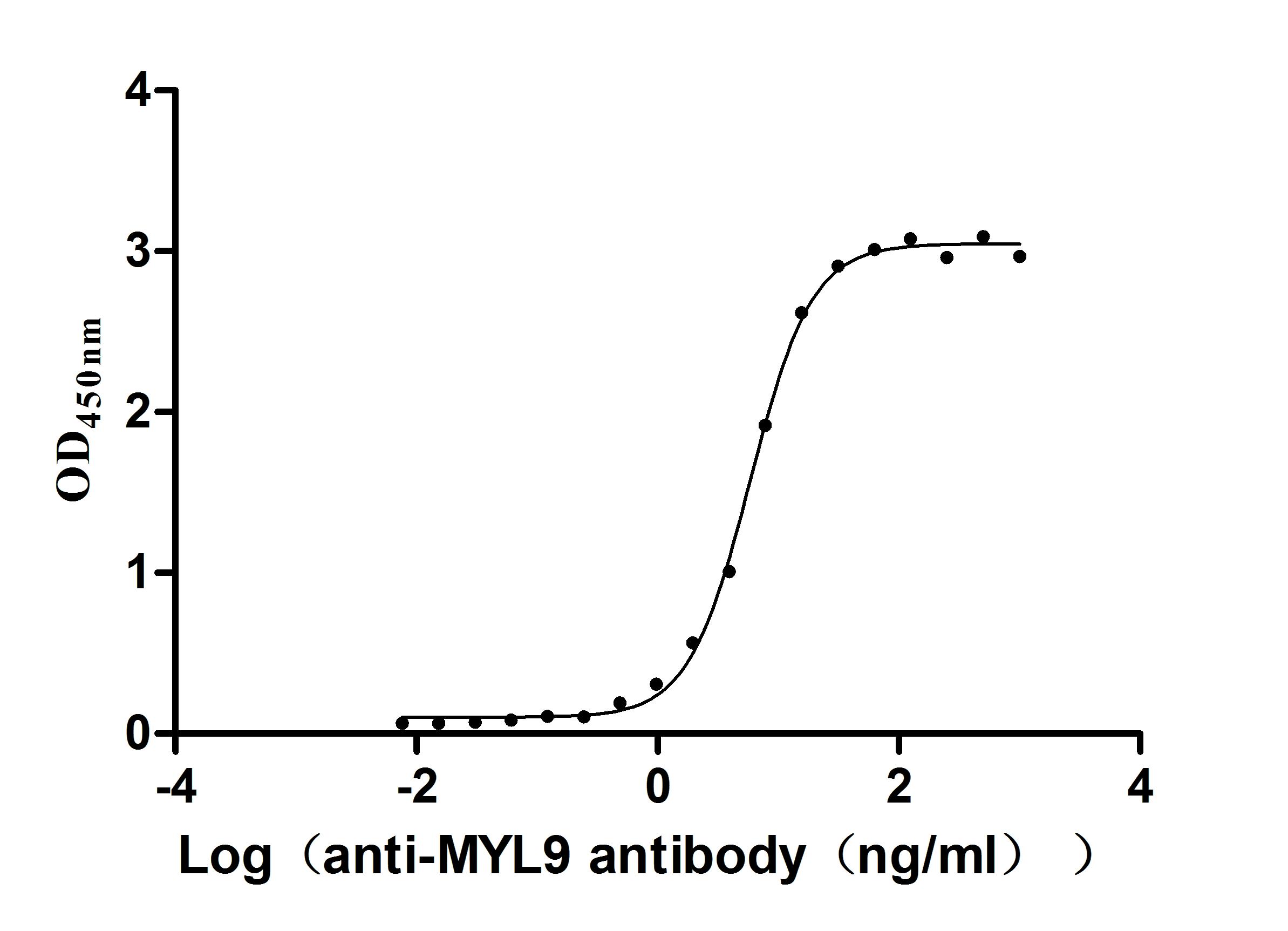
Recombinant Human Myosin regulatory light chain 12A (MYL12A) (Active)
Express system: E.coli
Species: Homo sapiens (Human)
-
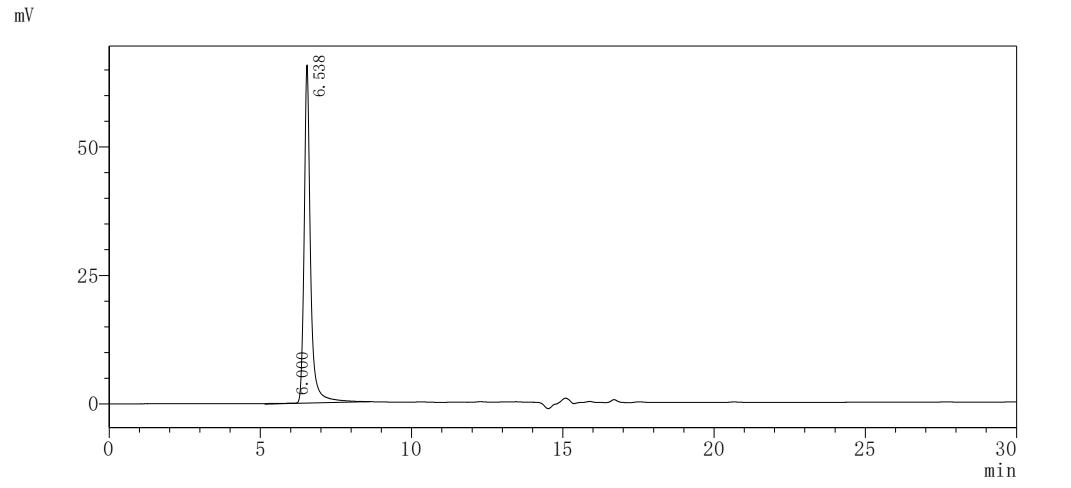
Recombinant Human C-C chemokine receptor type 9 (CCR9)-VLPs (Active)
Express system: Mammalian cell
Species: Homo sapiens (Human)
-
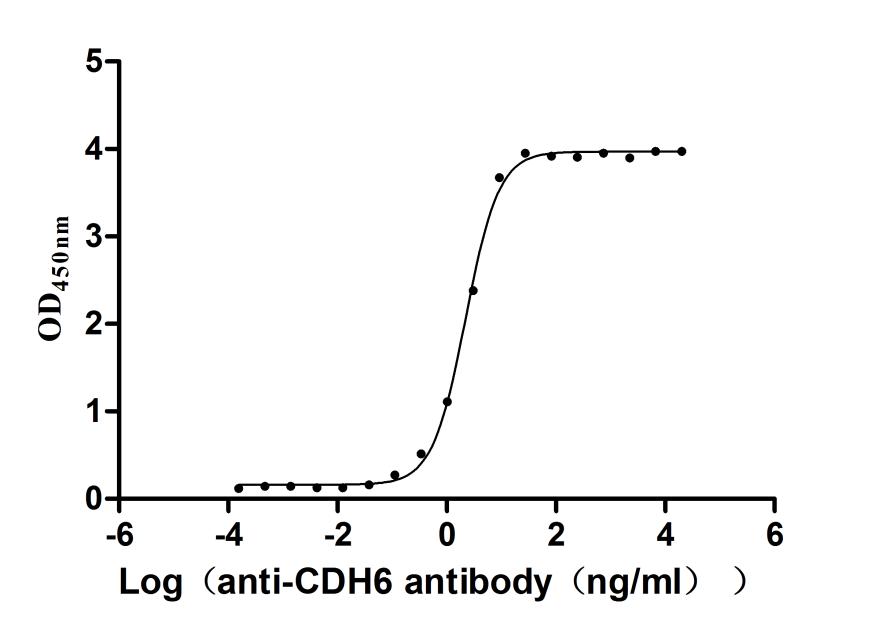
Recombinant Macaca fascicularis Cadherin 6(CDH6),partial (Active)
Express system: Mammalian cell
Species: Macaca fascicularis (Crab-eating macaque) (Cynomolgus monkey)
-
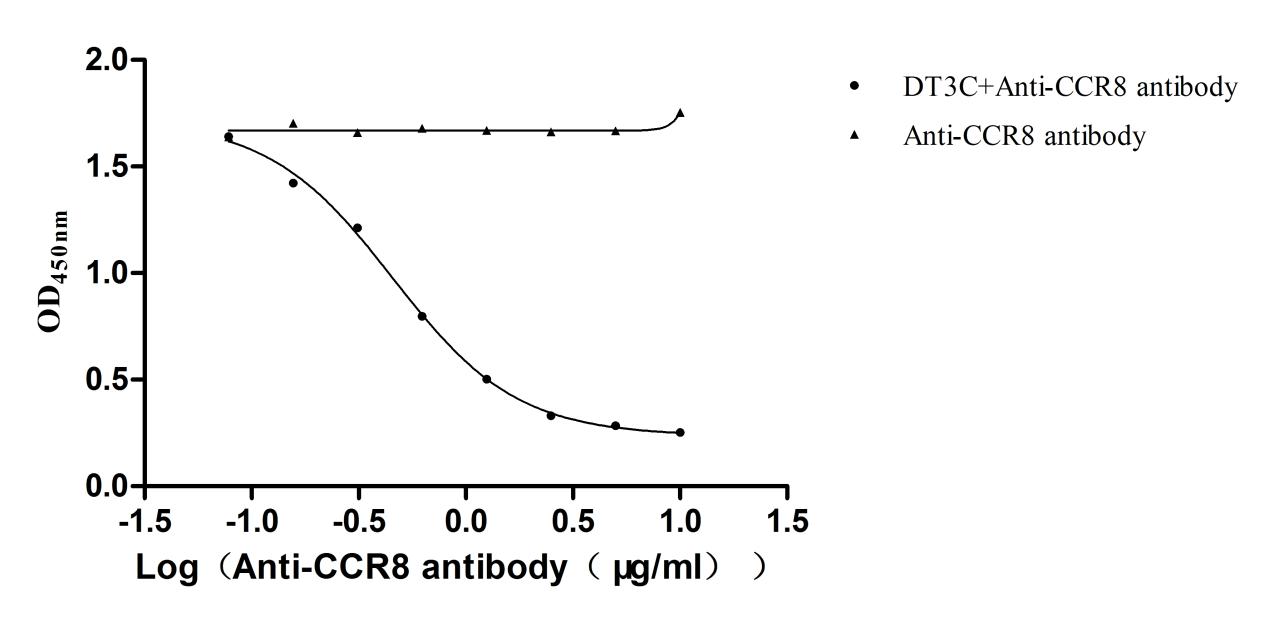
Recombinant DT3C (Diphtheria toxin & spg 3C domain) for Antibody Internalization Assay (Active)
Express system: E.coli
Species: N/A