
Recombinant Pig Unconventional myosin-VI (MYO6), partial
-
中文名稱:野豬MYO6重組蛋白
-
貨號:CSB-YP641823PI
-
規格:
-
來源:Yeast
-
其他:
-
中文名稱:野豬MYO6重組蛋白
-
貨號:CSB-EP641823PI
-
規格:
-
來源:E.coli
-
其他:
-
中文名稱:野豬MYO6重組蛋白
-
貨號:CSB-EP641823PI-B
-
規格:
-
來源:E.coli
-
共軛:Avi-tag Biotinylated
E. coli biotin ligase (BirA) is highly specific in covalently attaching biotin to the 15 amino acid AviTag peptide. This recombinant protein was biotinylated in vivo by AviTag-BirA technology, which method is BriA catalyzes amide linkage between the biotin and the specific lysine of the AviTag.
-
其他:
-
中文名稱:野豬MYO6重組蛋白
-
貨號:CSB-BP641823PI
-
規格:
-
來源:Baculovirus
-
其他:
-
中文名稱:野豬MYO6重組蛋白
-
貨號:CSB-MP641823PI
-
規格:
-
來源:Mammalian cell
-
其他:
產品詳情
-
純度:>85% (SDS-PAGE)
-
基因名:MYO6
-
Uniprot No.:
-
別名:MYO6; Unconventional myosin-VI; Unconventional myosin-6
-
種屬:Sus scrofa (Pig)
-
蛋白長度:Partial
-
蛋白標簽:Tag?type?will?be?determined?during?the?manufacturing?process.
The tag type will be determined during production process. If you have specified tag type, please tell us and we will develop the specified tag preferentially. -
產品提供形式:Lyophilized powder
Note: We will preferentially ship the format that we have in stock, however, if you have any special requirement for the format, please remark your requirement when placing the order, we will prepare according to your demand. -
復溶:We recommend that this vial be briefly centrifuged prior to opening to bring the contents to the bottom. Please reconstitute protein in deionized sterile water to a concentration of 0.1-1.0 mg/mL.We recommend to add 5-50% of glycerol (final concentration) and aliquot for long-term storage at -20℃/-80℃. Our default final concentration of glycerol is 50%. Customers could use it as reference.
-
儲存條件:Store at -20°C/-80°C upon receipt, aliquoting is necessary for mutiple use. Avoid repeated freeze-thaw cycles.
-
保質期:The shelf life is related to many factors, storage state, buffer ingredients, storage temperature and the stability of the protein itself.
Generally, the shelf life of liquid form is 6 months at -20°C/-80°C. The shelf life of lyophilized form is 12 months at -20°C/-80°C. -
貨期:Delivery time may differ from different purchasing way or location, please kindly consult your local distributors for specific delivery time.Note: All of our proteins are default shipped with normal blue ice packs, if you request to ship with dry ice, please communicate with us in advance and extra fees will be charged.
-
注意事項:Repeated freezing and thawing is not recommended. Store working aliquots at 4°C for up to one week.
-
Datasheet :Please contact us to get it.
產品評價

靶點詳情
-
功能:Myosins are actin-based motor molecules with ATPase activity. Unconventional myosins serve in intracellular movements. Myosin 6 is a reverse-direction motor protein that moves towards the minus-end of actin filaments. Has slow rate of actin-activated ADP release due to weak ATP binding. Functions in a variety of intracellular processes such as vesicular membrane trafficking and cell migration. Required for the structural integrity of the Golgi apparatus via the p53-dependent pro-survival pathway. Appears to be involved in a very early step of clathrin-mediated endocytosis in polarized epithelial cells. May act as a regulator of F-actin dynamics. As part of the DISP complex, may regulate the association of septins with actin and thereby regulate the actin cytoskeleton. May play a role in transporting DAB2 from the plasma membrane to specific cellular targets. May play a role in the extension and network organization of neurites. Required for structural integrity of inner ear hair cells. Modulates RNA polymerase II-dependent transcription.
-
基因功能參考文獻:
- Studied the crystal structure of myosin VI, (the pretransition state (PTS)), in particular the recovery stroke of Myosin VI, which was solved at 2.2 A resolution. PMID: 29844196
- Data suggest that cells direct the movement of vesicles around a cell by altering the relative number of myosin Va from Gallus gallus and myosin VI from Sus scrofa. PMID: 25738229
- A myosin VI deafness mutation, D179Y, uncoupled the release of the ATP hydrolysis product, inorganic phosphate (Pi), from dependency on actin binding and destroyed the ability of single dimeric molecules to move processively on actin filaments. PMID: 25751888
- model reveals that myosin VI, unlike plus-end directed myosins, does not use a pure lever arm mechanism, but instead steps with a mechanism analogous to the kinesin neck-linker uncoupling mode PMID: 22940248
- The stepping dynamics of single quantum-dot-labeled myoV and myoVI motors linked to a common cargo, was studied. PMID: 21808051
- These results suggest that myosin VI kinetics are tuned such that the motor maintains a consistent level of mechanical tension within the cell, a property potentially shared by other mechanosensitive proteins. PMID: 20970430
- a mechanism is proposed of myosin VI stepping that predicts a regulation through load of the motor's roles as transporter and anchor PMID: 15006355
- 2.4-A structure of a truncated version of the reverse-direction myosin motor, myosin VI, that contains the motor domain and binding sites for two calmodulin molecules PMID: 15944696
- Data demonstrate that full-length myosin VI is capable of forming stable, processive dimers when monomers are clustered, which move up to 1-2 mum in approximately 30 nm, hand-over-hand steps. PMID: 16455488
- unique insert is required for directionality reversal, ruling out a large class of models in which the converter domain moves toward the (-) end PMID: 17182734
- further adaptations within the motor increase the magnitude and variability of the plus-end directed converter movements, and unexpectedly provide the source of the highly variable myosin VI step size PMID: 17213313
- Results suggest that myosin VI and vinculin form a molecular apparatus that generates cohesive cell-cell contacts in cultured mammalian epithelia. PMID: 17664339
- the crystal structure of a fragment of the myosin VI motor in the structural state represents the starting point for movement on actin; the pre-powerstroke state. PMID: 17956731
- Novel features of myosin VI may be important in maintaining the converter conformation during detachment from actin. Other features may promote rapid rearrangement in structure following actin detachment that enable hydrolysis of adenosine triphosphate. PMID: 18046460
- These data indicate that the myosin VI immunoanalog has an important role in pinocytosis and phagocytosis in Amoeba proteus (Pal.). PMID: 19088799
- propose that for the two heads of myosin VI to coordinate their processive movement, the lever arm of the lead head must be uncoupled from the converter until the rear head detaches. PMID: 19828438
顯示更多
收起更多
-
亞細胞定位:Golgi apparatus, trans-Golgi network membrane; Peripheral membrane protein. Golgi apparatus. Nucleus. Cytoplasm, perinuclear region. Membrane, clathrin-coated pit. Cytoplasmic vesicle, clathrin-coated vesicle. Cell projection, filopodium. Cell projection, ruffle membrane. Cell projection, microvillus. Cytoplasm, cytosol.
-
蛋白家族:TRAFAC class myosin-kinesin ATPase superfamily, Myosin family
-
組織特異性:Expressed in all tissues examined including kidney cortex, intestinal mucosa, liver, lung, heart, jowl muscle, brain cortex and medulla, and in the epithelial cell line, LLC-PK1 (at protein level). In the kidney, located to the brush border of adult kidne
-
數據庫鏈接:
Most popular with customers
-

Recombinant Human Tumor necrosis factor ligand superfamily member 13B (TNFSF13B), partial (Active)
Express system: Mammalian cell
Species: Homo sapiens (Human)
-
-AC1.jpg)
Recombinant Human Glypican-3 (GPC3) (G537R), partial (Active)
Express system: Mammalian cell
Species: Homo sapiens (Human)
-
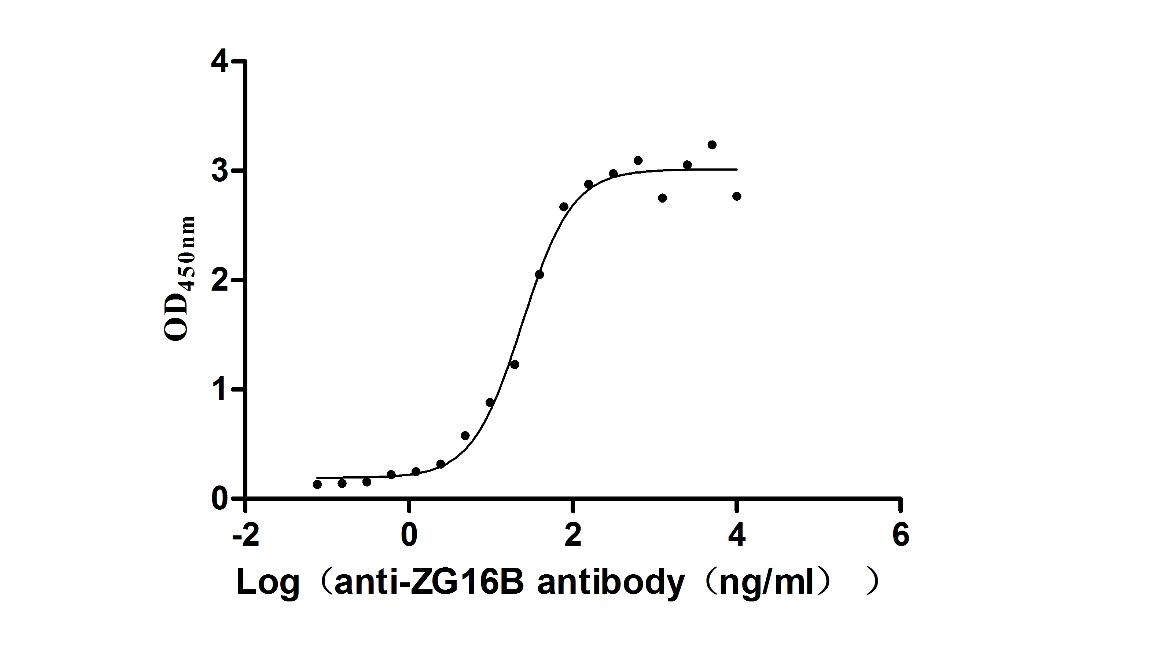
Recombinant Macaca fascicularis zymogen granule protein 16 homolog B (ZG16B) (Active)
Express system: Mammalian cell
Species: Macaca fascicularis (Crab-eating macaque) (Cynomolgus monkey)
-
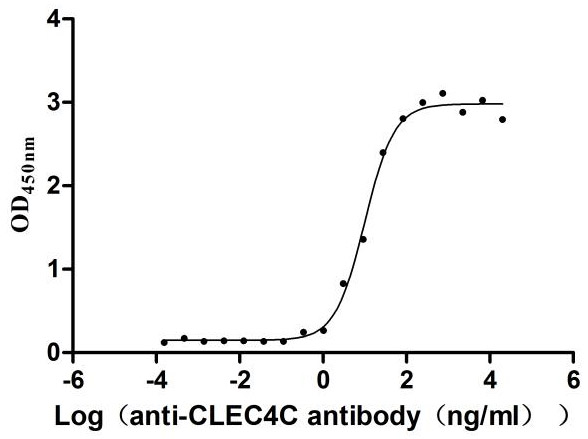
Recombinant Human C-type lectin domain family 4 member C (CLEC4C), partial (Active)
Express system: Mammalian cell
Species: Homo sapiens (Human)
-
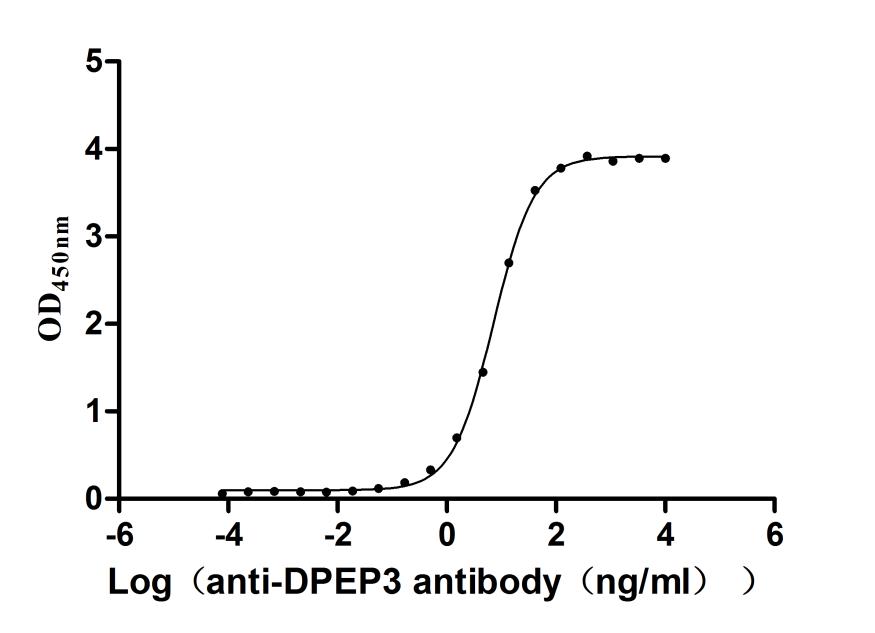
Recombinant Human Dipeptidase 3(DPEP3), partial (Active)
Express system: Mammalian cell
Species: Homo sapiens (Human)
-
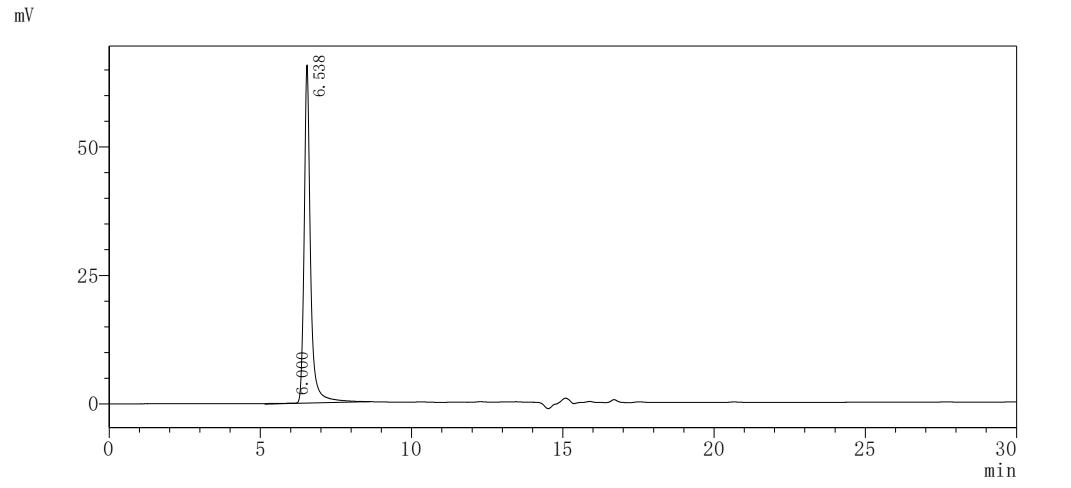
Recombinant Human C-C chemokine receptor type 9 (CCR9)-VLPs (Active)
Express system: Mammalian cell
Species: Homo sapiens (Human)
-
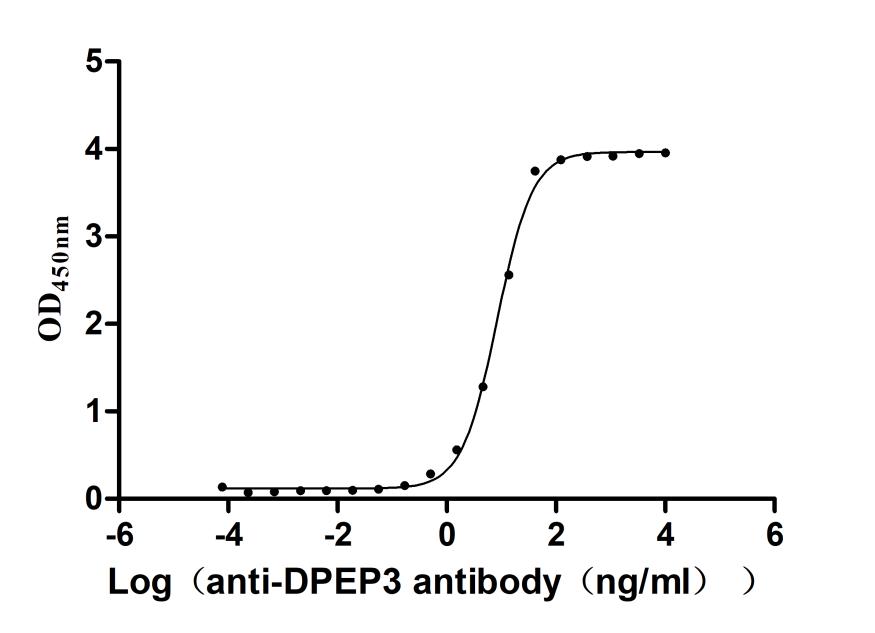
Recombinant Macaca fascicularis Dipeptidase 3(DPEP3) (Active)
Express system: Mammalian cell
Species: Macaca fascicularis (Crab-eating macaque) (Cynomolgus monkey)
-
-AC1.jpg)
Recombinant Human Tumor necrosis factor ligand superfamily member 15(TNFSF15) (Active)
Express system: Mammalian cell
Species: Homo sapiens (Human)