
Recombinant Human Squamous cell carcinoma antigen recognized by T-cells 3 (SART3), partial
-
中文名稱:人SART3重組蛋白
-
品名簡稱:Recombinant Human SART3 protein, partial
-
貨號:CSB-YP624010HU
-
說明書:
-
規格:¥1656
-
圖片:
-
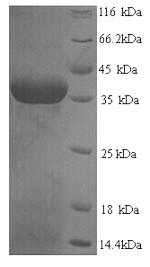 (Tris-Glycine gel) Discontinuous SDS-PAGE (reduced) with 5% enrichment gel and 15% separation gel.
-
-
其他:
產品詳情
-
純度:Greater than 90% as determined by SDS-PAGE.
-
基因名:SART3
-
Uniprot No.:
-
別名:DSAP1; hSART 3; hSART-3; P100; P110; p110(nrb); RP11 13G14; SART 3; SART-3; SART3; SART3_HUMAN; Squamous cell carcinoma antigen recognized by T cells 3; Squamous cell carcinoma antigen recognized by T-cells 3; Tat interacting protein of 110 kDa; Tat-interacting protein of 110 kDa; Tip110
-
種屬:Homo sapiens (Human)
-
蛋白長度:Partial
-
來源:Yeast
-
分子量:35.8kDa
-
表達區域:600-900aa
-
氨基酸序列QRKRARAEKKALKKKKKIRGPEKRGADEDDEKEWGDDEEEQPSKRRRVENSIPAAGETQNVEVAAGPAGKCAAVDVEPPSKQKEKAASLKRDMPKVLHDSSKDSITVFVSNLPYSMQEPDTKLRPLFEACGEVVQIRPIFSNRGDFRGYCYVEFKEEKSALQALEMDRKSVEGRPMFVSPCVDKSKNPDFKVFRYSTSLEKHKLFISGLPFSCTKEELEEICKAHGTVKDLRLVTNRAGKPKGLAYVEYENESQASQAVMKMDGMTIKENIIKVAISNPPQRKVPEKPETRKAPGGPMLLP
Note: The complete sequence may include tag sequence, target protein sequence, linker sequence and extra sequence that is translated with the protein sequence for the purpose(s) of secretion, stability, solubility, etc.
If the exact amino acid sequence of this recombinant protein is critical to your application, please explicitly request the full and complete sequence of this protein before ordering. -
蛋白標簽:N-terminal 6xHis-tagged
-
產品提供形式:Liquid or Lyophilized powder
Note: We will preferentially ship the format that we have in stock, however, if you have any special requirement for the format, please remark your requirement when placing the order, we will prepare according to your demand. -
緩沖液:If the delivery form is liquid, the default storage buffer is Tris/PBS-based buffer, 5%-50% glycerol.
Note: If you have any special requirement for the glycerol content, please remark when you place the order.
If the delivery form is lyophilized powder, the buffer before lyophilization is Tris/PBS-based buffer, 6% Trehalose. -
儲存條件:Store at -20°C/-80°C upon receipt, aliquoting is necessary for mutiple use. Avoid repeated freeze-thaw cycles.
-
保質期:The shelf life is related to many factors, storage state, buffer ingredients, storage temperature and the stability of the protein itself.
Generally, the shelf life of liquid form is 6 months at -20°C/-80°C. The shelf life of lyophilized form is 12 months at -20°C/-80°C. -
貨期:Basically, we can dispatch the products out in 1-3 working days after receiving your orders. Delivery time may differ from different purchasing way or location, please kindly consult your local distributors for specific delivery time.Note: All of our proteins are default shipped with normal blue ice packs, if you request to ship with dry ice, please communicate with us in advance and extra fees will be charged.
-
注意事項:Repeated freezing and thawing is not recommended. Store working aliquots at 4°C for up to one week.
-
Datasheet & COA:Please contact us to get it.
產品評價

相關產品
靶點詳情
-
功能:U6 snRNP-binding protein that functions as a recycling factor of the splicing machinery. Promotes the initial reassembly of U4 and U6 snRNPs following their ejection from the spliceosome during its maturation. Also binds U6atac snRNPs and may function as a recycling factor for U4atac/U6atac spliceosomal snRNP, an initial step in the assembly of U12-type spliceosomal complex. The U12-type spliceosomal complex plays a role in the splicing of introns with non-canonical splice sites. May also function as a substrate-targeting factor for deubiquitinases like USP4 and USP15. Recruits USP4 to ubiquitinated PRPF3 within the U4/U5/U6 tri-snRNP complex, promoting PRPF3 deubiquitination and thereby regulating the spliceosome U4/U5/U6 tri-snRNP spliceosomal complex disassembly. May also recruit the deubiquitinase USP15 to histone H2B and mediate histone deubiquitination, thereby regulating gene expression and/or DNA repair. May play a role in hematopoiesis probably through transcription regulation of specific genes including MYC.; Regulates Tat transactivation activity through direct interaction. May be a cellular factor for HIV-1 gene expression and viral replication.
-
基因功能參考文獻:
- Data suggest that ZIP, USP39, Prp24/p100/SART3, and Prp43 associate to form complex instrumental in spliceosome assembly; ZIP regulates pre-mRNA splicing of USP39 independent of RNA binding; stable 35S tri-snRNP particles are enriched in Cajal body. (ZIP = zinc finger and G-patch domain-containing protein; USP39 = ubiquitin specific peptidase 39; Prp43 = RNA helicase Prp43) PMID: 28878014
- We show that PRP31, a component of U4 snRNP, is modified with K63-linked ubiquitin chains by the PRP19 complex and deubiquitinated by USP15 and its substrate targeting factor SART3. USP15SART3 makes a complex with USP4 and this ternary complex serves as a platform to deubiquitinate PRP31 and PRP3 PMID: 28088760
- The complex structure of SART3 nuclear localization signal (NLS) and importin-alpha reveals bipartite binding, and removal of SART3 NLS prevents the entry of USP4 (and USP15) into the nucleus and abrogates the subsequent deubiquitinase activity of USP4. PMID: 27060135
- crystal structures of SART3 in the apo-form and in complex with the DUSP-UBL domain of USP15 at 2.0 and 3.0 A, respectively. Structural analysis reveals SART3 contains 12 half-a-tetratricopeptide (HAT) repeats, organized into two subdomains, HAT-N and HAT-C. SART3 dimerizes through the concave surface of HAT-C, whereas the HAT-C convex surface binds USP15 in a novel bipartite mode. PMID: 27255711
- miR-124 regulates Tip110 expression and differentiation of human cord blood CD34(+) cells PMID: 25928721
- Hypoxia led to Tip110 protein degradation through the ubiquitin-proteasome system. Under hypoxia, Tip110 stabilized p53, which in return destabilized Tip110. PMID: 25939381
- SART3 recruits ubH2B, which may be evicted from DNA during transcription, for deubiquitination by Usp15 PMID: 24526689
- these findings have provided additional and mechanistic evidence to support Tip110 function in HIV-1 transcription. PMID: 24217245
- Results identify a novel frameshift mutation in this gene implicated in disseminated superficial actinic porokeratosis in 4 Chinese families PMID: 23834120
- YB-1 potentiates the Tip110/Tat-mediated transactivation of the HIV-1 LTR promoter. PMID: 23822148
- findings show C-MYC upregulates transcription of TIP110 through interaction with the TIP110 E-box in the TIP110 promoter, ensuring high-level Tip110 expression in proliferating embryonic stem cells (hESCs); further show TIP110 regulates OCT4 alternative splicing in hESCs PMID: 23088399
- TIP110 is also expressed in human embryonic stem cells (hESCs) and expression was decreased with differentiation of these ESCs. PMID: 22132941
- detectable in majority of colorectal carcinoma tissues studied; could be an appropriate molecule for use in specific immunotherapy for colorectal carcinoma PMID: 11920522
- Results suggest that U4 and U6 small nuclear ribonucleoproteins (snRNPs) accumulate in Cajal bodies for the purpose of assembly into U4/U6 snRNPs by SART3/p110. PMID: 12578909
- involvement of U6-p110 (SART3) in recycling of the U4atac/U6atac snRNP PMID: 14749385
- Tip110 is a negative regulator of AR transcriptional activation, and may be directly involved in AR-related developmental, physiological, and pathological processes PMID: 15031286
- Data suggest a model whereby p110 (SART3) brings together U4 and U6 snRNAs through both RNA-protein and protein-protein interactions. PMID: 15314151
- Both purified and recombinant LSm2-8 proteins are able to recruit p110 protein to U6 snRNA via interaction with the highly conserved C-terminal region of p110. PMID: 18567812
- Levels of anti-SART3 peptide antibody in prostate cancer patients are significantly higher than those of non-cancer subjects. PMID: 19148489
顯示更多
收起更多
-
亞細胞定位:Nucleus, nucleoplasm. Nucleus, Cajal body. Nucleus speckle. Cytoplasm.
-
組織特異性:Ubiquitously expressed.
-
數據庫鏈接:
Most popular with customers
-
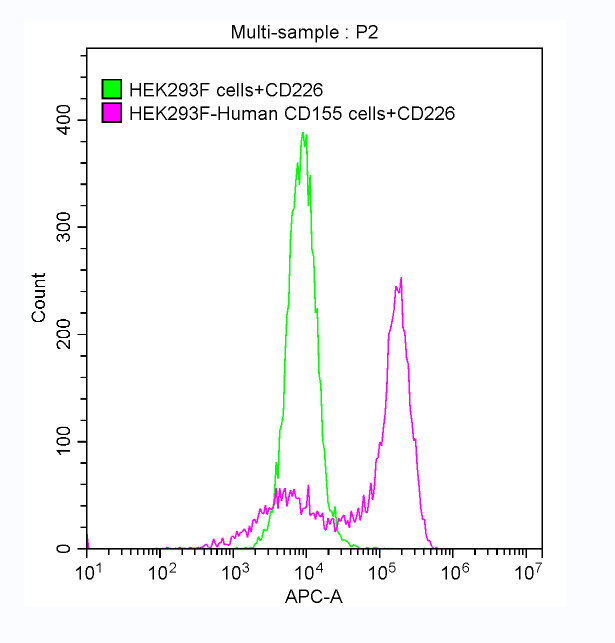
Recombinant Human CD226 antigen (CD226), partial (Active)
Express system: Mammalian cell
Species: Homo sapiens (Human)
-
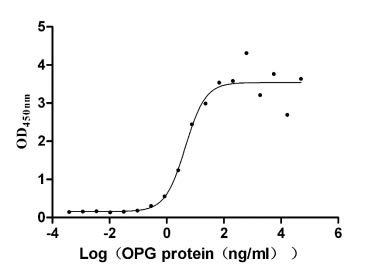
Recombinant Human Tumor necrosis factor receptor superfamily member 11B (TNFRSF11B) (Active)
Express system: Mammalian cell
Species: Homo sapiens (Human)
-
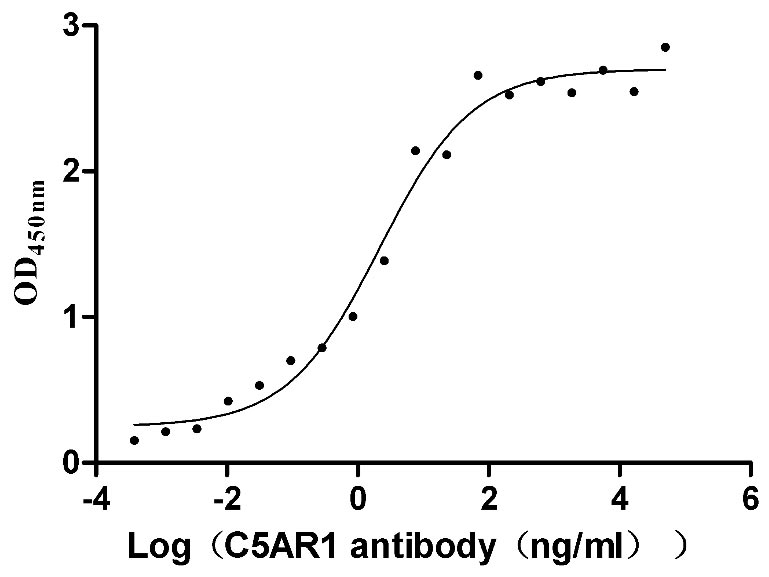
Recombinant Human C5a anaphylatoxin chemotactic receptor 1 (C5AR1)-VLPs (Active)
Express system: Mammalian cell
Species: Homo sapiens (Human)
-
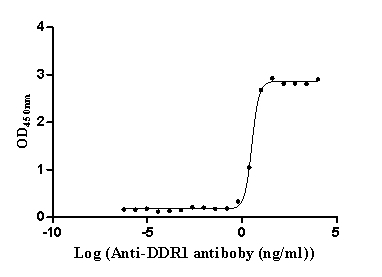
Recombinant Human Epithelial discoidin domain-containing receptor 1 (DDR1), partial (Active)
Express system: Mammalian cell
Species: Homo sapiens (Human)
-
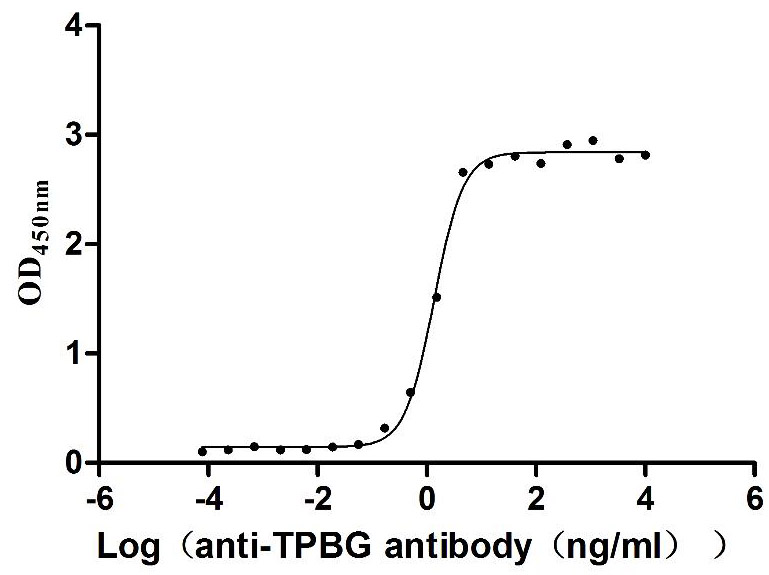
Recombinant Human Trophoblast glycoprotein (TPBG), partial (Active)
Express system: Mammalian cell
Species: Homo sapiens (Human)
-
-AC1.jpg)
Recombinant Human Dickkopf-related protein 1 (DKK1) (Active)
Express system: Mammalian cell
Species: Homo sapiens (Human)
-
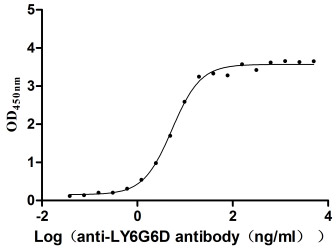
Recombinant Macaca fascicularis lymphocyte antigen 6 family member G6D (LY6G6D) (Active)
Express system: Yeast
Species: Macaca fascicularis (Crab-eating macaque) (Cynomolgus monkey)
-
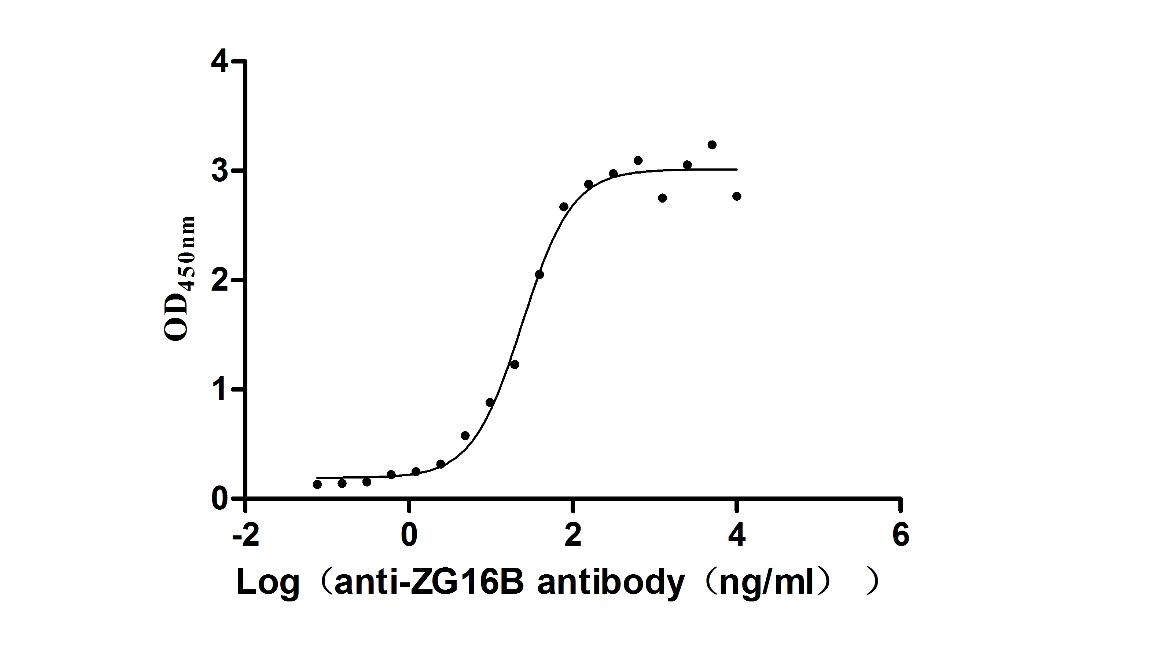
Recombinant Macaca fascicularis zymogen granule protein 16 homolog B (ZG16B) (Active)
Express system: Mammalian cell
Species: Macaca fascicularis (Crab-eating macaque) (Cynomolgus monkey)