Recombinant Human Sphingomyelin phosphodiesterase (SMPD1)
In Stock-
中文名稱:人SMPD1重組蛋白
-
品名簡稱:Recombinant Human SMPD1 protein
-
貨號:CSB-MP021845HU
-
說明書:
-
規(guī)格:¥1140
-
圖片:
-
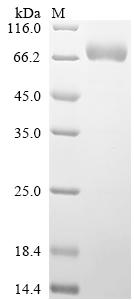 (Tris-Glycine gel) Discontinuous SDS-PAGE (reduced) with 5% enrichment gel and 15% separation gel.
-
-
其他:
產(chǎn)品詳情
-
純度:Greater than 90% as determined by SDS-PAGE.
-
基因名:
-
Uniprot No.:
-
種屬:Homo sapiens (Human)
-
蛋白長度:Full Length of Mature Protein
-
來源:Mammalian cell
-
分子量:66.6 kDa
-
表達(dá)區(qū)域:47-631aa
-
氨基酸序列LALSDSRVLWAPAEAHPLSPQGHPARLHRIVPRLRDVFGWGNLTCPICKGLFTAINLGLKKEPNVARVGSVAIKLCNLLKIAPPAVCQSIVHLFEDDMVEVWRRSVLSPSEACGLLLGSTCGHWDIFSSWNISLPTVPKPPPKPPSPPAPGAPVSRILFLTDLHWDHDYLEGTDPDCADPLCCRRGSGLPPASRPGAGYWGEYSKCDLPLRTLESLLSGLGPAGPFDMVYWTGDIPAHDVWHQTRQDQLRALTTVTALVRKFLGPVPVYPAVGNHESTPVNSFPPPFIEGNHSSRWLYEAMAKAWEPWLPAEALRTLRIGGFYALSPYPGLRLISLNMNFCSRENFWLLINSTDPAGQLQWLVGELQAAEDRGDKVHIIGHIPPGHCLKSWSWNYYRIVARYENTLAAQFFGHTHVDEFEVFYDEETLSRPLAVAFLAPSATTYIGLNPGYRVYQIDGNYSGSSHVVLDHETYILNLTQANIPGAIPHWQLLYRARETYGLPNTLPTAWHNLVYRMRGDMQLFQTFWFLYHKGHPPSEPCGTPCRLATLCAQLSARADSPALCRHLMPDGSLPEAQSLWPRPLFC
Note: The complete sequence may include tag sequence, target protein sequence, linker sequence and extra sequence that is translated with the protein sequence for the purpose(s) of secretion, stability, solubility, etc.
If the exact amino acid sequence of this recombinant protein is critical to your application, please explicitly request the full and complete sequence of this protein before ordering. -
蛋白標(biāo)簽:C-terminal 10xHis-tagged
-
產(chǎn)品提供形式:Liquid or Lyophilized powder
Note: We will preferentially ship the format that we have in stock, however, if you have any special requirement for the format, please remark your requirement when placing the order, we will prepare according to your demand. -
緩沖液:If the delivery form is liquid, the default storage buffer is Tris/PBS-based buffer, 5%-50% glycerol.If the delivery form is lyophilized powder, the buffer before lyophilization is Tris/PBS-based buffer, 6% Trehalose.
-
復(fù)溶:We recommend that this vial be briefly centrifuged prior to opening to bring the contents to the bottom. Please reconstitute protein in deionized sterile water to a concentration of 0.1-1.0 mg/mL.We recommend to add 5-50% of glycerol (final concentration) and aliquot for long-term storage at -20°C/-80°C. Our default final concentration of glycerol is 50%. Customers could use it as reference.
-
儲存條件:Store at -20°C/-80°C upon receipt, aliquoting is necessary for mutiple use. Avoid repeated freeze-thaw cycles.
-
保質(zhì)期:The shelf life is related to many factors, storage state, buffer ingredients, storage temperature and the stability of the protein itself.
Generally, the shelf life of liquid form is 6 months at -20°C/-80°C. The shelf life of lyophilized form is 12 months at -20°C/-80°C. -
貨期:3-7 business days
-
注意事項:Repeated freezing and thawing is not recommended. Store working aliquots at 4°C for up to one week.
-
Datasheet & COA:Please contact us to get it.
產(chǎn)品評價

相關(guān)產(chǎn)品
靶點詳情
-
功能:Converts sphingomyelin to ceramide. Exists as two enzymatic forms that arise from alternative trafficking of a single protein precursor, one that is targeted to the endolysosomal compartment, whereas the other is released extracellularly. However, in response to various forms of stress, lysosomal exocytosis may represent a major source of the secretory form.; In the lysosomes, converts sphingomyelin to ceramide. Plays an important role in the export of cholesterol from the intraendolysosomal membranes. Also has phospholipase C activities toward 1,2-diacylglycerolphosphocholine and 1,2-diacylglycerolphosphoglycerol. Modulates stress-induced apoptosis through the production of ceramide.; When secreted, modulates cell signaling with its ability to reorganize the plasma membrane by converting sphingomyelin to ceramide. Secreted form is increased in response to stress and inflammatory mediators such as IL1B, IFNG or TNF as well as upon infection with bacteria and viruses. Produces the release of ceramide in the outer leaflet of the plasma membrane playing a central role in host defense. Ceramide reorganizes these rafts into larger signaling platforms that are required to internalize P. aeruginosa, induce apoptosis and regulate the cytokine response in infected cells. In wounded cells, the lysosomal form is released extracellularly in the presence of Ca(2+) and promotes endocytosis and plasma membrane repair.; Lacks residues that bind the cofactor Zn(2+) and has no enzyme activity.; Lacks residues that bind the cofactor Zn(2+) and has no enzyme activity.; (Microbial infection) Secretion is activated by bacteria such as P. aeruginos, N. gonorrhoeae and others, this activation results in the release of ceramide in the outer leaflet of the plasma membrane which facilitates the infection.; (Microbial infection) Secretion is activated by human coronaviruses SARS-CoV and SARS-CoV-2 as well as Zaire ebolavirus, this activation results in the release of ceramide in the outer leaflet of the plasma membrane which facilitates the infection.
-
基因功能參考文獻(xiàn):
- The novel p.P226Q mutation and p.P533L mutation of SMPD1 are associated with Parkinson's disease. PMID: 29896723
- the human ASM holoenzyme and product bound structures encompassing all of the functional domains, are presented. PMID: 27725636
- This study sheds light on the molecular mechanism of ASMase function. PMID: 27435900
- The results suggest an association of Acid sphingomyelinase activation with Respiratory Syncytial Virus infection, a cause for common acute illness. PMID: 29238000
- This study identified association between Leu-Ala (Val) repeat variants in SMPD1 and Chinese Han patients with sporadic Parkinson's disease. PMID: 27814975
- Parkinson's disease is associated with mutations in SMPD1 gene in Ashkenazi Jews. PMID: 27449028
- Through genetic analysis it was determined that genetic variants in SMPD1 increase the risk of Parkinson's Disease in the Chinese Han population. PMID: 26377108
- Enzyme activities (acid alpha-glucosidase (GAA), galactocerebrosidase (GALC), glucocerebrosidase (GBA), alpha-galactosidase A (GLA), alpha-iduronidase (IDUA) and sphingomyeline phosphodiesterase-1 (SMPD-1)) were measured on ~43,000 de-identified dried blood spot (DBS) punches, and screen positive samples were submitted for DNA sequencing to obtain genotype confirmation of disease risk PMID: 27238910
- This study shows that the ASM alternative splicing pattern could be a biological target with diagnostic relevance and could serve as a novel biomarker for Major depressive disorder PMID: 27866044
- stress-induced activation of p38 MAPK and apoptosis in endothelial cells and established the link between the acid sphingomyelinase/ceramide and p38 MAPK pathways. PMID: 28179144
- Elevated acid sphingomyelinase (ASM) activity in the lung tumor environment and blood serum of patients with non-small cell lung cancer (NSCLC). PMID: 28883000
- this is the largest study on mutation analysis of patients with ASM-deficient Niemann-Pick disease reported in literature and also the first study on the SMPD1 gene mutation spectrum in India. PMID: 27338287
- ASM and ceramides, together with STX6 and cholesterol, constitute a new regulatory mechanism for the exit of Met from the Golgi during its biosynthetic route. PMID: 27802163
- the p.Ala359Asp mutation causes structural alterations in the hydrophobic environment where ASM is located, decreasing its enzymatic activity PMID: 27659707
- Airway cells with lower SMPD1 activity increases neutrophil chemotaxis towards them. PMID: 27865842
- The results identify acid sphingomyelinase as a novel target of Lycium Chinense berries to decrease saturated/unsaturated fatty acid sphingomyelin ratio, known to be useful for cell health. Consistent with these data, the berries regulate specifically gene expression to protect cells from apoptosis. PMID: 27756324
- ASMase mediated the 50-Hz MF-induced EGFR clustering via ceramide which was produced from hydrolyzation on lipid rafts PMID: 26915736
- acid sphingomyelinase-1 PMID: 27352097
- ASM is a negative regulator of regulatory T Cell development. PMID: 27512981
- We report on an infant with a new frameshift mutation (c.575dupG) of the SMPD1 gene. PMID: 26766671
- Seven novel mutations (c.518-519insT, c.562_563insC, c.792Gdel, c.949G>A, c.1487_1499delACCGTGTGTACCA, c.1495T>C and c.1670T>C) of the SMPD1 gene were identified in four patients. Only one fetus had two mutations of the SMPD1 gene of amniocytes PMID: 26851525
- although ebeta,5alpha,6beta-triol is more specific than 7-KC, it has been found to be significantly elevated in patients with Niemann-Pick type A, a lysosomal storage disorder caused by mutations in the SMPD1 gene PMID: 26790753
- This work provides the first evidence of significantly elevated circulating secretory sphyngomyelinase activity in the first trimester of pregnancy in women who go on to develop preeclampsia. PMID: 26756094
- A comprehensive updated review of already reported and newly identified SMPD1 variants of Niemann-Pick Types A and B disease has been presented. (Review) PMID: 26499107
- a conserved haplotype and shared 280 Kb region around the SMPD1 gene was observed in the patients analyzed, indicating that the variant originated from a common ancestor PMID: 25920558
- ASM activation may be involved in the pathophysiology of Kawasaki disease PMID: 26447086
- These results indicate that increased EGR1/3 and ASMase expression play an important role in cellular ceramide increase by RSV treatment. PMID: 26809095
- The results of this study suggested that disruptive mutations in SMPD1 constitute a risk factor for parkindon disease. PMID: 26169695
- This is the first evidence that supports the possibility that sphingolipid metabolism is affected via the induction of ASMase by the Nrf2 pathway. PMID: 25762726
- ASM has a pivotal role in adaptive immune T-cell responses. PMID: 26203857
- Patterns of alternatively spliced SMPD1 transcripts are significantly different in patients with systemic inflammatory response syndrome and severe sepsis/septic shock compared to control subjects allowing discrimination of respective disease entity. PMID: 25898364
- The mechanisms by which pyocyanin induces the release of mitochondrial ROS and by which ROS induce neutrophil death via mitochondrial acid sphingomyelinase was identified. PMID: 25686490
- Results show four novel mutations in SMPD1 in Iranian patients with type A or B Niemann-Pick disease extending the genotypic spectrum of the disease. PMID: 25811928
- The relationship between autophagy and A-SMase. [Review] PMID: 25666706
- Data suggest ASM (acid sphingomyelinase) activity is regulated by membrane lipids and facilitates cholesterol transfer by NPC2 (Niemann Pick protein type C2); hydrolysis of sphingomyelin by ASM may be crucial for endosomal lipid degradation/sorting. PMID: 25339683
- Data suggest invasiveness of Neisseria meningitidis depends on activation of SMPD1 and up-regulation of ceramide release to form ceramide-enriched platforms in cell membrane of endothelium of brain microvessels upon attachment of N. meningitidis. PMID: 24945304
- L-ASM activity was significantly lower in subjects homozygous for the minor A allele but not different between allergic and non-allergic subjects PMID: 24977483
- results provide the mechanism for dysferlin-mediated repair of skeletal muscle sarcolemma and identify ASM as a potential therapy for dysferlinopathy PMID: 24967968
- These results reveal a novel mechanism of ASM pathogenesis in Alzheimer's disease. PMID: 25049335
- The lysosomal enzyme coding genes SMPD1 which are associated with a 9-fold increased risk of Parkinson disease. PMID: 24262184
- seven novel SMPD1 mutations and new inside into genotype/phenotype correlations in Niemann-Pick disease PMID: 23252888
- Serum acid sphingomyelinase is upregulated in chronic hepatitis C infection and non-alcoholic fatty liver disease. PMID: 24769340
- liver samples from patients with alcoholic hepatitis exhibited increased expression of ASMase, StARD1, and ER stress markers PMID: 23707365
- Rare SMPD1 variant (p.R591C) increases the risk of Parkinson disease. PMID: 23871123
- Mutational analysis demonstrated the siblings are compound heterozygotes (V112M and H554Y). PMID: 22367733
- the spectrum of SMPD1 gene mutations in Turkish Niemann-Pick disease patients PMID: 23618813
- Role of the acid sphingomyelinase (Asm)-ceramide system as a target for antidepressants. PMID: 23770692
- Chinese population may have a comparably high incidence of sphingomyelinase-deficient Niemann-Pick disease type A. This study has identified some novel genotype and phenotype correlations in this rare and devastating disorder PMID: 23356216
- The SMPD1 p.L302P mutation is a novel risk factor for Parkinson disease PMID: 23535491
- Hydrogen peroxide, a primary form of reactive oxygen species in mammalian cells, induces very rapid translocation of ASM and formation of ceramide-enriched membrane platforms in the plasma membrane of Jurkat T cells. PMID: 22890197
顯示更多
收起更多
-
相關(guān)疾病:Niemann-Pick disease A (NPDA); Niemann-Pick disease B (NPDB)
-
亞細(xì)胞定位:Lysosome. Lipid droplet. Secreted.
-
蛋白家族:Acid sphingomyelinase family
-
數(shù)據(jù)庫鏈接:
Most popular with customers
-
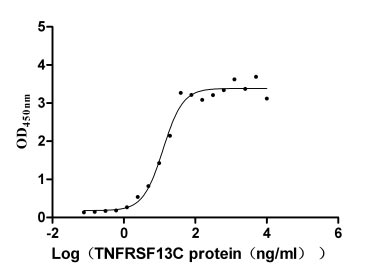
Express system: Mammalian cell
Species: Homo sapiens (Human)
-
-AC1.jpg)
Recombinant Mouse Claudin-18.2 (Cldn18.2)-VLPs (Active)
Express system: Mammalian cell
Species: Mus musculus (Mouse)
-
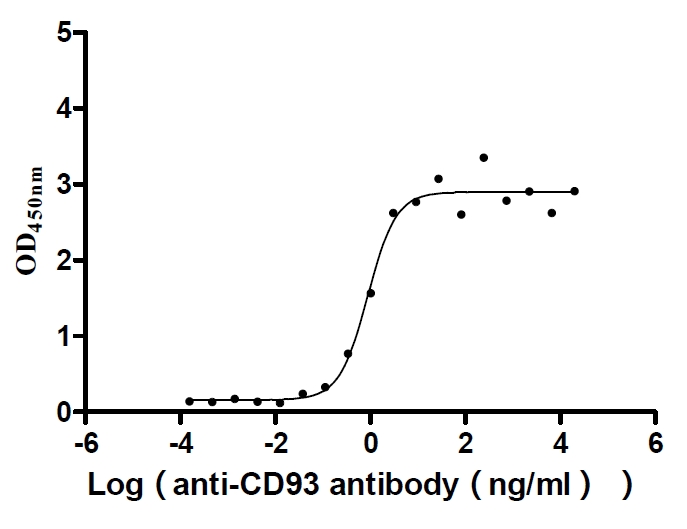
Recombinant Human Complement component C1q receptor (CD93), partial (Active)
Express system: Mammalian cell
Species: Homo sapiens (Human)
-
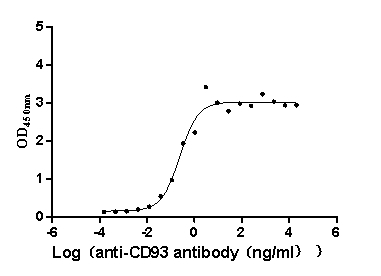
Recombinant Macaca fascicularis CD93 molecule (CD93), partial (Active)
Express system: Mammalian cell
Species: Macaca fascicularis (Crab-eating macaque) (Cynomolgus monkey)
-
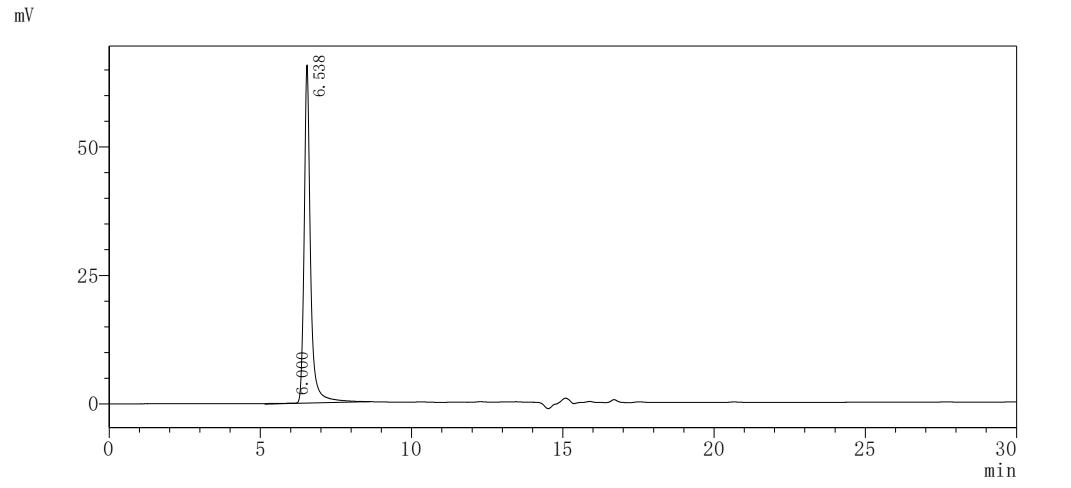
Recombinant Human C-C chemokine receptor type 9 (CCR9)-VLPs (Active)
Express system: Mammalian cell
Species: Homo sapiens (Human)
-
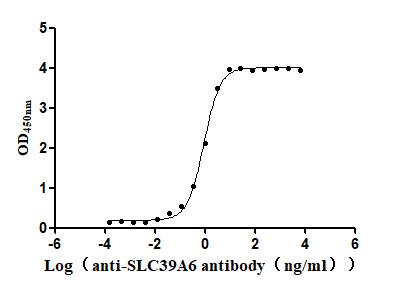
Recombinant Macaca fascicularis Zinc transporter ZIP6 isoform X1(SLC39A6),partial (Active)
Express system: Baculovirus
Species: Macaca fascicularis (Crab-eating macaque) (Cynomolgus monkey)
-
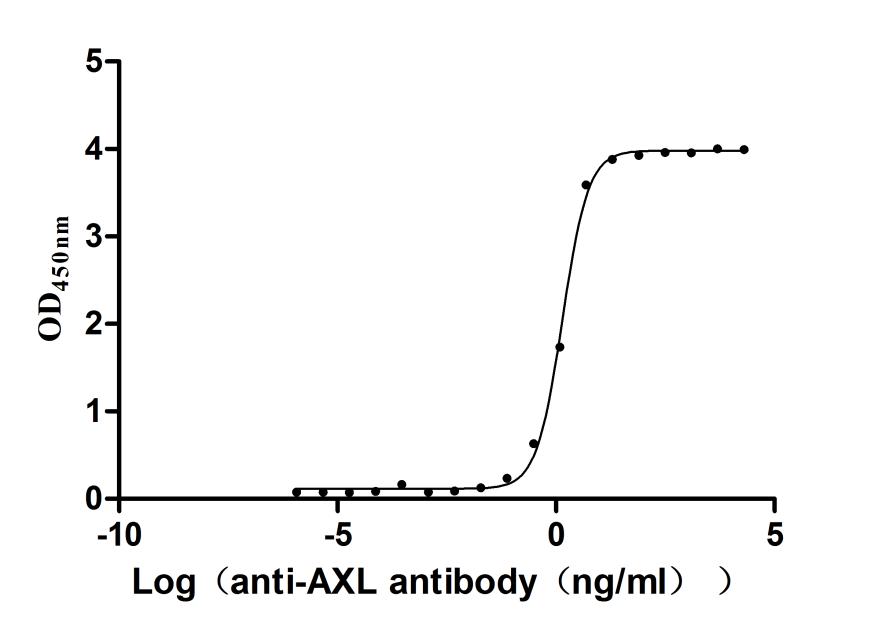
Recombinant Human Tyrosine-protein kinase receptor UFO(AXL),partial (Active)
Express system: Mammalian cell
Species: Homo sapiens (Human)