Recombinant Human Neural cell adhesion molecule L1-like protein (CHL1), partial
-
貨號(hào):CSB-YP005355HU
-
規(guī)格:
-
來(lái)源:Yeast
-
其他:
-
貨號(hào):CSB-EP005355HU
-
規(guī)格:
-
來(lái)源:E.coli
-
其他:
-
貨號(hào):CSB-EP005355HU-B
-
規(guī)格:
-
來(lái)源:E.coli
-
共軛:Avi-tag Biotinylated
E. coli biotin ligase (BirA) is highly specific in covalently attaching biotin to the 15 amino acid AviTag peptide. This recombinant protein was biotinylated in vivo by AviTag-BirA technology, which method is BriA catalyzes amide linkage between the biotin and the specific lysine of the AviTag.
-
其他:
-
貨號(hào):CSB-BP005355HU
-
規(guī)格:
-
來(lái)源:Baculovirus
-
其他:
-
貨號(hào):CSB-MP005355HU
-
規(guī)格:
-
來(lái)源:Mammalian cell
-
其他:
產(chǎn)品詳情
-
純度:>85% (SDS-PAGE)
-
基因名:CHL1
-
Uniprot No.:
-
別名:Neural cell adhesion molecule L1-like protein; Close homolog of L1; [Cleaved into: Processed neural cell adhesion molecule L1-like protein] CHL1 CALL
-
種屬:Homo sapiens (Human)
-
蛋白長(zhǎng)度:Partial
-
表達(dá)區(qū)域:35-124
-
氨基酸序列PTIIKQSKVQVAFPFDEYFQIECEAKGNPEPTFSWTKDGNPFYFTDHRIIPSNNSGTFRIPNEGHISHFQGKYRCFASNKLGIAMSEEIE
-
蛋白標(biāo)簽:Tag?type?will?be?determined?during?the?manufacturing?process.
The tag type will be determined during production process. If you have specified tag type, please tell us and we will develop the specified tag preferentially. -
產(chǎn)品提供形式:Liquid or Lyophilized powder
Note: We will preferentially ship the format that we have in stock, however, if you have any special requirement for the format, please remark your requirement when placing the order, we will prepare according to your demand. -
復(fù)溶:We recommend that this vial be briefly centrifuged prior to opening to bring the contents to the bottom. Please reconstitute protein in deionized sterile water to a concentration of 0.1-1.0 mg/mL.We recommend to add 5-50% of glycerol (final concentration) and aliquot for long-term storage at -20℃/-80℃. Our default final concentration of glycerol is 50%. Customers could use it as reference.
-
儲(chǔ)存條件:Store at -20°C/-80°C upon receipt, aliquoting is necessary for mutiple use. Avoid repeated freeze-thaw cycles.
-
保質(zhì)期:The shelf life is related to many factors, storage state, buffer ingredients, storage temperature and the stability of the protein itself.
Generally, the shelf life of liquid form is 6 months at -20°C/-80°C. The shelf life of lyophilized form is 12 months at -20°C/-80°C. -
貨期:Delivery time may differ from different purchasing way or location, please kindly consult your local distributors for specific delivery time.Note: All of our proteins are default shipped with normal blue ice packs, if you request to ship with dry ice, please communicate with us in advance and extra fees will be charged.
-
注意事項(xiàng):Repeated freezing and thawing is not recommended. Store working aliquots at 4°C for up to one week.
-
Datasheet :Please contact us to get it.
產(chǎn)品評(píng)價(jià)

靶點(diǎn)詳情
-
功能:Extracellular matrix and cell adhesion protein that plays a role in nervous system development and in synaptic plasticity. Both soluble and membranous forms promote neurite outgrowth of cerebellar and hippocampal neurons and suppress neuronal cell death. Plays a role in neuronal positioning of pyramidal neurons and in regulation of both the number of interneurons and the efficacy of GABAergic synapses. May play a role in regulating cell migration in nerve regeneration and cortical development. Potentiates integrin-dependent cell migration towards extracellular matrix proteins. Recruits ANK3 to the plasma membrane.
-
基因功能參考文獻(xiàn):
- CHL1 was found to have greater than 15-fold higher expression in fragments per kilobase million in HCC compared with benign Hurthle cell tumors. This was confirmed by qRT-PCR. Moreover, the immunoreactivity score of the CHL1 protein was significantly higher in HCC compared with benign Hurthle cell nodules. PMID: 30311656
- Results indicate that close homolog of L1 protein (CHL1) is downregulated by hypermethylation and that this epigenetic alteration is an independent prognostic factor in breast cancer (BC). PMID: 28178655
- CHL1 expression patient-derived lymphoblasts correlated with clinical outcome in depressive disorder patients. PMID: 25943212
- our findings suggest that miR-590-5p acts as an oncogene by targeting the CHL1 gene and promotes cervical cancer proliferation PMID: 24288179
- There was no statistical association between polymorphisms of the CHL1 gene and idiopathic scoliosis in a Chinese population. PMID: 24512353
- Our data collectively indicate that miR-182 in PTC promotes cell proliferation and invasion through direct suppression of CHL1, supporting the potential utility of miR-182 inhibition as a novel therapeutic strategy against PTC. PMID: 24971532
- The rs2272522 polymorphism (in the CHL1 gene) was found to exhibit a highly significant association with schizophrenia in the Qatari population. PMID: 23857787
- In 1 of 113 Colombian children with refractory epilepsy, MLPA showed a subtelomeric duplication of exon 3 of CHL1, also present in 2 relatives. PMID: 24203666
- CHL1 has a role in human breast tumorigenesis and progression PMID: 23906755
- The miRNA miR-151-3p had 6.7-fold higher basal expression in paroxetine-sensitive LCLs. This corresponds with lower expression of CHL1, a target of miR-151-3p PMID: 22909203
- BACE1(-/-) axon guidance defects are likely the result of abrogated BACE1 processing of CHL1 and BACE1 deficiency produces a CHL1 loss-of-function phenotype PMID: 22988240
- miR-10a expression is upregulated in cervical cancer tissues, and miR-10a promotes cell growth, migration and invasion by targeting CHL1 in human cervical cancer cells. PMID: 22634495
- Overall, our study found a significant association of IL-17RC gene polymorphisms with AIS in a Chinese Han population, indicating IL-17RC gene may be as a susceptibility gene for AIS. PMID: 22744455
- CHL1 is involved in the development of different human cancers. PMID: 21408220
- Genome-wide transcriptional profiling of in vitro phenotyped LCLs identified CHL1 and additional genes implicated in synaptogenesis and brain circuitry as putative SSRI response biomarkers. PMID: 21332311
- An association between a missense polymorphism in the close homologue of L1 (CHL1, CALL) gene and schizophrenia. PMID: 11986985
- L1 could drive progression by enhancing cell migration and tumor growth in ovarian carcinoma. PMID: 15704102
- MAP kinase pathway regulates L1-CAM-mediated nerve growth by modulating ankyrin binding. PMID: 16597699
- CHL1 expression was uniformly positive on a cell line derived from angiomyolipoma. PMID: 17592550
- results do not support the candidacy of CHL1, CNTN6, and CNTN4 as tumor suppressor genes in the 3p26-pter region in ovarian cancer PMID: 19509545
顯示更多
收起更多
-
亞細(xì)胞定位:Cell membrane; Single-pass type I membrane protein.; [Processed neural cell adhesion molecule L1-like protein]: Secreted, extracellular space, extracellular matrix.
-
蛋白家族:Immunoglobulin superfamily, L1/neurofascin/NgCAM family
-
組織特異性:Expressed in the fetal and adult brain as well as in Schwann cell culture. Also detected in adult peripheral tissues.
-
數(shù)據(jù)庫(kù)鏈接:
Most popular with customers
-
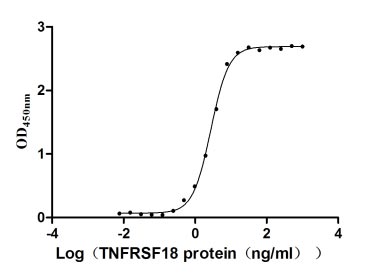
Recombinant Human Tumor necrosis factor receptor superfamily member 18 (TNFRSF18), partial (Active)
Express system: Mammalian cell
Species: Homo sapiens (Human)
-
-AC1.jpg)
Recombinant Human T-cell surface protein tactile (CD96), partial (Active)
Express system: Mammalian cell
Species: Homo sapiens (Human)
-
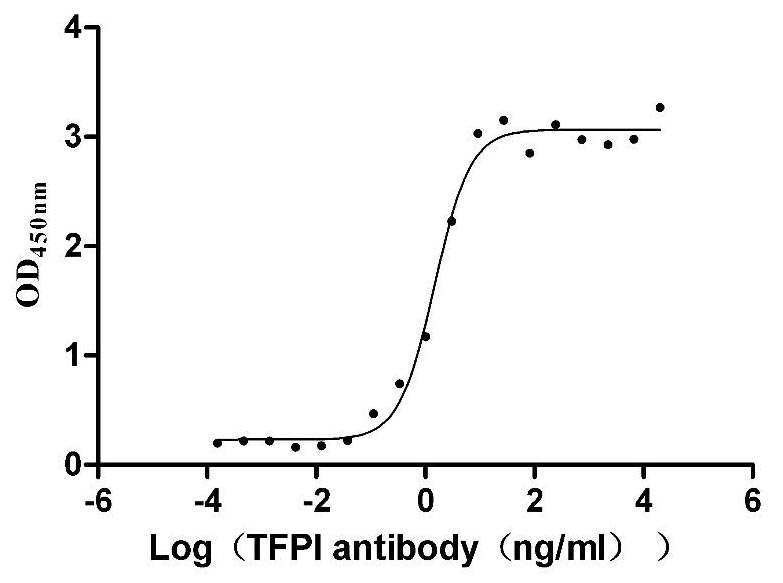
Recombinant Human Tissue factor pathway inhibitor (TFPI), partial (Active)
Express system: Mammalian cell
Species: Homo sapiens (Human)
-
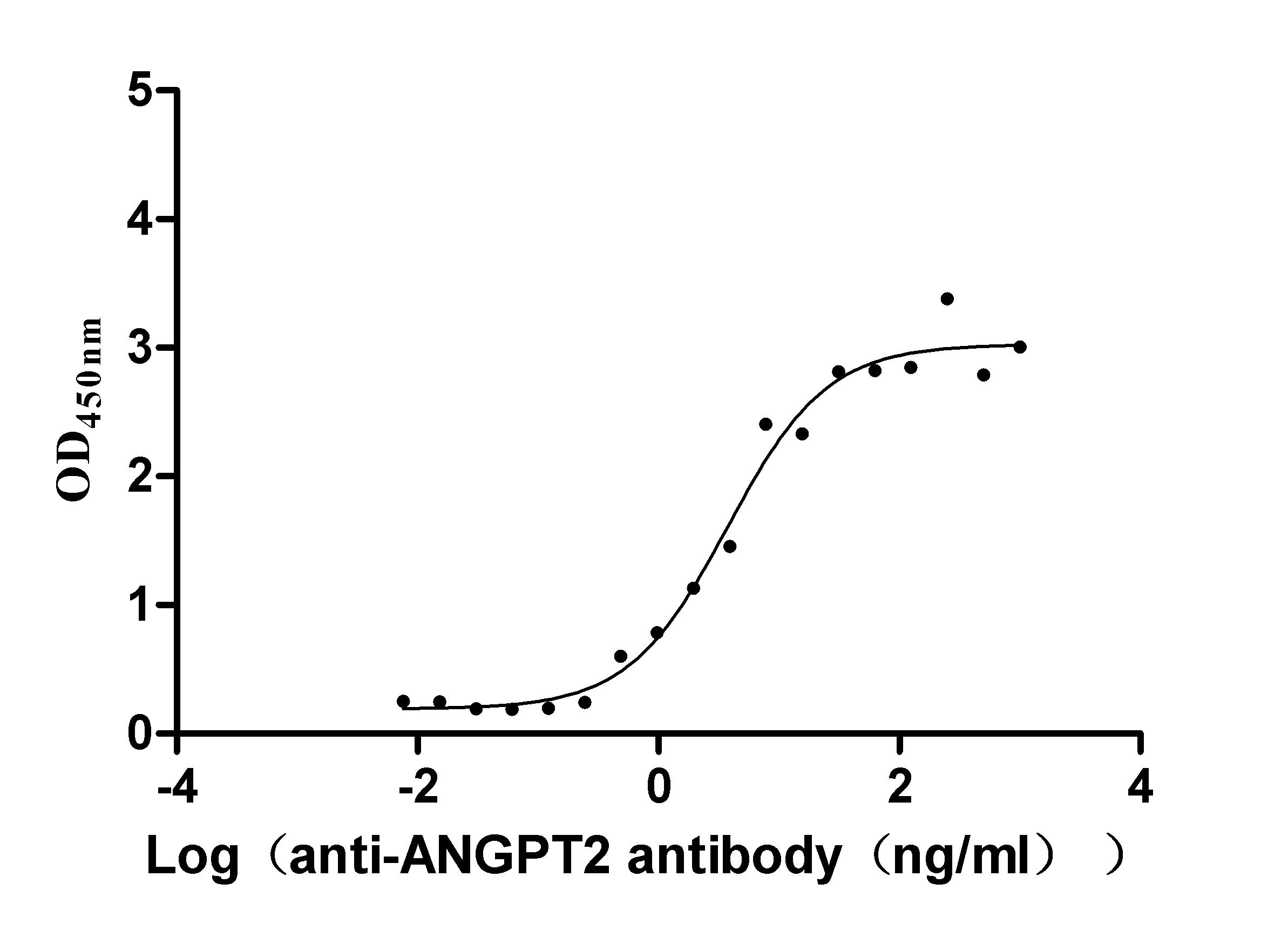
Recombinant Dog Angiopoietin-2 (ANGPT2) (Active)
Express system: Mammalian cell
Species: Canis lupus familiaris (Dog) (Canis familiaris)
-
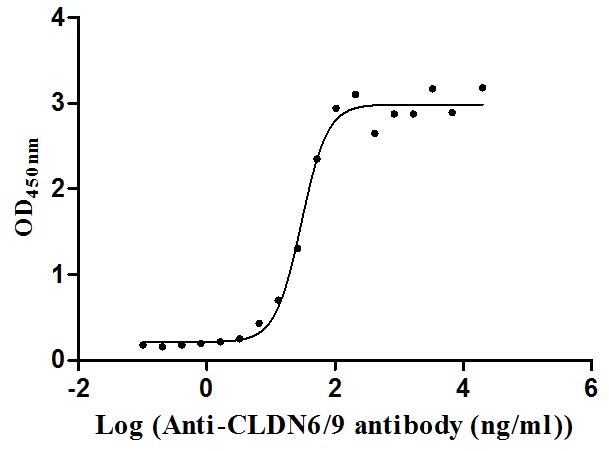
Recombinant Human Claudin-9 (CLDN9)-VLPs (Active)
Express system: Mammalian cell
Species: Homo sapiens (Human)
-
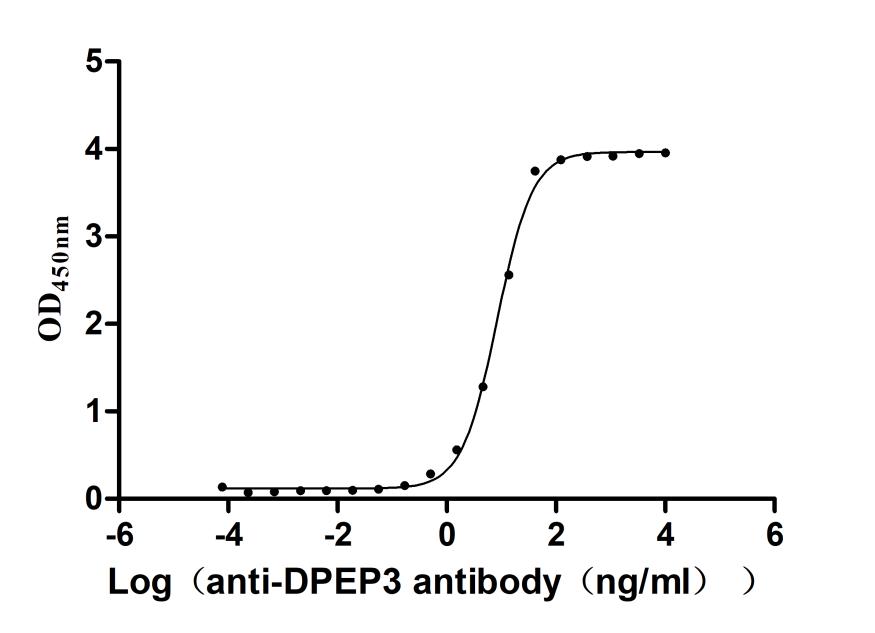
Recombinant Macaca fascicularis Dipeptidase 3(DPEP3) (Active)
Express system: Mammalian cell
Species: Macaca fascicularis (Crab-eating macaque) (Cynomolgus monkey)