Recombinant Human LIM domain-containing protein 1 (LIMD1)
-
中文名稱:Recombinant Human LIM domain-containing protein 1 (LIMD1)
-
品名簡稱:Recombinant Human LIMD1 protein
-
貨號:CSB-EP883381HU
-
說明書:
-
規格:¥1836
-
圖片:
-
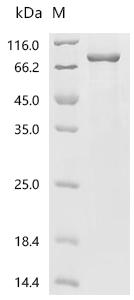 (Tris-Glycine gel) Discontinuous SDS-PAGE (reduced) with 5% enrichment gel and 15% separation gel.
-
-
其他:
產品詳情
-
純度:Greater than 85% as determined by SDS-PAGE.
-
生物活性:Not Test
-
基因名:
-
Uniprot No.:
-
種屬:Homo sapiens (Human)
-
蛋白長度:Full Length
-
來源:E.coli
-
分子量:78.2 kDa
-
表達區域:1-676aa
-
氨基酸序列MDKYDDLGLEASKFIEDLNMYEASKDGLFRVDKGAGNNPEFEETRRVFATKMAKIHLQQQQQQLLQEETLPRGSRGPVNGGGRLGPQARWEVVGSKLTVDGAAKPPLAASTGAPGAVTTLAAGQPPYPPQEQRSRPYLHGTRHGSQDCGSRESLATSEMSAFHQPGPCEDPSCLTHGDYYDNLSLASPKWGDKPGVSPSIGLSVGSGWPSSPGSDPPLPKPCGDHPLNHRQLSLSSSRSSEGSLGGQNSGIGGRSSEKPTGLWSTASSQRVSPGLPSPNLENGAPAVGPVQPRTPSVSAPLALSCPRQGGLPRSNSGLGGEVSGVMSKPNVDPQPWFQDGPKSYLSSSAPSSSPAGLDGSQQGAVPGLGPKPGCTDLGTGPKLSPTSLVHPVMSTLPELSCKEGPLGWSSDGSLGSVLLDSPSSPRVRLPCQPLVPGPELRPSAAELKLEALTQRLEREMDAHPKADYFGACVKCSKGVFGAGQACQAMGNLYHDTCFTCAACSRKLRGKAFYFVNGKVFCEEDFLYSGFQQSADRCFLCGHLIMDMILQALGKSYHPGCFRCVICNECLDGVPFTVDSENKIYCVRDYHKVLAPKCAACGLPILPPEGSDETIRVVSMDRDYHVECYHCEDCGLELNDEDGHRCYPLEDHLFCHSCHVKRLEKRPSSTALHQHHF
Note: The complete sequence may include tag sequence, target protein sequence, linker sequence and extra sequence that is translated with the protein sequence for the purpose(s) of secretion, stability, solubility, etc.
If the exact amino acid sequence of this recombinant protein is critical to your application, please explicitly request the full and complete sequence of this protein before ordering. -
蛋白標簽:N-terminal 6xHis-tagged
-
產品提供形式:Liquid or Lyophilized powder
Note: We will preferentially ship the format that we have in stock, however, if you have any special requirement for the format, please remark your requirement when placing the order, we will prepare according to your demand. -
緩沖液:If the delivery form is liquid, the default storage buffer is Tris/PBS-based buffer, 5%-50% glycerol. If the delivery form is lyophilized powder, the buffer before lyophilization is Tris/PBS-based buffer, 6% Trehalose, pH 8.0.
-
復溶:We recommend that this vial be briefly centrifuged prior to opening to bring the contents to the bottom. Please reconstitute protein in deionized sterile water to a concentration of 0.1-1.0 mg/mL.We recommend to add 5-50% of glycerol (final concentration) and aliquot for long-term storage at -20°C/-80°C. Our default final concentration of glycerol is 50%. Customers could use it as reference.
-
儲存條件:Store at -20°C/-80°C upon receipt, aliquoting is necessary for mutiple use. Avoid repeated freeze-thaw cycles.
-
保質期:The shelf life is related to many factors, storage state, buffer ingredients, storage temperature and the stability of the protein itself.
Generally, the shelf life of liquid form is 6 months at -20°C/-80°C. The shelf life of lyophilized form is 12 months at -20°C/-80°C. -
貨期:Basically, we can dispatch the products out in 3-7 working days after receiving your orders. Delivery time may differ from different purchasing way or location, please kindly consult your local distributors for specific delivery time.
-
注意事項:Repeated freezing and thawing is not recommended. Store working aliquots at 4℃ for up to one week.
-
Datasheet & COA:Please contact us to get it.
產品評價

相關產品
靶點詳情
-
功能:Adapter or scaffold protein which participates in the assembly of numerous protein complexes and is involved in several cellular processes such as cell fate determination, cytoskeletal organization, repression of gene transcription, cell-cell adhesion, cell differentiation, proliferation and migration. Positively regulates microRNA (miRNA)-mediated gene silencing and is essential for P-body formation and integrity. Acts as a hypoxic regulator by bridging an association between the prolyl hydroxylases and VHL enabling efficient degradation of HIF1A. Acts as a transcriptional corepressor for SNAI1- and SNAI2/SLUG-dependent repression of E-cadherin transcription. Negatively regulates the Hippo signaling pathway and antagonizes phosphorylation of YAP1. Inhibits E2F-mediated transcription, and suppresses the expression of the majority of genes with E2F1-responsive elements. Regulates osteoblast development, function, differentiation and stress osteoclastogenesis. Enhances the ability of TRAF6 to activate adapter protein complex 1 (AP-1) and negatively regulates the canonical Wnt receptor signaling pathway in osteoblasts. May act as a tumor suppressor by inhibiting cell proliferation.
-
基因功能參考文獻:
- our data also suggests the importance ofLIMD1 and CDC25A in conjunction with HPV for use as diagnostic and prognostic markers of HNSCC, whereas RBSP3 as a prognostic marker only. PMID: 29672635
- LIMD1 coordinates the assembly of an AGO-TNRC6 containing miRISC complex by binding both proteins simultaneously at distinct interfaces. PMID: 28683311
- These results suggested that LIMD1 is a novel BRCA2-interacting protein and is involved in the centrosome localization of BRCA2 and suppression of LIMD1, causing abnormal cell division in EC cells. PMID: 27656835
- Thus, the LIMD1-MYBL1 Index had considerable clinical value for DLBCL subtype classification and prognosis. PMID: 25940947
- Cyclic stretch is associated with a JNK-dependent increase in binding of a LATS inhibitor, LIMD1, to the LATS1 kinase and that reduction of LIMD1 expression suppresses the activation of YAP by cyclic stretch. PMID: 25127217
- LIMD1 prevents retinoblastoma phosphorylation and downregulates of E2F1 protein and blocks entry of cells into S-phase. PMID: 24523249
- PU.1 is a major transcriptional activator of LIMD1 PMID: 21402070
- LIMD1 inactivation as primary event than inactivation of RB1 in head and neck squamous cell carcinoma development. PMID: 20226061
- LIMD1 is a tumor-suppressor gene, the protein product of which functionally interacts with pRB and the loss of which promotes lung carcinogenesis PMID: 15542589
- analysis of hLIMD1 gene variants in breast cancer PMID: 17889706
- These results suggest that some breast tumors have altered expression of LIMD1 RNA and that LIMD1 may be involved in cell anchoring via focal adhesions and in the cell cycle, particularly during mitosis. PMID: 18439753
- study demonstrates that LIMD1 represents a novel prognostic marker for breast cancer. Combined with the fact that LIMD1 expression is downregulated in lung cancers this clearly indicates that LIMD1 may represent a critical tumor suppressor gene PMID: 18712738
- LIMD1 is a validated chromosome 3p21.3 tumor-suppressor gene involved in human lung cancer development. PMID: 19060205
顯示更多
收起更多
-
亞細胞定位:Cytoplasm. Nucleus. Cytoplasm, P-body. Cell junction, adherens junction. Cell junction, focal adhesion. Note=Shuttles between cytoplasm and nucleus but is localized predominantly to the cytoplasm. Found in the nucleus but not nucleoli. Colocalizes with VCL in the focal adhesions. Down-regulation and/or elimination of its expression from the nucleus of neoplastic cells correlates strongly with poor patient prognosis and aggressive forms of breast carcinoma. Conversely, strong nuclear localization correlates with low-tumor grade and better patient prognosis.
-
蛋白家族:Zyxin/ajuba family
-
組織特異性:Expressed in normal and breast cancer tissues (at protein level). Ubiquitous.
-
數據庫鏈接:
Most popular with customers
-
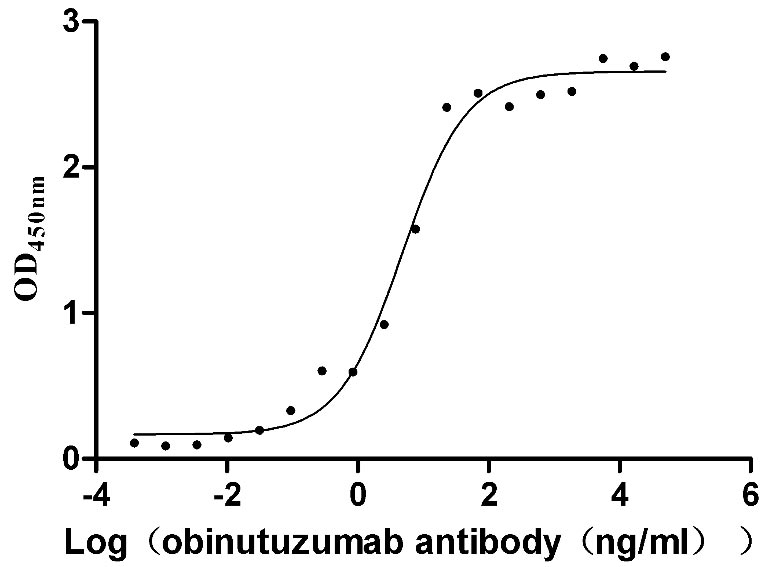
Recombinant Human B-lymphocyte antigen CD20 (MS4A1)-VLPs (Active)
Express system: Mammalian cell
Species: Homo sapiens (Human)
-
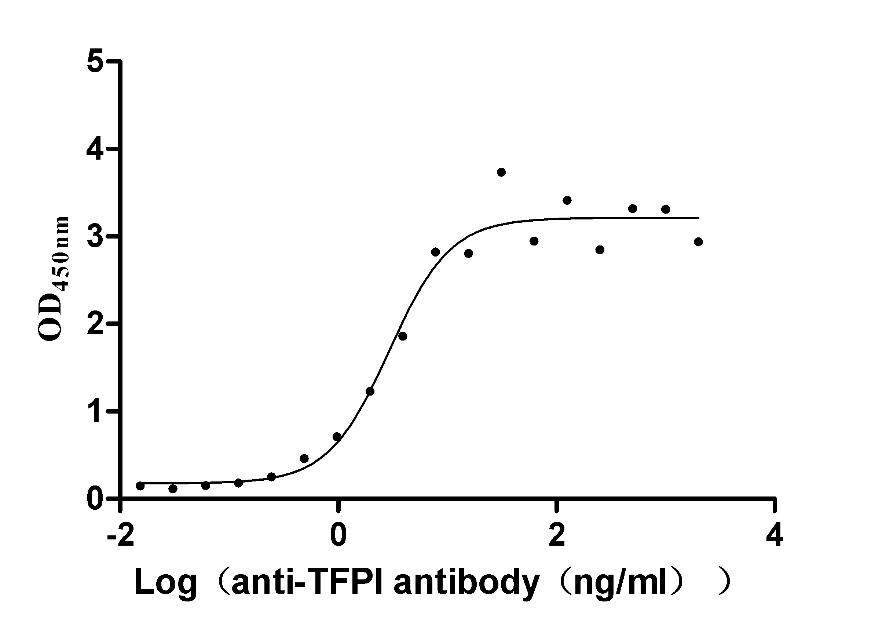
Recombinant Rabbit Tissue factor pathway inhibitor (TFPI) (Active)
Express system: Mammalian cell
Species: Oryctolagus cuniculus (Rabbit)
-
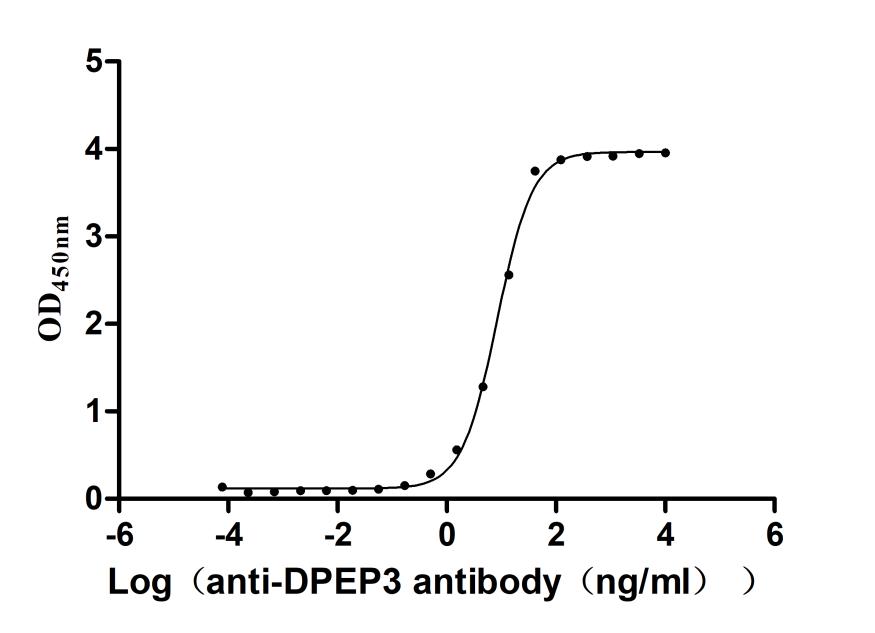
Recombinant Macaca fascicularis Dipeptidase 3(DPEP3) (Active)
Express system: Mammalian cell
Species: Macaca fascicularis (Crab-eating macaque) (Cynomolgus monkey)
-
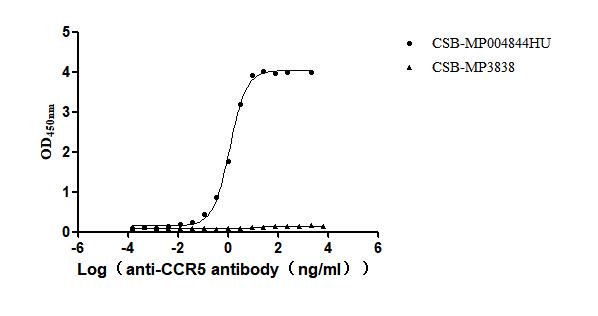
Recombinant Human C-C chemokine receptor type 5 (CCR5)-VLPs (Active)
Express system: Mammalian cell
Species: Homo sapiens (Human)