
Recombinant Human Actin-related protein 3 (ACTR3)
-
中文名稱:Recombinant Human Actin-related protein 3(ACTR3)
-
貨號:CSB-YP001249HU
-
規格:
-
來源:Yeast
-
其他:
-
中文名稱:Recombinant Human Actin-related protein 3(ACTR3)
-
貨號:CSB-EP001249HU-B
-
規格:
-
來源:E.coli
-
共軛:Avi-tag Biotinylated
E. coli biotin ligase (BirA) is highly specific in covalently attaching biotin to the 15 amino acid AviTag peptide. This recombinant protein was biotinylated in vivo by AviTag-BirA technology, which method is BriA catalyzes amide linkage between the biotin and the specific lysine of the AviTag.
-
其他:
-
中文名稱:Recombinant Human Actin-related protein 3(ACTR3)
-
貨號:CSB-MP001249HU
-
規格:
-
來源:Mammalian cell
-
其他:
產品詳情
-
純度:>85% (SDS-PAGE)
-
基因名:ACTR3
-
Uniprot No.:
-
別名:ACTR3; ARP3Actin-related protein 3; Actin-like protein 3
-
種屬:Homo sapiens (Human)
-
蛋白長度:Full Length of Mature Protein
-
表達區域:2-418
-
氨基酸序列AGRLPACVV DCGTGYTKLG YAGNTEPQFI IPSCIAIKES AKVGDQAQRR VMKGVDDLDF FIGDEAIEKP TYATKWPIRH GIVEDWDLME RFMEQVIFKY LRAEPEDHYF LLTEPPLNTP ENREYTAEIM FESFNVPGLY IAVQAVLALA ASWTSRQVGE RTLTGTVIDS GDGVTHVIPV AEGYVIGSCI KHIPIAGRDI TYFIQQLLRD REVGIPPEQS LETAKAVKER YSYVCPDLVK EFNKYDTDGS KWIKQYTGIN AISKKEFSID VGYERFLGPE IFFHPEFANP DFTQPISEVV DEVIQNCPID VRRPLYKNIV LSGGSTMFRD FGRRLQRDLK RTVDARLKLS EELSGGRLKP KPIDVQVITH HMQRYAVWFG GSMLASTPEF YQVCHTKKDY EEIGPSICRH NPVFGVMS
-
蛋白標簽:Tag?type?will?be?determined?during?the?manufacturing?process.
The tag type will be determined during production process. If you have specified tag type, please tell us and we will develop the specified tag preferentially. -
產品提供形式:Lyophilized powder
Note: We will preferentially ship the format that we have in stock, however, if you have any special requirement for the format, please remark your requirement when placing the order, we will prepare according to your demand. -
復溶:We recommend that this vial be briefly centrifuged prior to opening to bring the contents to the bottom. Please reconstitute protein in deionized sterile water to a concentration of 0.1-1.0 mg/mL.We recommend to add 5-50% of glycerol (final concentration) and aliquot for long-term storage at -20℃/-80℃. Our default final concentration of glycerol is 50%. Customers could use it as reference.
-
儲存條件:Store at -20°C/-80°C upon receipt, aliquoting is necessary for mutiple use. Avoid repeated freeze-thaw cycles.
-
保質期:The shelf life is related to many factors, storage state, buffer ingredients, storage temperature and the stability of the protein itself.
Generally, the shelf life of liquid form is 6 months at -20°C/-80°C. The shelf life of lyophilized form is 12 months at -20°C/-80°C. -
貨期:Delivery time may differ from different purchasing way or location, please kindly consult your local distributors for specific delivery time.Note: All of our proteins are default shipped with normal blue ice packs, if you request to ship with dry ice, please communicate with us in advance and extra fees will be charged.
-
注意事項:Repeated freezing and thawing is not recommended. Store working aliquots at 4°C for up to one week.
-
Datasheet :Please contact us to get it.
產品評價

相關產品
靶點詳情
-
功能:ATP-binding component of the Arp2/3 complex, a multiprotein complex that mediates actin polymerization upon stimulation by nucleation-promoting factor (NPF). The Arp2/3 complex mediates the formation of branched actin networks in the cytoplasm, providing the force for cell motility. Seems to contact the pointed end of the daughter actin filament. In podocytes, required for the formation of lamellipodia downstream of AVIL and PLCE1 regulation. In addition to its role in the cytoplasmic cytoskeleton, the Arp2/3 complex also promotes actin polymerization in the nucleus, thereby regulating gene transcription and repair of damaged DNA. The Arp2/3 complex promotes homologous recombination (HR) repair in response to DNA damage by promoting nuclear actin polymerization, leading to drive motility of double-strand breaks (DSBs). Plays a role in ciliogenesis.
-
基因功能參考文獻:
- we conclude that ARP3 may be a potential prognostic indicator and therapeutic target for hepatocellular carcinoma PMID: 30049513
- RARalpha regulates Arp2/3-mediated actin cytoskeletal dynamics through a non-genomic signaling pathway PMID: 26848712
- evidence of a direct protein-protein interaction between PKD2 and Arp2/3 PMID: 27559607
- miR-24-1*/let-7a*-ARP2/3 complex-RAC isoforms pathway may represent a novel pathogenic mechanism for Hirschsprung disease. PMID: 26991540
- Authors found that ARP3 and profilin1 were 2 binding partners of LMO2, primarily in cytoplasm. LMO2. LMO2 mediated the assembly of a complex including ARP3, profilin1, and actin monomer, increased actin monomer binding to profilin1, and promoted lamellipodia/filopodia formation in basal-type breast cancer cells. PMID: 28170369
- Arp2 and Arp3 expression was increased under atherosclerotic conditions both in ApoE-/- mice and in oxidized low-density lipoproteins stimulated human coronary artery endothelial cells (HCAECs). PMID: 27181356
- These findings indicate that inhibition of the Rac1WAVE2Arp2/3 signaling pathway may promote radiosensitivity, which may partially result from the downregulation of CFL1 in U251 human glioma cells. PMID: 27052944
- Kv3.3 regulates Arp2/3-dependent cortical actin nucleation mediated by Hax-1; resulting cortical actin structures interact with the channel's gating machinery to slow its inactivation rate during sustained membrane depolarizations; a mutation that leads to late-onset spinocerebellar ataxia type 13. PMID: 26997484
- demonstrate that the Arp2/3 complex in higher eukaryotes is actually a family of complexes with different properties PMID: 26655834
- Platelet actin nodule formation is dependent on WASp and the ARP2/3 complex. PMID: 26028144
- Suggest alpha5beta1/Arp2/Arp3/FHOD3 pathway reprograms the actin cytoskeleton to promote invasive migration and local invasion in vivo. PMID: 26370503
- The loss of the Arp2/3 complex acts as a stress that initiates cell cycle arrest by triggering p16INK4a/p14Arf transcription. PMID: 25264243
- study unveils an ARP2/3:VCA-independent function of nuclear-WASp in TH1 gene activation that is uncoupled from its cytoplasmic role in actin polymerization. PMID: 24872192
- Cortactin has a role as a scaffold for Arp2/3 and WAVE2 at the epithelial zonula adherens PMID: 24469447
- The Arp2/Arp3 complex has a role in osmotic signaling. PMID: 24344184
- Study suggested that positive CFL1 and Arp3 expression are closely related to tumor progression, metastasis, and poor prognosis of gallbladder cancer. PMID: 23320827
- We demonstrate that WAVE2-Arp2/3 is a major nucleator of actin assembly at the zonula adherens and likely acts in response to junctional Rac signaling PMID: 23051739
- Anthrax edema toxin induced transendothelial cell tunnels are resealed by MIM via Arp2/3-driven actin polymerization. PMID: 22100162
- the centrosome transiently recruits Arp2/3 to perform processes such as centrosome separation prior to mitotic entry. PMID: 21108927
- The results identify Arp2/3 complex as a key factor in the generation of the dynamic actin cluster during mitosis. PMID: 20974812
- key residues at this interface were crucial for actin nucleation and Y-branching, high-affinity F-actin binding, and Y-branch stability, demonstrating that the affinity of Arp2/3 complex for F actin independently modulates branch formation and stability. PMID: 20404198
- Loss of Arp2/3 function led to defects in cell adhesion and actin assembly at the junction with the target cell (the lytic synapse) PMID: 19913427
- Arp2/3 complex is required for actin polymerization during platelet shape change. PMID: 12036877
- Platelets activate Arp2/3 complex, assemble actin, and change shape in the absence of WASp, indicating a more specialized role for WASp in these cells. PMID: 12200375
- Results suggest that recruitment of factors by Wiskott-Aldrich Syndrome protein (WASP) and Scar1 stimulates cellular actin-based motility and actin nucleation with the Arp2/3 complex. PMID: 12429845
- Arp2/3 complex contribution to actin filament nucleation in platelets and fibroblasts importantly requires free barbed ends generated by severing and uncapping. PMID: 12464680
- cortactin links receptor endocytosis to actin polymerization by binding both CD2AP and the Arp2/3 complex, which may facilitate the trafficking of internalized growth factor receptors PMID: 12672817
- ARP3-mediated actin polymerization is regulated by phosphorylation of the WASP protein. PMID: 12791263
- The interaction between cortactin and Arp2/3 complex plays an important role in S1P-mediated remodeling of endothelial cells. PMID: 15242766
- Arp2/3 complex genes have roles in actin organization and possibly in cancer phenotypes PMID: 15279900
- existence of an Arp2/3 complex-dependent event during the early phase of the life cycles of both primate lentiviruses and intracellular mature vaccinia virus PMID: 15385624
- signalling pathways leading to Arp2/3-dependent actin nucleation play an important role in Salmonella typhimurium invasion, but are not involved in intracellular Salmonella-induced actin assembly PMID: 15469433
- T-plastin increases Arp2/3-mediated actin-based movement PMID: 15741236
- These results indicate that interaction between the Arp2/3 complex and WASP stimulates actin polymerization and integrin beta-1-mediated adhesion during MCP-1-induced chemotaxis of THP-1 cells. PMID: 16004967
- the binding of the C terminus of SPIN90 with both the Arp2/3 complex (actin-related proteins Arp 2 and Arp 3) and G-actin activates the former, leading to actin polymerization PMID: 16253999
- in activation of the Arp2/3 complex, the C domain first primes the complex by inducing a necessary conformational change and then initiates nucleus assembly by bringing an actin monomer into proximity of the primed complex PMID: 16403731
- signal-induced relief of the autoinhibited fold of IQGAP1 allows activation of N-WASP to stimulate Arp2/3-dependent actin assembly PMID: 17085436
- Taken together, our data suggest that Apr3 should play an important role in ATRA signal pathway. PMID: 17524364
- p120 depletion led to dramatic loss of cortactin and its partner, Arp3, from the cell leading edges PMID: 17576929
- Results suggest that WAVE and the Arp2/3 complex jointly orchestrate different types of actin-based plasma membrane protrusions by promoting ruffling and inhibiting mDia2-induced filopodia. PMID: 18516090
- the exchange rate of N-WASP controls the rate of ARP2/3-complex-dependent actin-based motility by regulating the extent of actin polymerization by antagonizing filament capping PMID: 19262673
- The Arp2/3 complex, an actin-nucleating factor, is recruited at the ring structure and is important for parasite entry. PMID: 19286135
顯示更多
收起更多
-
亞細胞定位:Cytoplasm, cytoskeleton. Cell projection. Nucleus. Note=In pre-apoptotic cells, colocalizes with MEFV in large specks (pyroptosomes) (PubMed:19109554).
-
蛋白家族:Actin family, ARP3 subfamily
-
數據庫鏈接:
Most popular with customers
-
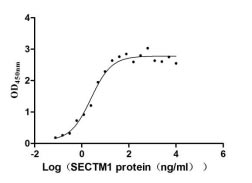
Recombinant Human Secreted and transmembrane protein 1 (SECTM1), partial (Active)
Express system: Mammalian cell
Species: Homo sapiens (Human)
-
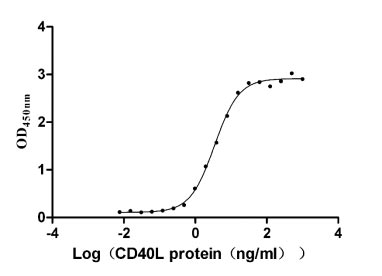
Recombinant Human Tumor necrosis factor receptor superfamily member 5 (CD40), partial (Active)
Express system: Mammalian cell
Species: Homo sapiens (Human)
-
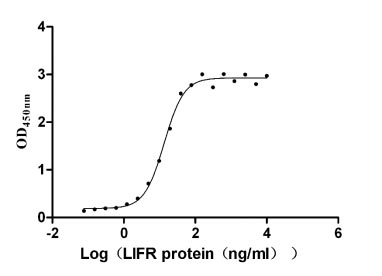
Recombinant Human Leukemia inhibitory factor receptor (LIFR), partial (Active)
Express system: Mammalian cell
Species: Homo sapiens (Human)
-
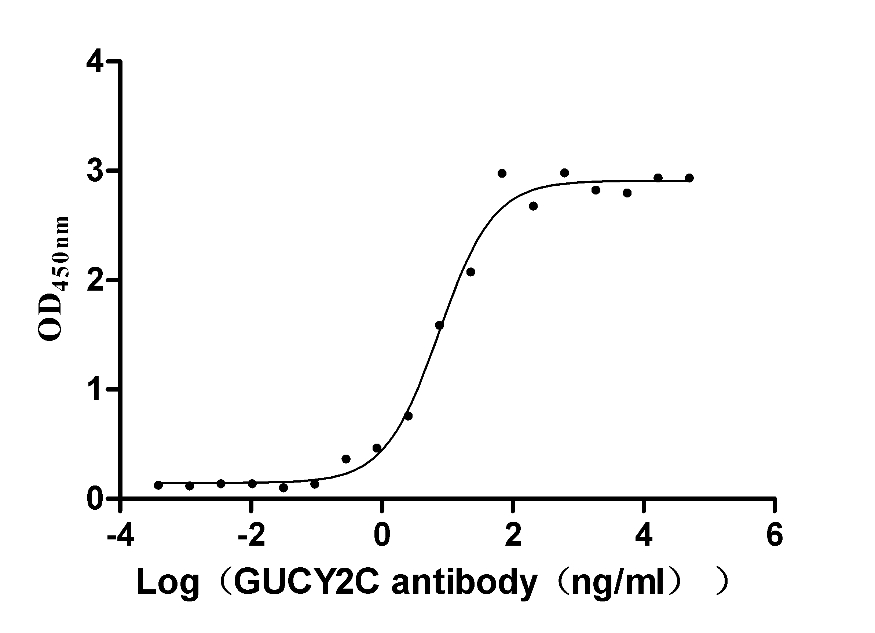
Recombinant Human Heat-stable enterotoxin receptor (GUCY2C), partial (Active)
Express system: Mammalian cell
Species: Homo sapiens (Human)
-
-AC1.jpg)
Recombinant Human HLA class II histocompatibility antigen gamma chain (CD74), partial (Active)
Express system: Mammalian cell
Species: Homo sapiens (Human)
-
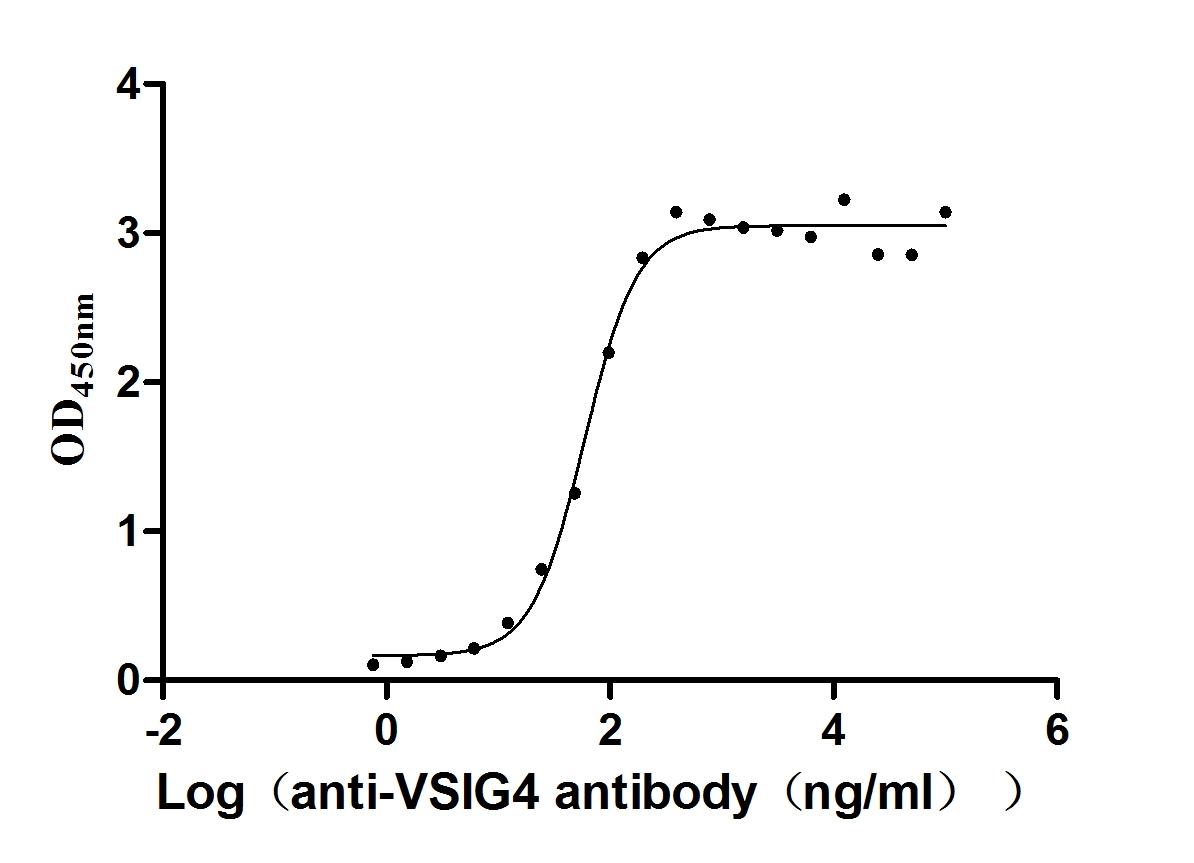
Recombinant Human V-set and immunoglobulin domain-containing protein 4 (VSIG4), partial (Active)
Express system: Mammalian cell
Species: Homo sapiens (Human)
-
-AC1.jpg)
Recombinant Human Dickkopf-related protein 1 (DKK1) (Active)
Express system: Mammalian cell
Species: Homo sapiens (Human)
-
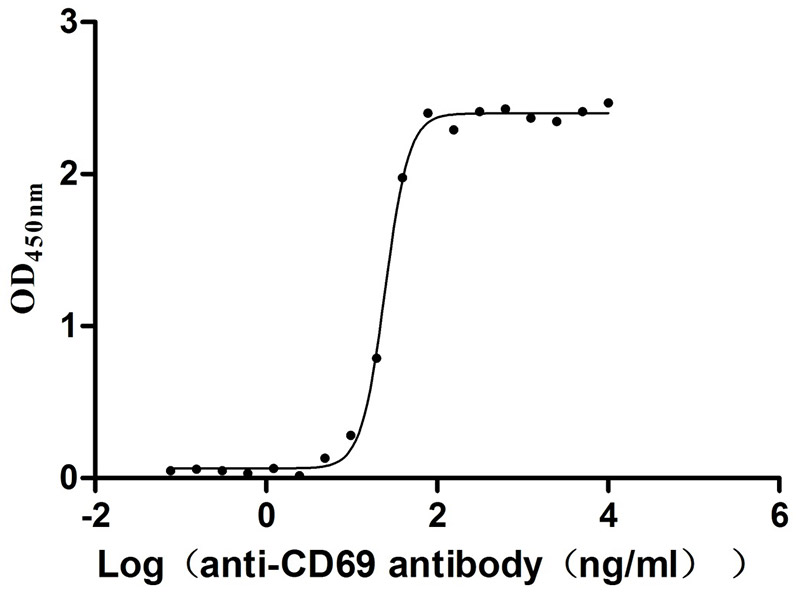
Recombinant Human Early activation antigen CD69 (CD69), partial (Active)
Express system: Mammalian cell
Species: Homo sapiens (Human)