
Recombinant Arabidopsis thaliana Protein CLAVATA 3 (CLV3)
-
中文名稱:Recombinant Arabidopsis thaliana Protein CLAVATA 3(CLV3)
-
貨號:CSB-YP894025DOA
-
規格:
-
來源:Yeast
-
其他:
-
中文名稱:Recombinant Arabidopsis thaliana Protein CLAVATA 3(CLV3)
-
貨號:CSB-EP894025DOA
-
規格:
-
來源:E.coli
-
其他:
-
中文名稱:Recombinant Arabidopsis thaliana Protein CLAVATA 3(CLV3)
-
貨號:CSB-EP894025DOA-B
-
規格:
-
來源:E.coli
-
共軛:Avi-tag Biotinylated
E. coli biotin ligase (BirA) is highly specific in covalently attaching biotin to the 15 amino acid AviTag peptide. This recombinant protein was biotinylated in vivo by AviTag-BirA technology, which method is BriA catalyzes amide linkage between the biotin and the specific lysine of the AviTag.
-
其他:
-
中文名稱:Recombinant Arabidopsis thaliana Protein CLAVATA 3(CLV3)
-
貨號:CSB-BP894025DOA
-
規格:
-
來源:Baculovirus
-
其他:
-
中文名稱:Recombinant Arabidopsis thaliana Protein CLAVATA 3(CLV3)
-
貨號:CSB-MP894025DOA
-
規格:
-
來源:Mammalian cell
-
其他:
產品詳情
-
純度:>85% (SDS-PAGE)
-
基因名:CLV3
-
Uniprot No.:
-
別名:CLV3; At2g27250; F12K2.17Protein CLAVATA 3 [Cleaved into: MCLV3]
-
種屬:Arabidopsis thaliana (Mouse-ear cress)
-
蛋白長度:Full Length of Mature Protein
-
表達區域:22-96
-
氨基酸序列SDLTQAHAH VQGLSNRKMM MMKMESEWVG ANGEAEKAKT KGLGLHEELR TVPSGPDPLH HHVNPPRQPR NNFQLP
-
蛋白標簽:Tag?type?will?be?determined?during?the?manufacturing?process.
The tag type will be determined during production process. If you have specified tag type, please tell us and we will develop the specified tag preferentially. -
產品提供形式:Lyophilized powder
Note: We will preferentially ship the format that we have in stock, however, if you have any special requirement for the format, please remark your requirement when placing the order, we will prepare according to your demand. -
復溶:We recommend that this vial be briefly centrifuged prior to opening to bring the contents to the bottom. Please reconstitute protein in deionized sterile water to a concentration of 0.1-1.0 mg/mL.We recommend to add 5-50% of glycerol (final concentration) and aliquot for long-term storage at -20℃/-80℃. Our default final concentration of glycerol is 50%. Customers could use it as reference.
-
儲存條件:Store at -20°C/-80°C upon receipt, aliquoting is necessary for mutiple use. Avoid repeated freeze-thaw cycles.
-
保質期:The shelf life is related to many factors, storage state, buffer ingredients, storage temperature and the stability of the protein itself.
Generally, the shelf life of liquid form is 6 months at -20°C/-80°C. The shelf life of lyophilized form is 12 months at -20°C/-80°C. -
貨期:Delivery time may differ from different purchasing way or location, please kindly consult your local distributors for specific delivery time.Note: All of our proteins are default shipped with normal blue ice packs, if you request to ship with dry ice, please communicate with us in advance and extra fees will be charged.
-
注意事項:Repeated freezing and thawing is not recommended. Store working aliquots at 4°C for up to one week.
-
Datasheet :Please contact us to get it.
產品評價

靶點詳情
-
功能:Extracellular signal that regulates meristem maintenance. Acts with CLV1 as a ligand-receptor pair in a signal transduction pathway coordinating growth between adjacent meristematic regions and controlling the balance between meristem cell proliferation and differentiation.; The secreted peptide MCLV3 activates a signal transduction cascade to restrict WUSCHEL (WUS) expression, inducing shoot and root meristem consumption as cells differentiated into other organs.
-
基因功能參考文獻:
- The hypothesis explains how the WUSCHEL gene product, synthesized basally in the meristem, induces CLAVATA3-expressing stem cells in the meristem apex but, paradoxically, not in the basal domain where WUSCHEL itself is expressed. The answer involves the activity of the small family of HAIRY MERISTEM genes, which prevent the activation of CLAVATA3 and which are expressed basally in the shoot meristem. PMID: 30072538
- In shoot apical meristem, FHY3 directly represses CLV3, which consequently regulates WUS to maintain the stem cell pool. PMID: 27469166
- structures provide insights about the ligand perception and specific interactions between the CLE peptides and their cognate receptors PMID: 28384649
- CLV3 ligand/CLV1 receptor system initiates a signaling cascade that elevates cytosolic Ca(2+). This cytosolic secondary messenger is involved in the signal transduction cascade linking CLV3/CLV1 to control of gene expression and stem cell fate in the shoot apical meristem (SAM). PMID: 26756833
- Gene NANA regulates cell proliferation in Arabidopsis thaliana shoot apical meristem without interaction with CLV3. PMID: 25752149
- These results suggest that 5-amino acid residues flanking the N-terminus of CLV3 peptide are required for proper cleavages and optimal function in stem cell regulation. PMID: 24369789
- The spatial expression of the two components (WUS and CLV3) of a regulatory network maintaining shoot meristem (SM)stem cells resembles that seen in a vegetative shoot apical meristem, suggesting the rapid initiation and establishment of the new SMs. PMID: 23181633
- The arabinose chain length of CLV3 is important for its biological activity. PMID: 23256149
- Exogenous CLV3 does not trigger FLS2-dependent immune responses. PMID: 22923673
- These studies established a complete contribution map of individual residues in the peptide-coding region of CLV3 for its function in shoot apical meristem. PMID: 22259020
- Data show that the CLAVATA 3 (CLV3) gene, a stem cell marker in shoot apical meristem (SAM), was expressed in expanded regions surrounding the SAM of nsn1 plants. PMID: 22058024
- Downregulation of plasma membrane-localized CLV1 by its CLV3 ligand can account for the buffering of CLV3 signaling in the maintenance of stem cell pools in plants. PMID: 21333538
- CLAVATA3 peptide (CLV3p), expressed and secreted from stem cells and functioning as a key regulator of stem-cell homeostasis in the shoot apical meristem, can trigger immune signalling and pathogen resistance via the flagellin receptor kinase FLS2 PMID: 21499263
- Data show that CLV3 protein CLE processing activity the in vitro cleavage occurs at Arg70, exactly matching in vivo maturation. PMID: 21052783
- In vitro peptide assay also showed that removal of the cysteine pairs did not affect the perception of CLV3 peptides in roots PMID: 20738721
- These observations suggest that RPK2 is an essential component of an independent third pathway for CLV3 signalling PMID: 20978082
- Data show that CRN, rather than CLV1 and CLV2, was able to form homodimers without CLV3 stimulation. PMID: 19843317
- Data suggest that CLV3, CLE19 and CLE40 peptides represent the major active domain of the CLE proteins, which interact with an unknown cell identity-maintaining CLAVATA2 receptor complex in roots, leading to consumption of the root meristem. PMID: 16055633
- study provides evidence that CLV3 signaling in meristems mediates both cell fate specification and growth control through inhibition of cell division rate, as well as that the processes can be temporally uncoupled PMID: 16210497
- Increased CLV3 signaling restricts meristem growth and promotes allocation of peripheral meristem cells into organ primordia. PMID: 16603652
- The CLV3/ESR (CLE) motif is the functional region of the CLV3 protein and it acts independently of the adjacent sequences. PMID: 16751438
- structure of a modified peptide (MCLV3), derived from a conserved motif in the CLV3 sequence; synthetic MCLV3 induced shoot & root meristem consumption as cells differentiated into other organs; results suggest the functional peptide of CLV3 is MCLV3 PMID: 16902141
- biochemical evidence shows that the CLV3 peptide directly binds the CLV1 ectodomain with a dissociation constant of 17.5 nM; results provide direct evidence that CLV3 and CLV1 function as a ligand-receptor pair involved in stem cell maintenance PMID: 18202283
- the novel receptor kinase CORYNE (CRN) and CLV2 act together, and in parallel with CLV1, to perceive the CLV3 signal PMID: 18381924
- The terminal residues of MCLV3 play critical roles in exerting its activity and are important for specific binding to the receptor, CLV1. PMID: 18848920
- Early development of the flower primordium has been studied in Arabidopsis thaliana clavata3-2 (clv3-2) plants with the aid of sequential in vivo replicas and longitudinal microtome sections. PMID: 19088334
顯示更多
收起更多
-
亞細胞定位:Secreted, extracellular space.
-
蛋白家族:CLV3/ESR signal peptide family
-
組織特異性:First detected in heart stage embryos in a patch of cells between the developing cotyledons. In vegetative and inflorescence meristems, expressed in a small cone of cells at the meristem apex.
-
數據庫鏈接:
Most popular with customers
-
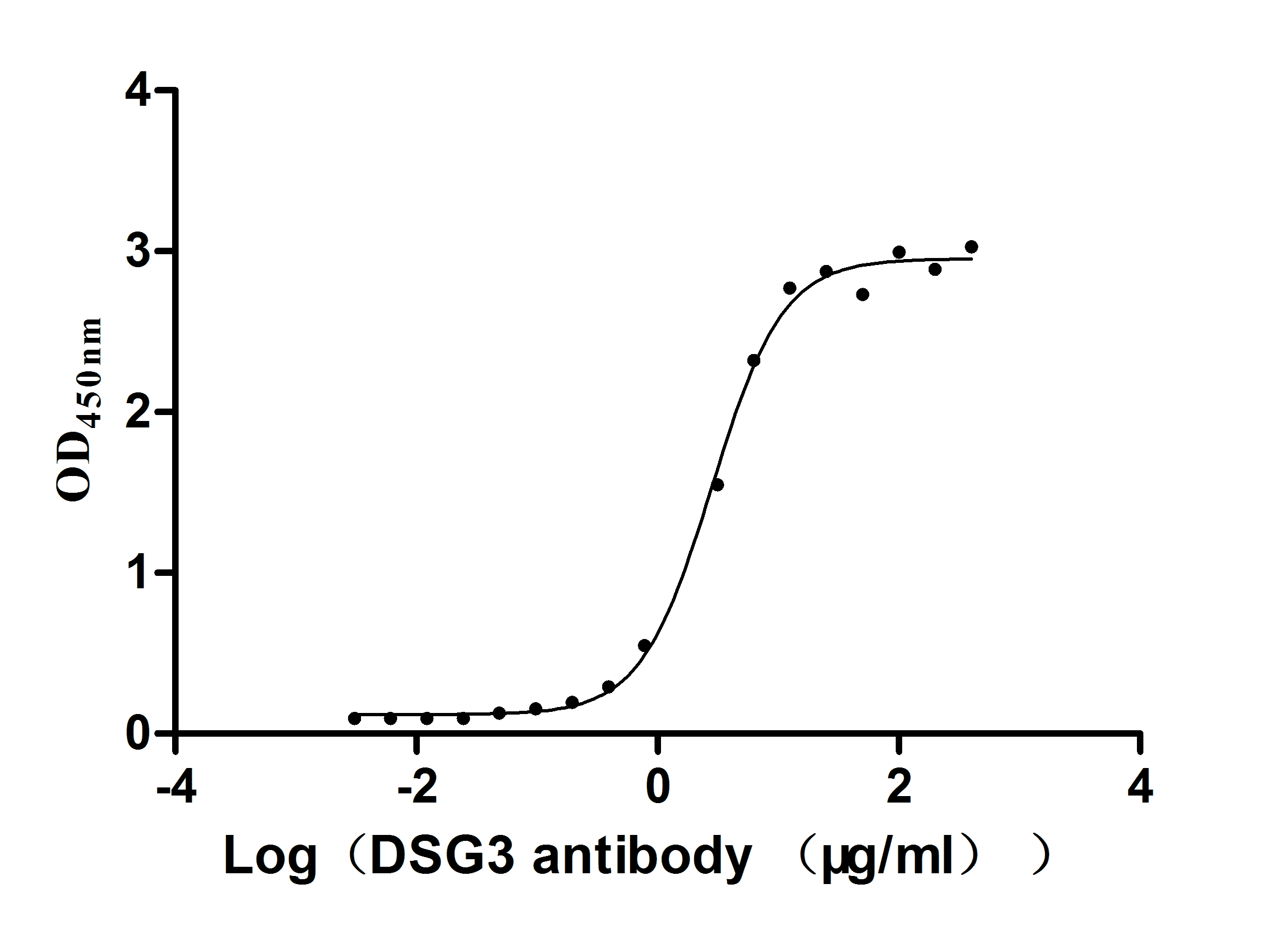
Recombinant Mouse Desmoglein-3 (Dsg3), partial (Active)
Express system: Mammalian cell
Species: Mus musculus (Mouse)
-
-AC1.jpg)
Recombinant Human Claudin-18.2 (CLDN18.2)-VLPs (Active)
Express system: Mammalian cell
Species: Homo sapiens (Human)
-
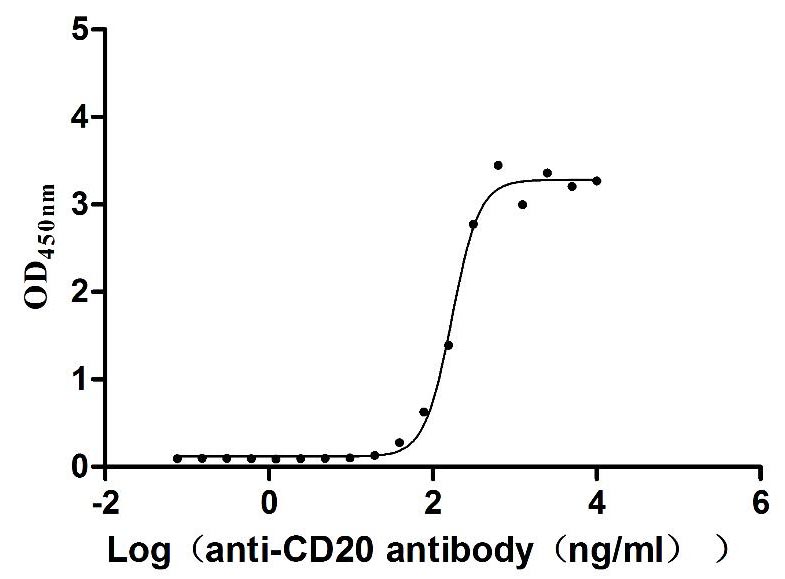
Recombinant Dog B-lymphocyte antigen CD20 (MS4A1)-VLPs (Active)
Express system: Mammalian cell
Species: Canis lupus familiaris (Dog) (Canis familiaris)
-
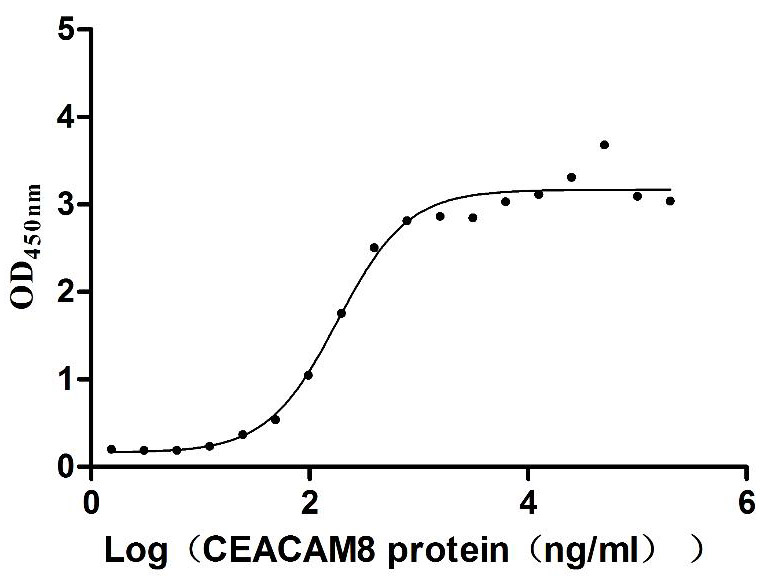
Recombinant Human Carcinoembryonic antigen-related cell adhesion molecule 6 (CEACAM6) (Active)
Express system: Mammalian cell
Species: Homo sapiens (Human)
-
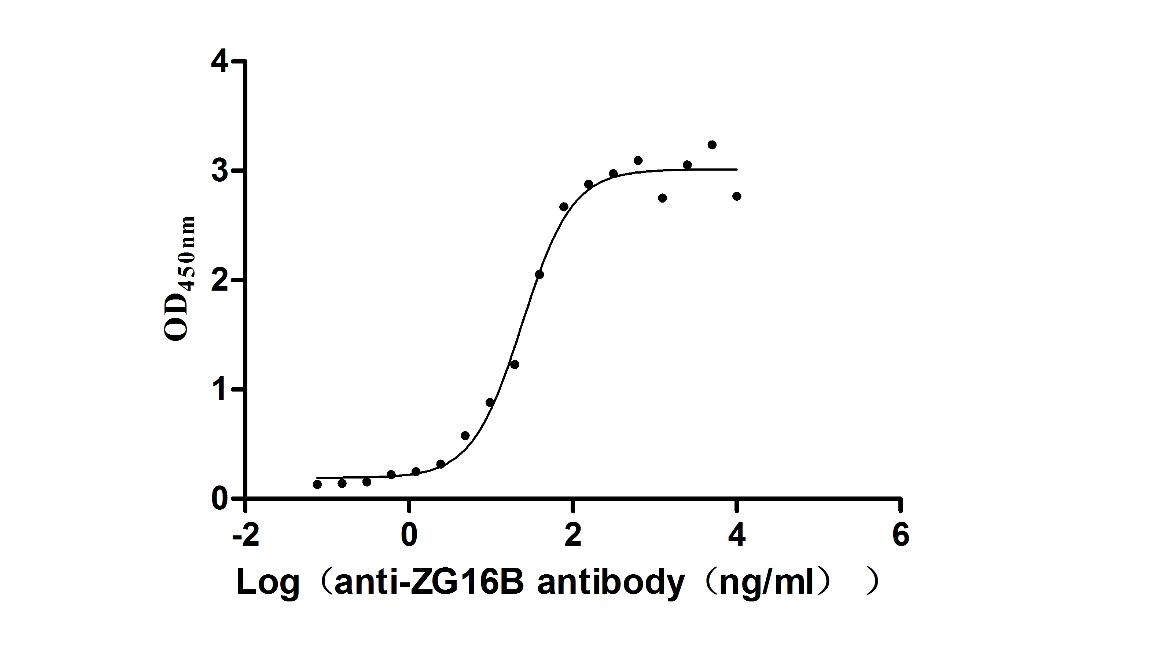
Recombinant Macaca fascicularis zymogen granule protein 16 homolog B (ZG16B) (Active)
Express system: Mammalian cell
Species: Macaca fascicularis (Crab-eating macaque) (Cynomolgus monkey)
-
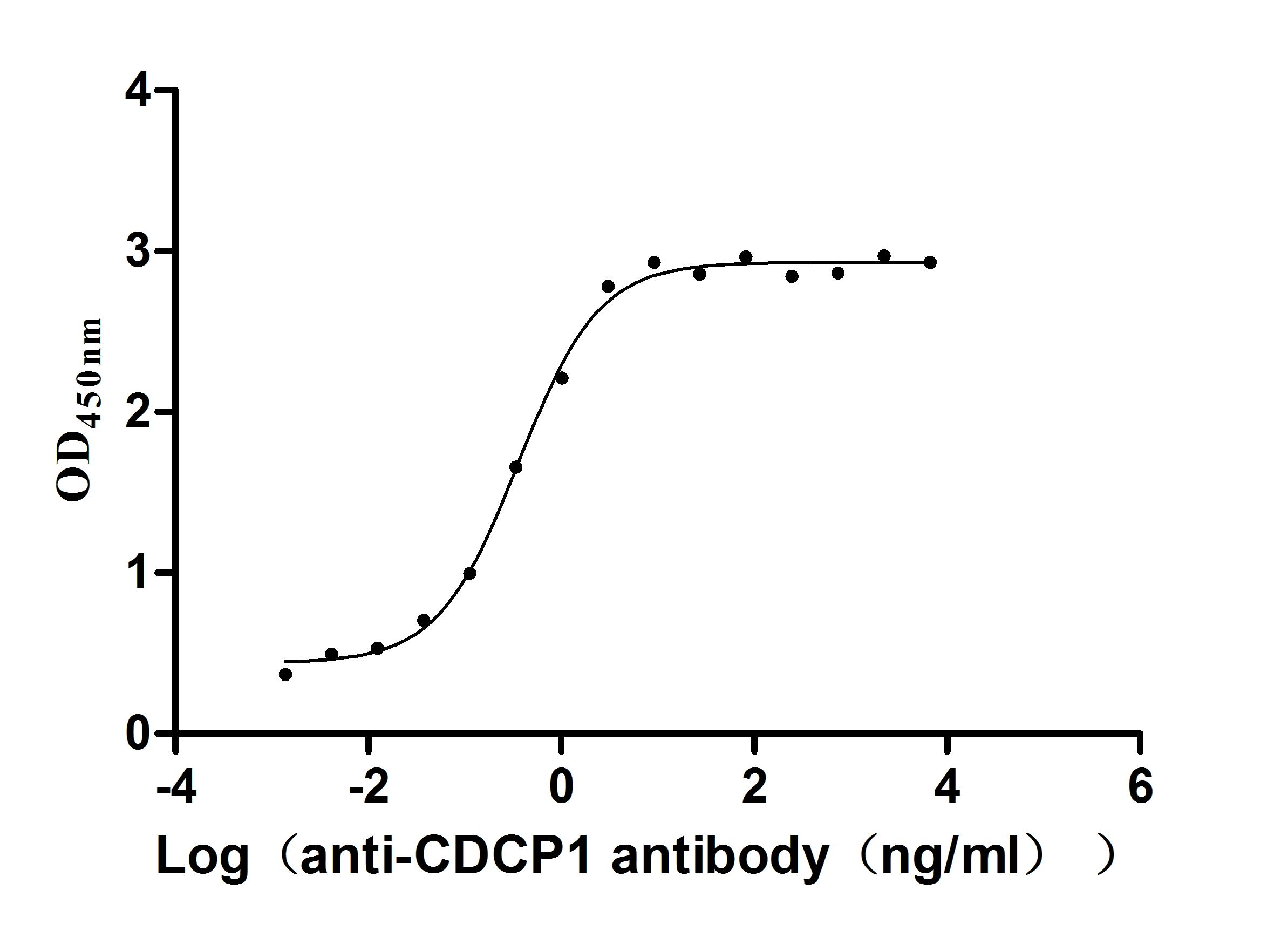
Recombinant Human CUB domain-containing protein 1 (CDCP1), partial (Active)
Express system: Mammalian cell
Species: Homo sapiens (Human)
-
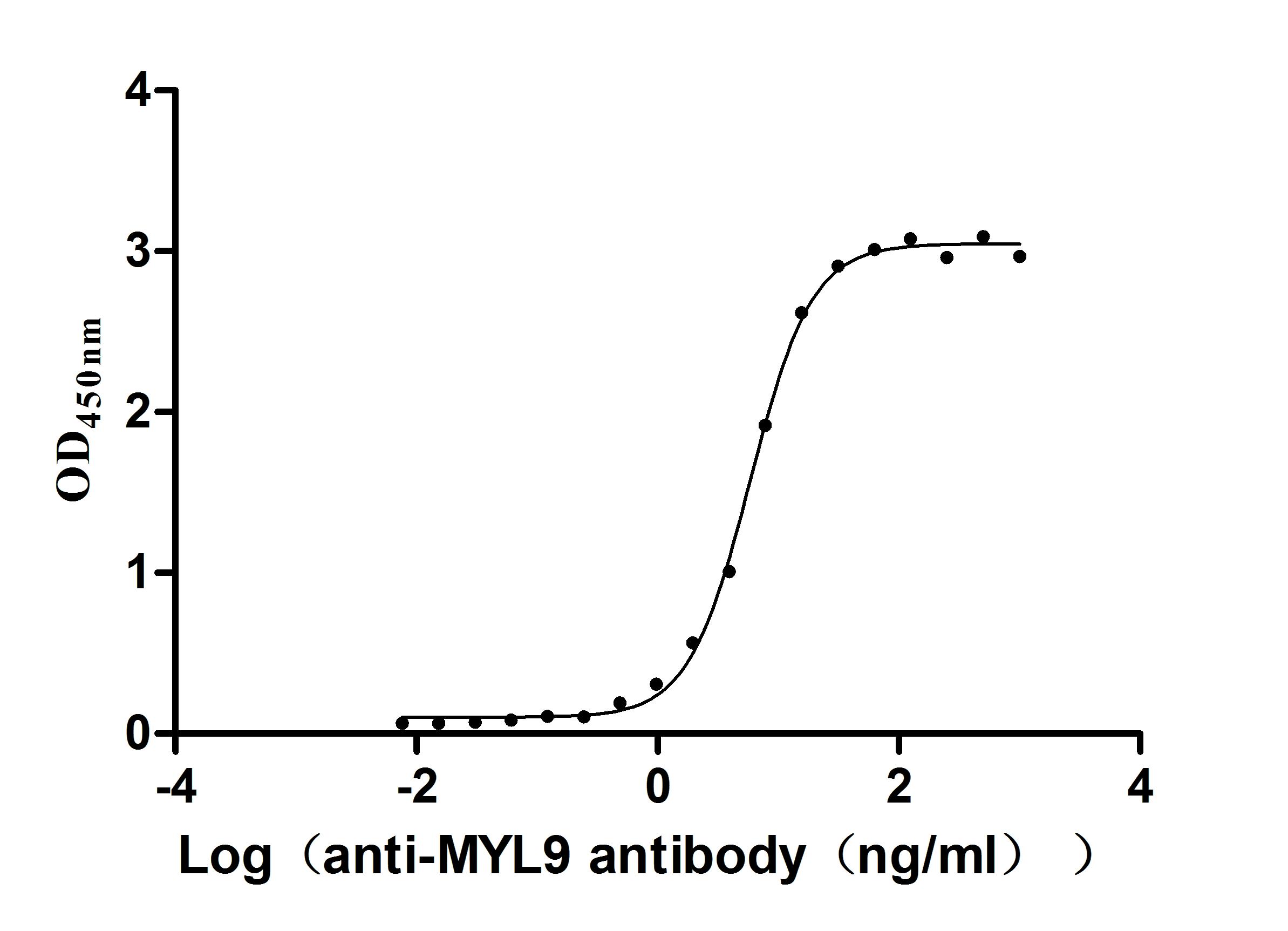
Recombinant Human Myosin regulatory light chain 12A (MYL12A) (Active)
Express system: E.coli
Species: Homo sapiens (Human)
-
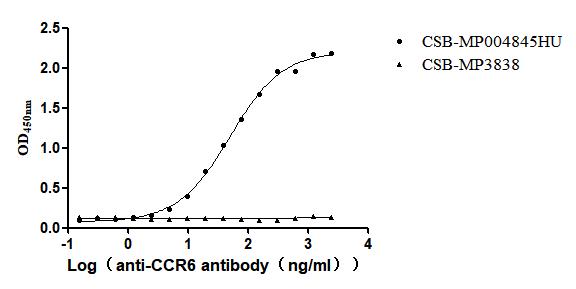
Recombinant Human C-C chemokine receptor type 6(CCR6)-VLPs (Active)
Express system: Mammalian cell
Species: Homo sapiens (Human)