Recombinant Arabidopsis thaliana Cryptochrome-1 (CRY1), partial
-
中文名稱:Recombinant Arabidopsis thaliana Cryptochrome-1(CRY1) ,partial
-
貨號:CSB-YP671487DOA
-
規格:
-
來源:Yeast
-
其他:
-
中文名稱:Recombinant Arabidopsis thaliana Cryptochrome-1(CRY1) ,partial
-
貨號:CSB-EP671487DOA
-
規格:
-
來源:E.coli
-
其他:
-
中文名稱:Recombinant Arabidopsis thaliana Cryptochrome-1(CRY1) ,partial
-
貨號:CSB-EP671487DOA-B
-
規格:
-
來源:E.coli
-
共軛:Avi-tag Biotinylated
E. coli biotin ligase (BirA) is highly specific in covalently attaching biotin to the 15 amino acid AviTag peptide. This recombinant protein was biotinylated in vivo by AviTag-BirA technology, which method is BriA catalyzes amide linkage between the biotin and the specific lysine of the AviTag.
-
其他:
-
中文名稱:Recombinant Arabidopsis thaliana Cryptochrome-1(CRY1) ,partial
-
貨號:CSB-BP671487DOA
-
規格:
-
來源:Baculovirus
-
其他:
-
中文名稱:Recombinant Arabidopsis thaliana Cryptochrome-1(CRY1) ,partial
-
貨號:CSB-MP671487DOA
-
規格:
-
來源:Mammalian cell
-
其他:
產品詳情
-
純度:>85% (SDS-PAGE)
-
基因名:CRY1
-
Uniprot No.:
-
別名:CRY1; BLU1; HY4; At4g08920; T3H13.14; T3H13.5Cryptochrome-1; AtCry; Atcry1; Blue light photoreceptor; Protein BLUE LIGHT UNINHIBITED 1; Protein ELONGATED HYPOCOTYL 4; Protein OUT OF PHASE 2; OOP2
-
種屬:Arabidopsis thaliana (Mouse-ear cress)
-
蛋白長度:Partial
-
蛋白標簽:Tag?type?will?be?determined?during?the?manufacturing?process.
The tag type will be determined during production process. If you have specified tag type, please tell us and we will develop the specified tag preferentially. -
產品提供形式:Lyophilized powder
Note: We will preferentially ship the format that we have in stock, however, if you have any special requirement for the format, please remark your requirement when placing the order, we will prepare according to your demand. -
復溶:We recommend that this vial be briefly centrifuged prior to opening to bring the contents to the bottom. Please reconstitute protein in deionized sterile water to a concentration of 0.1-1.0 mg/mL.We recommend to add 5-50% of glycerol (final concentration) and aliquot for long-term storage at -20℃/-80℃. Our default final concentration of glycerol is 50%. Customers could use it as reference.
-
儲存條件:Store at -20°C/-80°C upon receipt, aliquoting is necessary for mutiple use. Avoid repeated freeze-thaw cycles.
-
保質期:The shelf life is related to many factors, storage state, buffer ingredients, storage temperature and the stability of the protein itself.
Generally, the shelf life of liquid form is 6 months at -20°C/-80°C. The shelf life of lyophilized form is 12 months at -20°C/-80°C. -
貨期:Delivery time may differ from different purchasing way or location, please kindly consult your local distributors for specific delivery time.Note: All of our proteins are default shipped with normal blue ice packs, if you request to ship with dry ice, please communicate with us in advance and extra fees will be charged.
-
注意事項:Repeated freezing and thawing is not recommended. Store working aliquots at 4°C for up to one week.
-
Datasheet :Please contact us to get it.
產品評價

靶點詳情
-
功能:Photoreceptor that mediates primarily blue light inhibition of hypocotyl elongation and photoperiodic control of floral initiation, and regulates other light responses, including circadian rhythms, tropic growth, stomata opening, guard cell development, root development, bacterial and viral pathogen responses, abiotic stress responses, cell cycles, programmed cell death, apical dominance, fruit and ovule development, seed dormancy, and magnetoreception. Photoexcited cryptochromes interact with signaling partner proteins to alter gene expression at both transcriptional and post-translational levels and, consequently, regulate the corresponding metabolic and developmental programs. Blue-light absorbing flavoprotein that activates reversible flavin photoreduction via an electron transport chain comprising a tryptophan triad (W-324, W-377 and W-400), accompanied by a large conformational change upon photoexcitation, or via an alternative electron transport that involves small metabolites, including NADPH, NADH, and ATP. The half-life of the activated signaling state is about 5 minutes. Also involved in the detection of blue/green ratio in light (shade under leaf canopies) and subsequent adaptations on plant growth and development. In darkness, the dark reoxidation of flavin occurs and leads to inactivated state. Perceives low blue light (LBL) and responds by directly contacting two bHLH transcription factors, PIF4 and PIF5, at chromatin on E-box variant 5'-CA[CT]GTG-3' to promote their activity and stimulate specific gene expression to adapt global physiology (e.g. hypocotyl elongation and hyponastic growth in low blue light). When activated by high-intensity blue light, catalyzes direct enzymatic conversion of molecular oxygen O(2) to reactive oxygen species (ROS) and hydrogen peroxide H(2)O(2) in vitro. ROS accumulation upon activation by blue light leads to cell death in protoplasts. Seems essential for blue-light-triggered and singlet oxygen-mediated programmed cell death (PCD). Required for the induction of nuclear genes encoding photoprotective components by GATA24 and GATA28 in extreme light intensities that exceed the electron utilization capacity of the chloroplast. Involved in shortening the circadian clock period, especially at 27 degrees Celsius, in blue light (BL) and required to maintain clock genes expression rhythm. Mediates blue light-induced gene expression and hypocotyl elongation through the inhibition of COP1-mediated degradation of the transcription factors BIT1 and HY5 and via the activation of anion channels at the plasma membrane, probably via auxin signaling. Required for the hypocotyl hook formation in darkness. Involved in blue light-dependent stomatal opening, CHS gene expression, transpiration, inhibition of stem growth and increase of root growth, probably by regulating abscisic acid (ABA). Prevents lateral roots growth by inhibiting auxin transport. Necessary for shade avoidance syndrome (SAS), characterized by leaf hyponasty and reduced lamina/petiole ratio, when exposed to blue light attenuation. Together with phototropins, involved in phototropism regulation by various blue light fluence; blue light attenuates phototropism in high fluence rates (100 umol.m-2.s-1) but enhances phototropism in low fluence rates (<1.0 umol.m-2.s-1). Required for blue/UV-A wavelengths-mediated inhibition of explants shoot regeneration in vitro (e.g. new shoot apical meristems regeneration from excised cotyledons). Modulates anthocyanin accumulation in a PHYA-dependent manner in far-red-light. Acts as a PHYA/PHYB-dependent modulator of chlorophyll accumulation in red light. Contributes to most blue light deetiolation responses. May act as a chemical magnetoreceptor, via magnetically sensitive kinetics and quantum yields of photo-induced flavin / tryptophan radical pairs. The effect of near-null magnetic field on flowering is altered by changes of blue light cycle and intensity in a CRY1/CRY2-dependent manner. Involved in the strigolactone signaling that regulates hypocotyl growth in response to blue light. Modulates temperature-dependent growth and physiology maintenance, especially at warm ambient temperatures, via HFR1-dependent activity.; Implicated in promoting R protein-mediated resistance to Pseudomonas syringae pv. tomato (Pst.) DC3000 under continuous light conditions. Promotes systemic acquired resistance (SAR) and PR gene expression triggered by P. syringae.
-
基因功能參考文獻:
- FIN219 and CRY1 negatively regulated each other by direct interaction in response to jasmonate under blue light. PMID: 29561841
- The results demonstrate a CRY-BIC negative-feedback circuitry that regulates the activity of each other. PMID: 28833729
- Data suggest that cry1 mutation L407F exhibits hyperactivity which is not related to a higher FADH occupancy of the photoreceptor but is caused by a structural alteration close to the ATP-binding site. PMID: 28634231
- Nitrogen signaling functions as a modulator of nuclear CRY1 protein abundance, as well as the input signal for the central circadian clock to interfere with the normal flowering process. PMID: 27325772
- Data show that the effect of 3-bromo-7-nitroindazole (3B7N) treatment on gene expression in cryptochromes cry1cry2 is considerably smaller than that in the wild type, indicating that 3B7N specifically interrupts cryptochrome function in the control of seedling development in a light-dependent manner. PMID: 28011868
- These data illustrate that in vivo modulation by metabolites in the cellular environment may play an important role in cryptochrome signaling. PMID: 26313597
- CRY1 inhibits hypocotyl elongation in blue light through CNT1-mediated repression of the auxin/BR/GAresponsive gene expression. PMID: 25721730
- Reactive oxygen species formation results from cry1 activation and induces cell death in insect cell cultures. PMID: 25728686
- The study shows that ATP binding and aspartate protonation enhance photoinduced electron transfer in plant CRY1. PMID: 25157750
- photoreduction-deficient Trp-triad mutations of CRY1 remained physiologically and biochemically active in Arabidopsis plants. PMID: 26106155
- Based on the loss of degradation of cry2 after prolonged darkness and loss of reversibility of photoactivated cry1 by a pulse of green light, we estimate the in vivo half-lives of the signaling states of cry1 and cry2 to be in the range of 5 and 16 min. PMID: 23398192
- Perception of light by phyA, cry1 or phyB activates ROC1; this in turn reduces the intensity of brassinosteroid signalling and fine-tunes seedling de-etiolation. PMID: 22463079
- The kinetics and quantum yields of photo-induced flavin-tryptophan radical pairs in cryptochrome are magnetically sensitive. PMID: 22421133
- Substitution of a conserved glycine in the PHR domain of cryptochrome 1 confers a constitutive light response. PMID: 21765176
- Blue light shade-avoidance responses required cry1 through mechanisms that showed only limited overlap with the pathways recruited by phyB inactivation. PMID: 21457375
- A significant reduction in the diffusion coefficient of AtCRY1 was observed upon photoexcitation, indicating that a large conformational change occurs in this monomeric protein. PMID: 21875594
- Molecular dynamics simulation of wild-type and mutant cry1 proteins indicated that the L407F mutation considerably reduces the structural flexibility of two solvent-exposed regions of the protein PMID: 20926618
- These results suggest that Arabidopsis CRY1 restrains lateral roots growth by inhibiting auxin transport. PMID: 20133010
- cry1 mutants exhibit reduced changes of mRNA expression in response to not only blue light, but also red light. PMID: 20031923
- A light-dependent conformational change in the carboxy-terminal domain of Arabidopsis Cry1 provides first biochemical evidence for the proposed conformational rearrangement of cryptochromes in response to light. PMID: 15751956
- light-induced flavin reduction via the tryptophan chain is the primary step in the signaling pathway PMID: 15774475
- Irradiation with blue light modifies the properties of the CNT1 dimer, resulting in a change in CCT1, activating CCT1, and eventually triggering the CRY1 signaling pathway. PMID: 15805487
- Primary root elongation in blue light may involve interaction between cryptochrome and auxin signaling pathways. PMID: 16703358
- The blue-light-specific trigger of apoptosis could not be attributed to a photosynthetic reaction or redox change within the chloroplast but to the activation of the blue light/UVA-specific photoreceptor cryptochrome-1. PMID: 17075038
- Cryptochrome activation via flavin photoreduction is a reversible mechanism novel to blue light photoreceptors. PMID: 17237227
- important step toward elucidation of cry1 signaling pathways is the recognition that different subcellular pools of the photoreceptor have different functions PMID: 18003924
- Data report the isolation of new cryptochrome1 (cry1) alleles from a screen for Arabidopsis thaliana genomes uncoupled mutants, which have defects in plastid-to-nucleus signaling. PMID: 18065688
- Data show that cryptochromes are shown to exert a positive effect on phototropic curvature under long-term irradiation conditions. Specifically, in a phot1-deficient genetic background (phot1 mutant), curvature is reduced in the absence of cryptochromes. PMID: 18183416
- Genetic analysis showed that CRYPTOCHROME1 acted independently from 5PTase13. PMID: 18252844
- BIT1 undergoes degradation in darkness and CRY1 functions to stabilize BIT1 in a blue light-dependent manner. PMID: 18397371
- HFR1, which is fine-tuned by cry1, is crucial for regulating global gene expression in cry1-mediated early blue light signaling. PMID: 18974779
- We found that plastid signals that depend on CRY1 can regulate cotyledon expansion and development. PMID: 19140931
顯示更多
收起更多
-
亞細胞定位:Cytoplasm. Nucleus. Nucleus, PML body.
-
蛋白家族:DNA photolyase class-1 family
-
組織特異性:Widely expressed. Expressed in the aerial tissues (e.g. cotyledons and leaf primordia), but not detected in the roots.
-
數據庫鏈接:
Most popular with customers
-
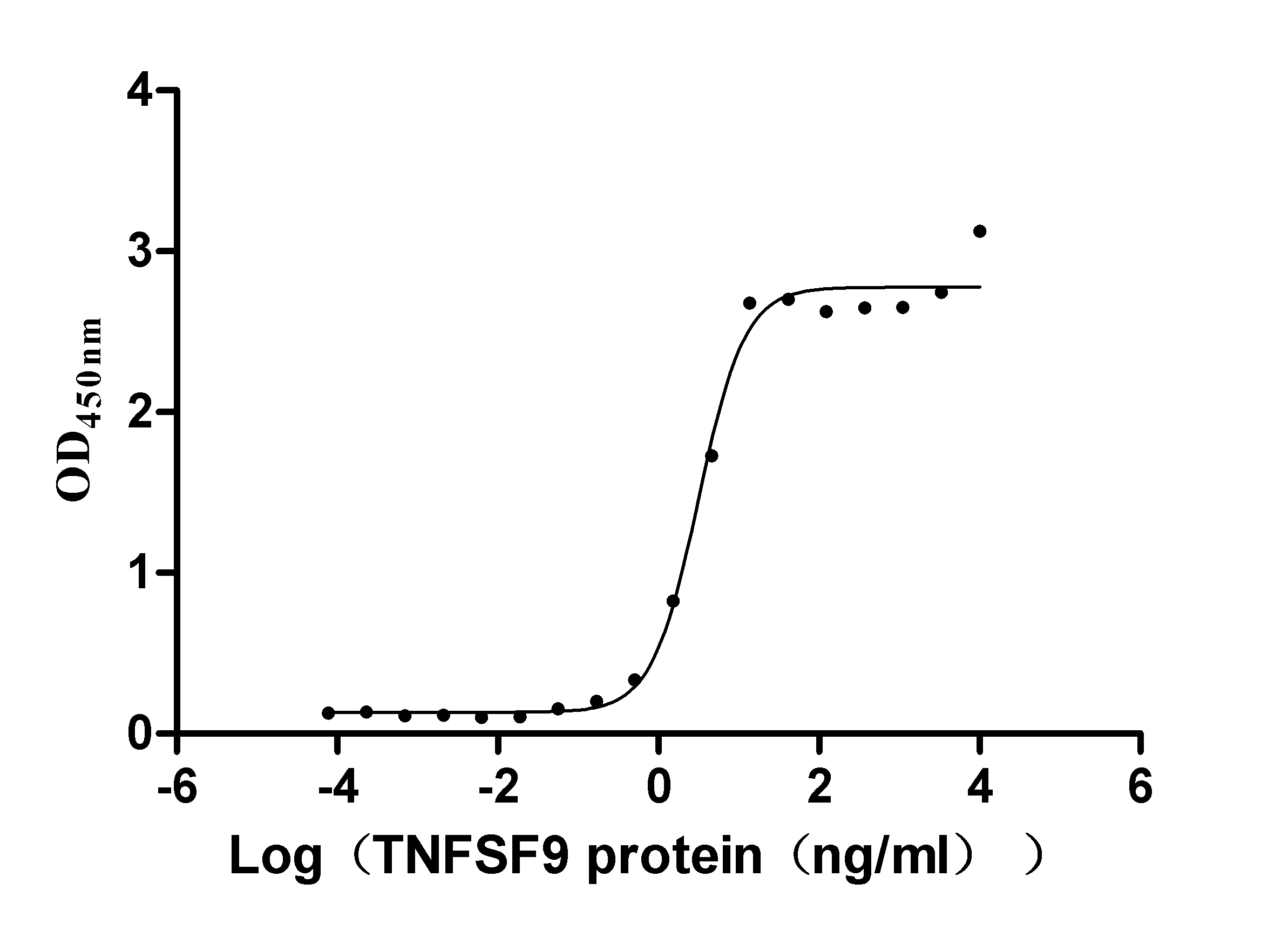
Recombinant Human Tumor necrosis factor ligand superfamily member 9 (TNFSF9), partial (Active)
Express system: Mammalian cell
Species: Homo sapiens (Human)
-
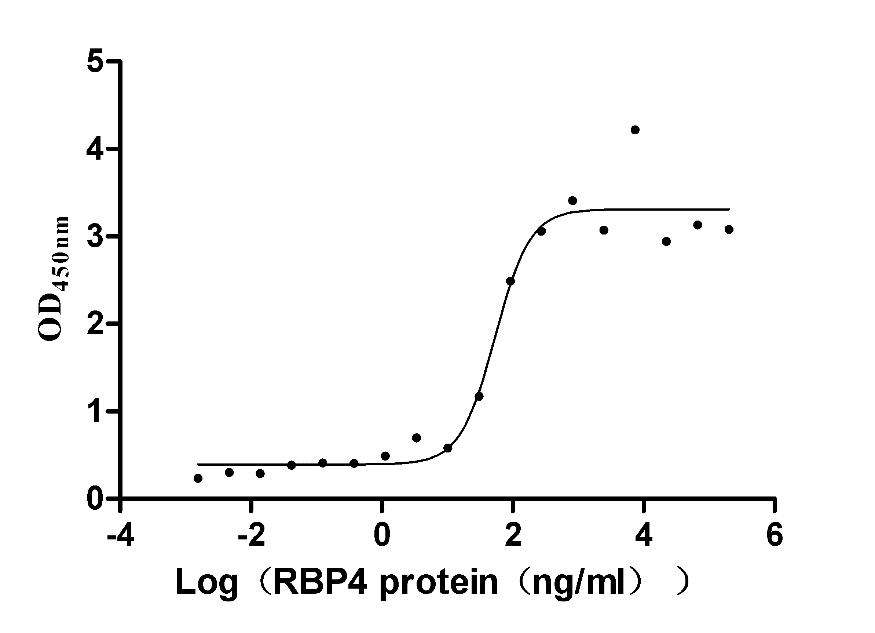
Recombinant Mouse Retinol-binding protein 4 (Rbp4) (Active)
Express system: Mammalian cell
Species: Mus musculus (Mouse)
-
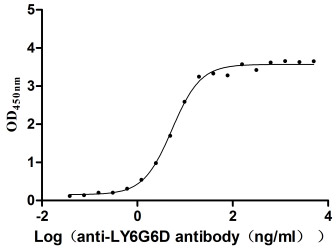
Recombinant Macaca fascicularis lymphocyte antigen 6 family member G6D (LY6G6D) (Active)
Express system: Yeast
Species: Macaca fascicularis (Crab-eating macaque) (Cynomolgus monkey)
-
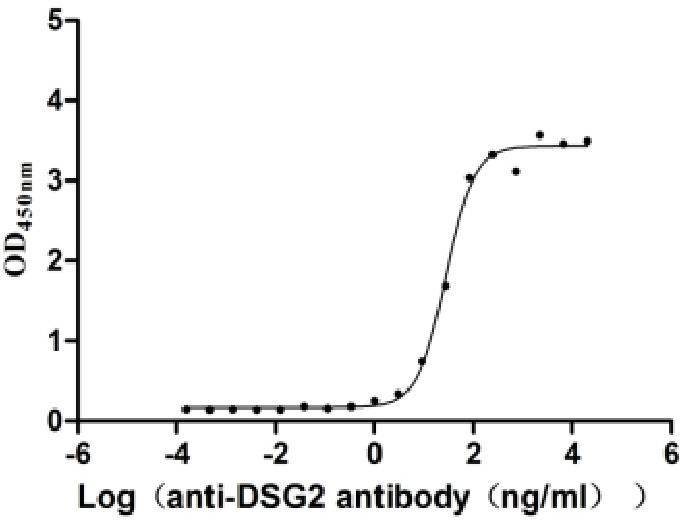
Recombinant Human Desmoglein-2 (DSG2), partial (Active)
Express system: Mammalian cell
Species: Homo sapiens (Human)