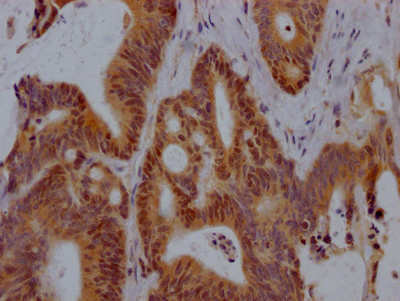
ACSS2 Recombinant Monoclonal Antibody
-
中文名稱:ACSS2 Recombinant Monoclonal Antibody
-
貨號:CSB-RA678530A0HU
-
規格:¥1320
-
圖片:
-
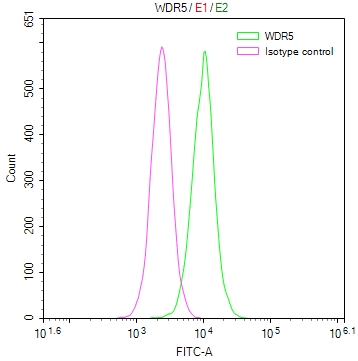
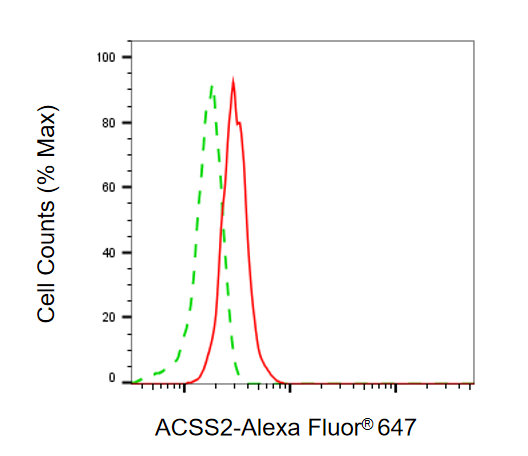 Flow cytometric analysis of ACSS2 expression in HepG2 cells using ACSS2 antibody. Green, isotype control; red, ACSS2.
 -
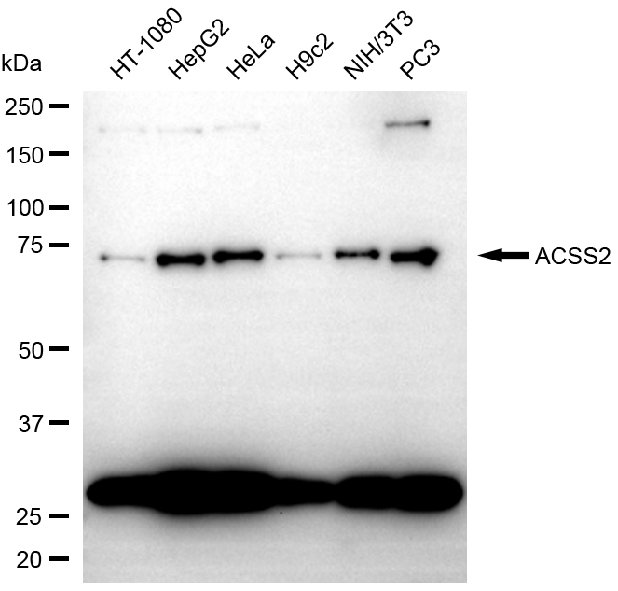 Western blotting analysis using ACSS2 antibody. Total cell lysates (30 μg) from various cell lines were loaded and separated by SDS-PAGE. The blot was incubated with ACSS2 antibody and HRP-conjugated goat anti-rabbit secondary antibody respectively.
-
-
其他:
產品詳情
-
Uniprot No.:
-
基因名:
-
別名:ACSS2; Acyl-CoA Synthetase Short Chain Family Member 2; ACS; DJ1161H23.1; ACAS2; ACSA; Acetyl-Coenzyme A Synthetase 2 (ADP Forming); Acetyl-Coenzyme A Synthetase, Cytoplasmic; Acetyl-CoA Synthetase 1; Acyl-Activating Enzyme; Propionate--CoA Ligase; EC 6.2.1.1; AceCS1; AceCS; ACECS; Acyl-CoA Synthetase Short-Chain Family Member 2; Cytoplasmic Acetyl-Coenzyme A Synthetase; Acetyl-CoA Synthetase; Acetate--CoA Ligase; Acetate Thiokinase; Acetate-CoA Ligase; EC 6.2.1.17; EC 6.2.1
-
反應種屬:Human, Mouse, Rat
-
免疫原:Recombinant Human ACSS2 protein
-
免疫原種屬:Homo sapiens (Human)
-
標記方式:Non-conjugated
-
克隆類型:Monoclonal
-
抗體亞型:Rabbit IgG
-
純化方式:Affinity-chromatography
-
克隆號:11H5
-
濃度:It differs from different batches. Please contact us to confirm it.
-
保存緩沖液:Rabbit IgG in PBS (pH 7.4) containing 50% glycerol, and 0.02% sodium azide.
-
產品提供形式:Liquid
-
應用范圍:ELISA, WB, FC
-
推薦稀釋比:
Application Recommended Dilution WB 1:1000-1:5000 FC 1:200-1:2000 -
Protocols:
-
儲存條件:Upon receipt, store at -20°C or -80°C. Avoid repeated freeze.
-
貨期:Basically, we can dispatch the products out in 1-3 working days after receiving your orders. Delivery time maybe differs from different purchasing way or location, please kindly consult your local distributors for specific delivery time.
-
用途:For Research Use Only. Not for use in diagnostic or therapeutic procedures.
產品評價

相關產品
靶點詳情
-
功能:Catalyzes the synthesis of acetyl-CoA from short-chain fatty acids. Acetate is the preferred substrate. Can also utilize propionate with a much lower affinity.
-
基因功能參考文獻:
- High ACSS2 expression is associated with renal cell carcinoma. PMID: 29503142
- A novel biologic role for ACSS2 in recycling of nuclear acetate for histone acetylation to promote lysosomal and autophagy-related gene expression and counteract nutritional stress, highlighting the importance of ACSS2 in maintaining autophagy and lysosome-mediated cellular energy homeostasis during tumor development. PMID: 28820290
- ACLY and ACSS2 are both activated to produce cytosolic Ac-CoA from glucose carbon for lipogenesis during human cytomegalovirus infection. PMID: 28167750
- ACSS2 is an important factor for promoting RCC development and is essential for cell migration and invasion, which it promotes by increasing the expression of LAMP1. PMID: 29444517
- these findings suggest that downregulation of acetyl-CoA synthetase-2 expression is a metabolic hallmark of tumor progression and aggressive behavior in colorectal carcinoma. PMID: 27713423
- Exogenous acetate augments Acss2/HIF-2 dependent cancer growth and metastasis in cell culture and mouse models PMID: 29281714
- The nuclear-cytosolic acetyl-CoA synthetase 2 recaptures acetate released from histone deacetylation for recycling by histone acetyltransferases. PMID: 28099844
- In a Honduran population, the odds of having nonsyndromic cleft lip/palate (NSCLP) among carriers of the ACSS2 variant was 4.0 with a carrier frequency of 7.1% in unrelated affected and 1.9% in unrelated unaffected individuals. In a Colombian population, the odds of having NSCLP among carriers of the ACSS2 variant was 2.6 with a carrier frequency of 10.0% in unrelated affected and 4.1% in unrelated unaffected individuals. PMID: 28543373
- In the nucleus, ACSS2 binds to transcription factor EB and translocates to lysosomal and autophagy gene promoter regions, where ACSS2 incorporates acetate generated from histone acetylation turnover to locally produce acetyl-CoA for histone H3 acetylation in these regions and promote lysosomal biogenesis, autophagy, cell survival, and brain tumorigenesis. PMID: 28552616
- ACSS2 is essential for glucose-independent acetate-mediated cell survival and tumor growth. PMID: 27539851
- Loss of ACSS2 expression is associated with with gastric cancer. PMID: 26381042
- Study revealed that the activity of acetyl-CoA synthetase 2 (ACSS2) contributes to cancer cell growth under low-oxygen and lipid-depleted conditions. PMID: 25584894
- Observations suggest that ACSS2 is expressed to a significant extent in particular tumor types, including triple-negative breast cancers. PMID: 25525877
- Study shows that ACSS2 is upregulated in the human orthotopic tumor and primary human tumors, as well as a murine glioma model; the tumors do not oxidize [U-(13)C]glutamine. In vivo oxidation of [1,2-(13)C]acetate was validated in brain tumor patients and was correlated with expression of acetyl-CoA synthetase enzyme 2, ACSS2. PMID: 25525878
- During hypoxia, ACSS2 modulates interactions of the acetylase/coactivator CBP with the stress-responsive transcription factor, HIF-2. These interactions include acetylation of HIF-2 by CBP as well as stable HIF-2/CBP complex formation, both of which are required for maximal HIF-2 signaling. Thus, ACSS2 links changes in metabolism that occur during stress with activation of a selective nuclear signaling pathway. PMID: 25108527
- Ritonavir (at 100 mg once daily and 100 mg twice daily significantly down-regulated acyl-CoA synthetase short-chain family member 2 in 20 healthy individuals. PMID: 20353815
- Because the activity of a bacterial ortholog of AceCS2, called ACS, is controlled via deacetylation by a bacterial sirtuin protein, our observation highlights the conservation of a metabolic regulatory pathway from bacteria to humans PMID: 16788062
- The patterns of (18)F-FDG and (11)C-acetate uptake seemed to complement each other in both human HCC and HCC cell lines. PMID: 19617323
顯示更多
收起更多
-
亞細胞定位:Cytoplasm, cytosol.
-
蛋白家族:ATP-dependent AMP-binding enzyme family
-
數據庫鏈接:
Most popular with customers
-
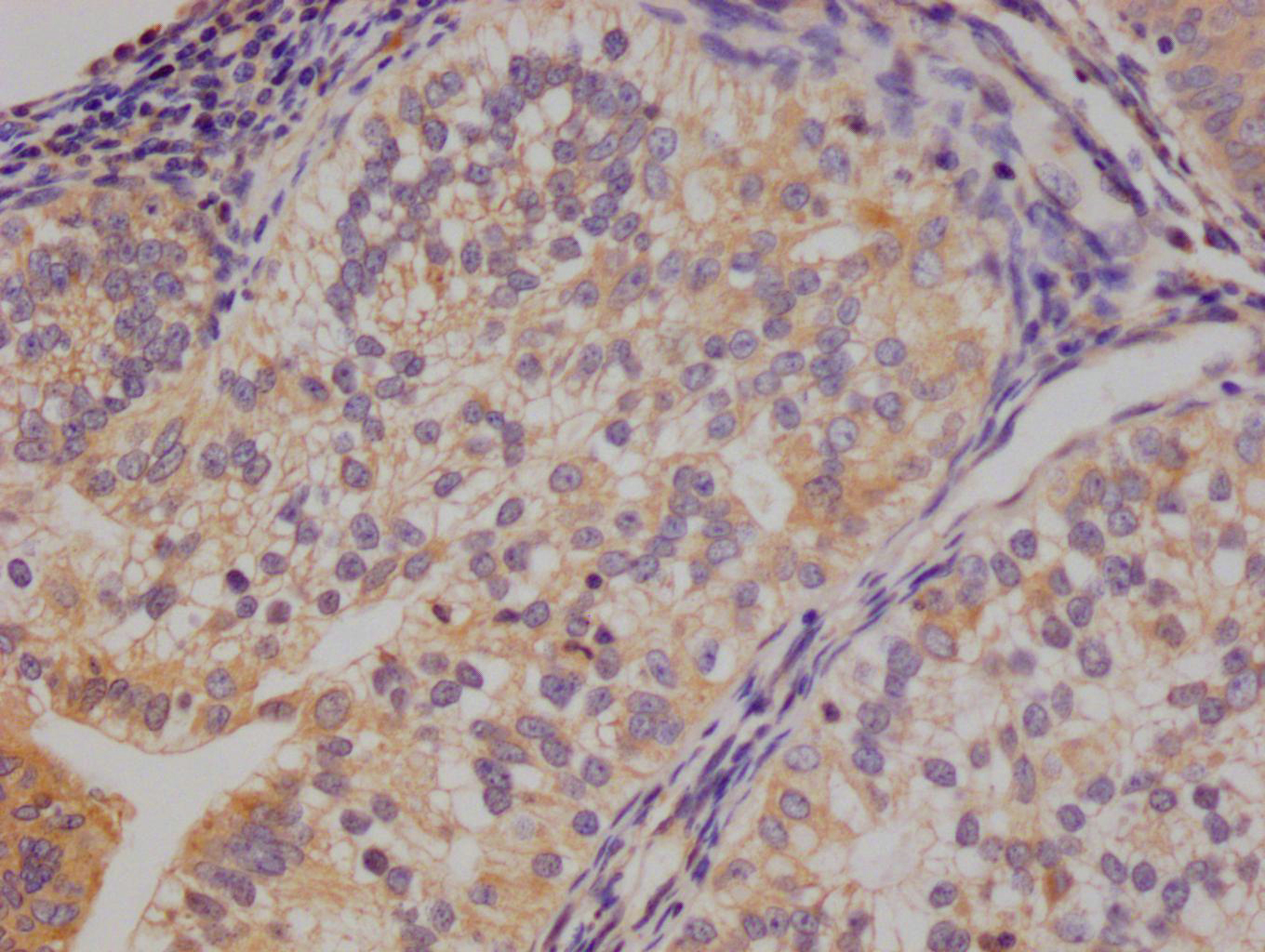
-
YWHAB Recombinant Monoclonal Antibody
Applications: ELISA, WB, IHC, IF, FC
Species Reactivity: Human, Mouse, Rat
-
-
-
-
-
-