SEMA4A Antibody
-
中文名稱:SEMA4A兔多克隆抗體
-
貨號:CSB-PA954171
-
規(guī)格:¥1100
-
圖片:
-
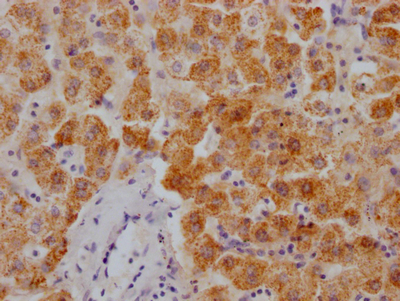
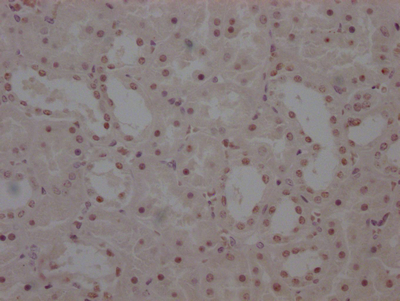
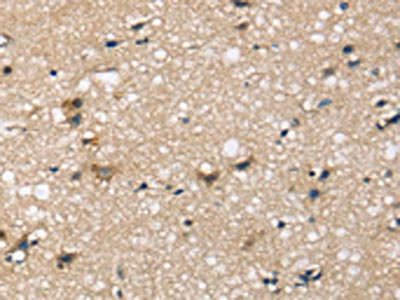 The image on the left is immunohistochemistry of paraffin-embedded Human brain tissue using CSB-PA954171(SEMA4A Antibody) at dilution 1/45, on the right is treated with fusion protein. (Original magnification: ×200)
-
-
其他:
產(chǎn)品詳情
-
Uniprot No.:
-
基因名:
-
別名:CORD10 antibody; RP11 54H19 2 antibody; RP35 antibody; SEM4A_HUMAN antibody; Sema B antibody; Sema domain immunoglobulin domain Ig transmembrane domain TM and short cytoplasmic domain 4A antibody; Sema domain immunoglobulin domain Ig transmembrane domain TM and short cytoplasmic domain semaphorin 4A antibody; Sema domain, immunoglobulin domain (Ig), transmembrane domain (TM) and short cytoplasmic domain, (semaphorin) antibody; Sema4a antibody; SEMAB antibody; Semaphorin 4A precursor antibody; Semaphorin B antibody; Semaphorin-4A antibody; Semaphorin-B antibody; SEMB antibody
-
宿主:Rabbit
-
反應(yīng)種屬:Human
-
免疫原:Fusion protein of Human SEMA4A
-
免疫原種屬:Homo sapiens (Human)
-
標(biāo)記方式:Non-conjugated
-
抗體亞型:IgG
-
純化方式:Antigen affinity purification
-
濃度:It differs from different batches. Please contact us to confirm it.
-
保存緩沖液:-20°C, pH7.4 PBS, 0.05% NaN3, 40% Glycerol
-
產(chǎn)品提供形式:Liquid
-
應(yīng)用范圍:ELISA,IHC
-
推薦稀釋比:
Application Recommended Dilution ELISA 1:2000-1:10000 IHC 1:30-1:150 -
Protocols:
-
儲存條件:Upon receipt, store at -20°C or -80°C. Avoid repeated freeze.
-
貨期:Basically, we can dispatch the products out in 1-3 working days after receiving your orders. Delivery time maybe differs from different purchasing way or location, please kindly consult your local distributors for specific delivery time.
-
用途:For Research Use Only. Not for use in diagnostic or therapeutic procedures.
產(chǎn)品評價

相關(guān)產(chǎn)品
靶點詳情
-
功能:Cell surface receptor for PLXNB1, PLXNB2, PLXNB3 and PLXND1 that plays an important role in cell-cell signaling. Regulates glutamatergic and GABAergic synapse development. Promotes the development of inhibitory synapses in a PLXNB1-dependent manner and promotes the development of excitatory synapses in a PLXNB2-dependent manner. Plays a role in priming antigen-specific T-cells, promotes differentiation of Th1 T-helper cells, and thereby contributes to adaptive immunity. Promotes phosphorylation of TIMD2. Inhibits angiogenesis. Promotes axon growth cone collapse. Inhibits axonal extension by providing local signals to specify territories inaccessible for growing axons.
-
基因功能參考文獻:
- Human oligodendrocytes undergo apoptosis when exposed to Sema4A and take up H-ferritin for meeting iron requirements and that these functions are mediated via the Tim-1 receptor. H-ferritin can block Sema4A-mediated cytotoxicity. Sema4A is detectable in the CSF of multiple sclerosis patients and HIV-seropositive persons and can induce oligodendrocyte cell death. PMID: 29457657
- Advanced peri-implantitis lesions showed higher levels of gene expression for Sem3A and Sem4D and lower levels of Sem4A in comparison to tissues obtained from a healthy dental implant. PMID: 29763494
- Here we show three families with retinal degeneration in which unaffected family members are either homozygous or heterozygous for the variant. The p.R713Q variant in SEMA4A is insufficient to cause either autosomal recessive or autosomal dominant retinitis pigmentosa and is unlikely to be pathogenic. PMID: 28805479
- ILT-4 is a receptor for hSEMA4A)on activated CD4(+) T cells. hSEMA4A is highly expressed in human asthmatic lung tissue. PMID: 29467366
- Suggest a role for Plexin-B1 as a ligand and Sema4A as a receptor and characterize a reverse signaling pathway downstream of Sema4A regulating cell migration via Scrib. PMID: 28007914
- SEMA 4A confers doxorubicin resistance on hepatocellular carcinoma by inducing epithelialemesenchymal transition. PMID: 27697528
- In this review, we summarized the current findings on neuroimmune Sema4A and Sema4D molecules in chronic inflammation underlying many diseases and discussed their positive or negative impacts on the implicated molecular and cellular processes PMID: 27554682
- Sema4A activated the Akt pathway via Plexin D1 receptor in lung fibroblasts.Lung fibroblasts show elevated levels of Sema4A expression in systemic sclerosis patients. PMID: 26648031
- Data suggest that increased expression of semaphorin 4A (Sema4A) is required to promote inflammation of rheumatoid arthritis (RA). PMID: 26303122
- Germline variants in SEMA4A predispose to familial colorectal cancer type X. PMID: 25307848
- PACAP released from retinal neural cells (photoreceptors or optic nerve cells) may regulate Sema4A expression in retinal pigment epithelial cells and thereby contribute to the maintenance of retinal structure and function. PMID: 25515530
- These results indicate the importance of the Sema4A protein conformation in human and mouse retina homeostasis. PMID: 23360997
- Sema4A plays an inhibitory role in T helper (Th)2-type allergic diseases, such as allergic asthma, in a fraction of Sema4a-deficient transgenic mice. PMID: 23007237
- mutations in SEMA4A may cause susceptibility to light exposure, oxidative stress, and ER stress, which may be involved in the progression and pathology of RP. PMID: 22956603
- Dendritic cell-derived SEM4A is not only critical for T helper type (Th)1 cells but also for Th17 cell differentiation, and multiple sclerosis patients with high Sema4A levels exhibit Th17 cell skewing. PMID: 22491253
- Mutations within the SEMA4A gene cause various retinal degnerative diseases. PMID: 16199541
顯示更多
收起更多
-
相關(guān)疾病:Retinitis pigmentosa 35 (RP35); Cone-rod dystrophy 10 (CORD10)
-
亞細胞定位:Cell membrane; Single-pass type I membrane protein.
-
蛋白家族:Semaphorin family
-
數(shù)據(jù)庫鏈接:
Most popular with customers
-
-
YWHAB Recombinant Monoclonal Antibody
Applications: ELISA, WB, IHC, IF, FC
Species Reactivity: Human, Mouse, Rat
-
Phospho-YAP1 (S127) Recombinant Monoclonal Antibody
Applications: ELISA, WB, IHC
Species Reactivity: Human
-
-
-
-
-