RORA Antibody
-
中文名稱:RORA兔多克隆抗體
-
貨號:CSB-PA182231
-
規格:¥1100
-
圖片:
-
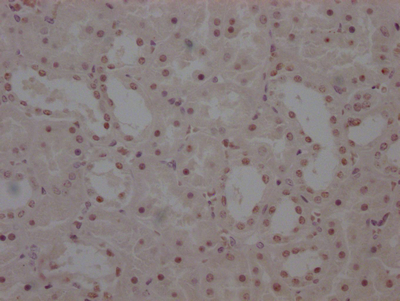
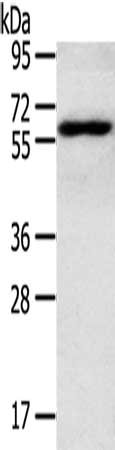 Gel: 8%SDS-PAGE, Lysate: 40 μg, Lane: TM4 cells, Primary antibody: CSB-PA182231(RORA Antibody) at dilution 1/400, Secondary antibody: Goat anti rabbit IgG at 1/8000 dilution, Exposure time: 3 minutes
-
-
其他:
產品詳情
-
Uniprot No.:
-
基因名:
-
別名:fhl2a antibody; NR1F1 antibody; Nuclear receptor ROR alpha antibody; Nuclear receptor ROR-alpha antibody; Nuclear receptor RZR-alpha antibody; Nuclear receptor subfamily 1 group F member 1 antibody; RAR related orphan receptor A antibody; RAR related orphan receptor alpha antibody; RAR-related orphan receptor A antibody; Retinoid-related orphan receptor-alpha antibody; Rora antibody; RORA_HUMAN antibody; RZR alpha antibody; RZR-ALPHA antibody; RZRA antibody; Transcription factor RZR alpha antibody
-
宿主:Rabbit
-
反應種屬:Human
-
免疫原:Synthetic peptide of Human RORA
-
免疫原種屬:Homo sapiens (Human)
-
標記方式:Non-conjugated
-
抗體亞型:IgG
-
純化方式:Antigen affinity purification
-
濃度:It differs from different batches. Please contact us to confirm it.
-
保存緩沖液:-20°C, pH7.4 PBS, 0.05% NaN3, 40% Glycerol
-
產品提供形式:Liquid
-
應用范圍:ELISA,WB
-
推薦稀釋比:
Application Recommended Dilution ELISA 1:2000-1:5000 WB 1:500-1:2000 -
Protocols:
-
儲存條件:Upon receipt, store at -20°C or -80°C. Avoid repeated freeze.
-
貨期:Basically, we can dispatch the products out in 1-3 working days after receiving your orders. Delivery time maybe differs from different purchasing way or location, please kindly consult your local distributors for specific delivery time.
-
用途:For Research Use Only. Not for use in diagnostic or therapeutic procedures.
產品評價

相關產品
靶點詳情
-
功能:Nuclear receptor that binds DNA as a monomer to ROR response elements (RORE) containing a single core motif half-site 5'-AGGTCA-3' preceded by a short A-T-rich sequence. Key regulator of embryonic development, cellular differentiation, immunity, circadian rhythm as well as lipid, steroid, xenobiotics and glucose metabolism. Considered to have intrinsic transcriptional activity, have some natural ligands like oxysterols that act as agonists (25-hydroxycholesterol) or inverse agonists (7-oxygenated sterols), enhancing or repressing the transcriptional activity, respectively. Recruits distinct combinations of cofactors to target genes regulatory regions to modulate their transcriptional expression, depending on the tissue, time and promoter contexts. Regulates genes involved in photoreceptor development including OPN1SW, OPN1SM and ARR3 and skeletal muscle development with MYOD1. Required for proper cerebellum development. Regulates SHH gene expression, among others, to induce granule cells proliferation as well as expression of genes involved in calcium-mediated signal transduction. Regulates the circadian expression of several clock genes, including CLOCK, ARNTL/BMAL1, NPAS2 and CRY1. Competes with NR1D1 for binding to their shared DNA response element on some clock genes such as ARNTL/BMAL1, CRY1 and NR1D1 itself, resulting in NR1D1-mediated repression or RORA-mediated activation of clock genes expression, leading to the circadian pattern of clock genes expression. Therefore influences the period length and stability of the clock. Regulates genes involved in lipid metabolism such as apolipoproteins APOA1, APOA5, APOC3 and PPARG. In liver, has specific and redundant functions with RORC as positive or negative modulator of expression of genes encoding phase I and phase II proteins involved in the metabolism of lipids, steroids and xenobiotics, such as CYP7B1 and SULT2A1. Induces a rhythmic expression of some of these genes. In addition, interplays functionally with NR1H2 and NR1H3 for the regulation of genes involved in cholesterol metabolism. Also involved in the regulation of hepatic glucose metabolism through the modulation of G6PC1 and PCK1. In adipose tissue, plays a role as negative regulator of adipocyte differentiation, probably acting through dual mechanisms. May suppress CEBPB-dependent adipogenesis through direct interaction and PPARG-dependent adipogenesis through competition for DNA-binding. Downstream of IL6 and TGFB and synergistically with RORC isoform 2, is implicated in the lineage specification of uncommitted CD4(+) T-helper (T(H)) cells into T(H)17 cells, antagonizing the T(H)1 program. Probably regulates IL17 and IL17F expression on T(H) by binding to the essential enhancer conserved non-coding sequence 2 (CNS2) in the IL17-IL17F locus. Involved in hypoxia signaling by interacting with and activating the transcriptional activity of HIF1A. May inhibit cell growth in response to cellular stress. May exert an anti-inflammatory role by inducing CHUK expression and inhibiting NF-kappa-B signaling.
-
基因功能參考文獻:
- three copy-number variant deletions (two de novo and one dominantly inherited in three generations), one de novo disrupting duplication, and nine de novo point mutations (three truncating, one canonical splice site, and five missense mutations) involving RORA, are reported. PMID: 29656859
- We have identified RORalpha as a regulator of Treg genes responsible for suppressing allergic skin inflammation and also documented higher expression of RORalpha in skin-resident Tregs than in peripheral blood circulating Tregs in humans, suggesting that RORalpha and the TL1A-DR3 circuit could be therapeutically targeted in atopic dermatitis. PMID: 29500225
- RORA downregulation may be a potential indicator of positive response to interferon beta treatment of multiple sclerosis patients PMID: 29889063
- In the present study we have detected an association between rs4774388 genotype and breast cancer risk in a population of Iranian breast cancer patients. PMID: 28598825
- rs4774388-TT genotype was significantly higher in patients compared with controls and was associated with autism spectrum disorder risk in dominant inheritance model PMID: 28608249
- human melanoma development and aggressiveness is associated with decreased expression of RORalpha and RORgamma, suggesting that RORs could be important in melanoma progression and host responses against the tumor PMID: 27542227
- CYP11A1- derived hydroxyvitamin D derivatives as "inverse" agonists on ROR-alpha and ROR-gamma. PMID: 27693422
- The expression RORalpha is significantly elevated under hypoxic conditions in keratinocytes in an HIF-1alpha dependent manner. PMID: 28332183
- RORgammat and RORalpha have overlapping roles in human Th17 cell differentiation through regulation of a defined common set of Th17 genes PMID: 28763457
- Retinoid-related orphan receptor alpha-regulated development of the mouse cerebellum has a distinct critical period for (1) lengthening Purkinje cell (PC) primary dendrite stems and the eventual increase in the thickness of the molecular layer and (2) the establishment of mGluR signaling and associated removal of surplus climbing fibers from PCs. PMID: 26122696
- findings strongly suggest that CLDND1 is a direct RORalpha target PMID: 28130419
- TRIB3 promotes acute promyelocytic leukemia progression through stabilization of the oncoprotein PML-RARalpha and inhibition of p53-mediated senescence. PMID: 28486108
- the RAR-related orphan receptor-a gene (RORA) and the Peroxisome Proliferator-Activated Receptor Gamma, Coactivator 1 Alpha gene (PPARGC1A or PGC-1alpha) were significantly associated with the Li response. Our results suggest genetic associations between Li response and these two close biological partners: PPARGC1A and RORA involved in circadian rhythms and bioenergetics processes in Li response PMID: 27324142
- The present study is to determine if any relation exists between RORA rs11639084 and rs4774388 gene polymorphisms on the individual susceptibility of multiple sclerosis. PMID: 27653902
- ROR-alpha may regulate signaling receptor activity, and transmembrane transport activity through its potential target genes. PMID: 28238834
- Association between RORA gene polymorphisms and the DSM-5 posttraumatic stress disorder symptoms in male earthquake survivors in China. PMID: 28262136
- this animal model study suggests that the NR, RORalpha4, has a critical regulatory role in the phenotype associated with decreased subcutaneous fat deposition, fatty liver and impaired glucose tolerance. PMID: 27568222
- The RORA intronic SNP rs11632098 was associated with greater odds of reporting depressive symptoms in older adults. PMID: 25892098
- A common SNP in the RORA gene (rs2899663) was associated with a 21% reduced odds of placental abruption. PMID: 26515929
- status epilepticus induced by pilocarpine is able to change the expression and daily variation of RORalpha in the rat hippocampal area during the acute and silent phases PMID: 26731717
- In a Han Chinese population, an association between RORA gene variation and depression personality trait was found. PMID: 26184991
- associations between NR1D1, RORA and RORB genes and bipolar disorder.( PMID: 25789810
- Retinoid-related orphan receptor alpha has gained attention as a new candidate in stress-related disorders, especially depression. PMID: 25826113
- Identify RORalpha as being essential to drive inflammation in experimental epidermolysis bullosa acquisita. PMID: 25953430
- the data presented in this report are that RORA is linked in important ways to molecules that could be playing important roles in the AD etiology. PMID: 25362032
- Retinoic acid receptor-related orphan receptor-alpha (RORalpha) may be a potential risk gene for chronic obstructive pulmonary disease (COPD). PMID: 24943193
- RORA variants were associated with dyslipidemia and obesity in Mexicans. PMID: 24886709
- RORA rs12912233 alone might be a possible risk variant for epilepsy in Malaysian Chinese, but that, together with RORA rs880626 and SCN1A rs3812718, this polymorphism may have a synergistic effect in the epilepsy risk in Malaysians. PMID: 25668517
- A cluster of RORA SNPs around rs2083074 showed an effect on psychic adverse drug reactions in the bipolar disorder. PMID: 25129258
- This information suggests that RORalpha is a potent tumor suppressor and a potential therapeutic target for breast cancer. PMID: 23443091
- RORalpha and its target gene expressions are lower in colorectal tumor tissue compared with control colorectal tissue. PMID: 25500738
- RORalpha mediates reprogramming of glucose metabolism in hepatoma cells in response to glutamine deficiency. PMID: 25346526
- TIMELESS and RORA genes may confer susceptibility to bipolar disorders and impact on circadian phenotypes PMID: 24716566
- Two single nucleotide polymorphisms in RORA were associated with breast cancer in the whole sample and among postmenopausal women, and we also reported an association with CLOCK, RORA, and NPAS2 in the analyses at the gene level PMID: 24919398
- down-regulated RORalpha expression was associated with poorer prognosis in HCC patients. PMID: 24798975
- Data indicate that intellectual disability and epilepsy are frequently observed with 15q22.2 deletions including the NMDA receptor-regulated 2 gene (NARG2) and the PAR-related orphan receptor A gene (RORA). PMID: 24525055
- These results reveal a novel link between ROR-alpha and E2F1 in regulating cell cycle progression and mammary tissue morphogenesis. PMID: 24891616
- 20(OH)D3 and 20,23(OH)2D3 act as antagonists or inverse agonists of RORalpha and RORgamma. PMID: 24668754
- The retinoid-related orphan receptor RORalpha promotes keratinocyte differentiation via FOXN1. PMID: 23922987
- RORA genotype predicted circadian rhythm period lengthening by lithium, specifically among bipolar disorder cases. PMID: 24150227
- DSG1, DSG3 and RORA values of the study group were not statistically different from control group (p > 0.05). PMID: 24142618
- found an association at genome-wide levels of significance between PTSD and the retinoic acid orphan receptor alpha. receptor A (RORA) gene PMID: 22869035
- Deficiency of RORalpha caused a damped transcriptional oscillation of Npas2 in NIH 3T3 cells. PMID: 24196956
- RORalpha is a key regulator of diurnal rhythm and fasting induction of CYP8B1, which regulates bile acid composition and serum and liver cholesterol levels. PMID: 24226095
- this study reveals a novel RORalpha-dependent escape mechanism by which H5N1 prevents an effective inflammatory response of monocytes blocking NF-kappaB-dependent gene expression. PMID: 23445660
- RORA SNPs are associated with childhood asthma and show epistasis with NPSR1, and the interaction between RORA and NPSR1 may be of biological relevance. PMID: 23565190
- RORA expression was downregulated in colorectal adenocarcinomas compared to normal controls and correlated with time to disease progression PMID: 22104449
- SULT2A1 as a novel ROR-alpha and ROR-gamma target gene. PMID: 23211525
- the results of this study indicate that cholesterol sulfate induces filaggrin expression through increased RORalpha expression. PMID: 23063684
- Genetic variants of RORA associate with depressive disorder and bipolar disorder. PMID: 22538398
顯示更多
收起更多
-
亞細胞定位:Nucleus.
-
蛋白家族:Nuclear hormone receptor family, NR1 subfamily
-
組織特異性:Widely expressed in a number of tissues. Expressed in both regulatory T-cells (Treg) and effector T-cells (Teff). Isoform 4: Highly expressed in the central nervous system, including in the cerebellum.
-
數據庫鏈接:
Most popular with customers
-
-
YWHAB Recombinant Monoclonal Antibody
Applications: ELISA, WB, IHC, IF, FC
Species Reactivity: Human, Mouse, Rat
-
Phospho-YAP1 (S127) Recombinant Monoclonal Antibody
Applications: ELISA, WB, IHC
Species Reactivity: Human
-
-
-
-
-