SIRT5 Monoclonal Antibody
-
中文名稱:SIRT5 Monoclonal Antibody
-
貨號:CSB-MA087902
-
規格:¥1320
-
圖片:
-
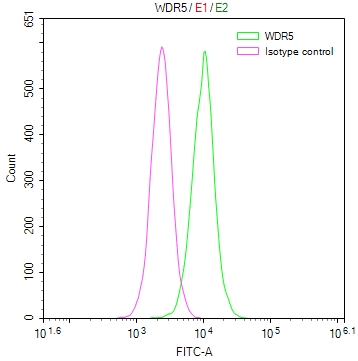
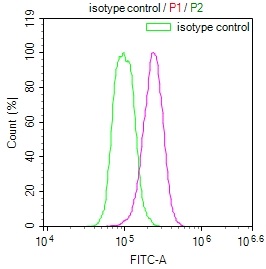
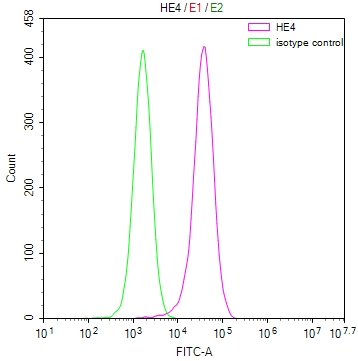
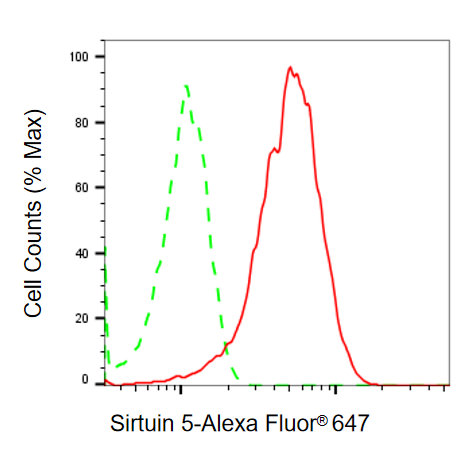 Flow cytometric analysis of Sirtuin 5 expression in HepG2 cells using Sirtuin 5 antibody. Green, isotype control; red, Sirtuin 5.
 -
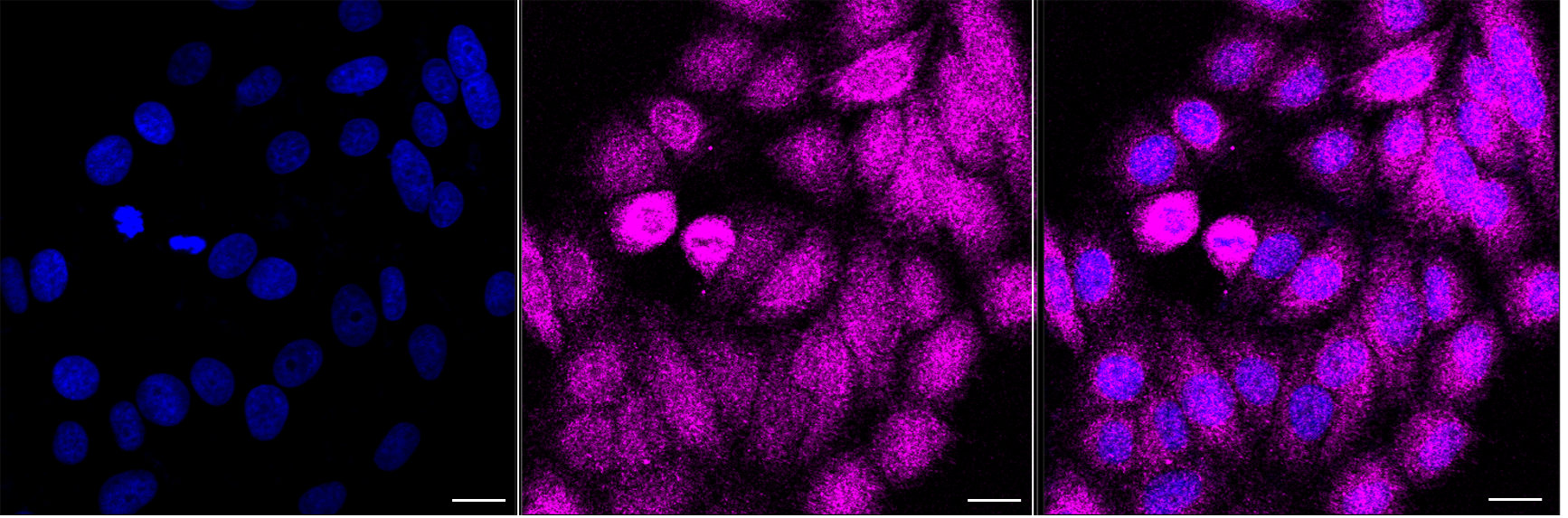 Immunocytochemical staining of HepG2 cells with Sirtuin 5 antibody. Nuclei were stained blue with DAPI; Sirtuin 5 was stained magenta with Alexa Fluor? 647. Images were taken using Leica stellaris 5. Protein abundance based on laser Intensity and smart gain: Medium. Scale bar, 20 μm.
 -
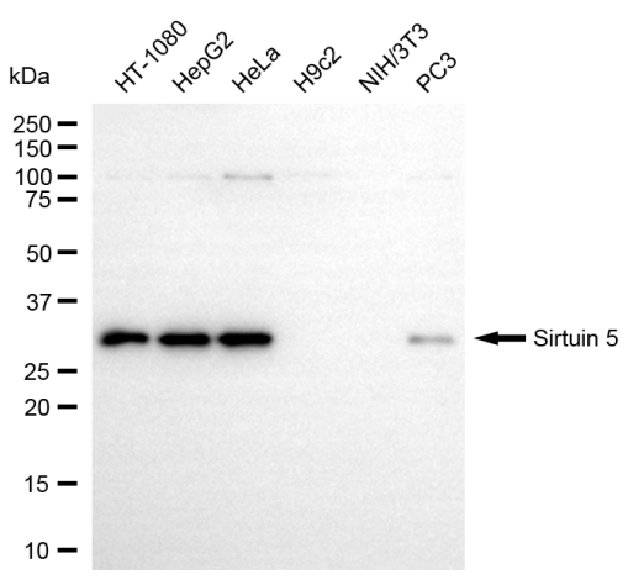 Western blotting analysis using sirtuin 5 antibody. Total cell lysates (30 μg) from various cell lines were loaded and separated by SDS-PAGE. The blot was incubated with sirtuin 5 antibody and HRP-conjugated goat anti-mouse secondary antibody respectively.
-
-
其他:
產品詳情
-
產品名稱:Mouse anti-Homo sapiens (Human) SIRT5 Monoclonal antibody
-
Uniprot No.:
-
基因名:
-
別名:SIRT5; Sirtuin 5; NAD-Dependent Protein Deacylase Sirtuin-5, Mitochondrial; SIR2L5; Sirtuin (Silent Mating Type Information Regulation 2 Homolog) 5 (S. Cerevisiae); Sirtuin (Silent Mating Type Information Regulation 2, S.Cerevisiae, Homolog) 5; NAD-Dependent Lysine Demalonylase And Desuccinylase Sirtuin-5, Mitochondrial; Silent Mating Type Information Regulation 2, S.Cerevisiae, Homolog 5; NAD-Dependent Deacetylase Sirtuin-5; Regulatory Protein SIR2 Homolog 5; SIR2-Like Protein 5; Sirtuin Type 5; Sir2-Like 5; EC 2.3.1.-
-
宿主:Mouse
-
反應種屬:Human
-
免疫原:Recombinant Human SIRT5 protein
-
免疫原種屬:Homo sapiens (Human)
-
標記方式:Non-conjugated
-
克隆類型:Monoclonal
-
抗體亞型:Mouse IgG1
-
純化方式:Affinity-chromatography
-
克隆號:24E12
-
濃度:It differs from different batches. Please contact us to confirm it.
-
保存緩沖液:PBS (pH 7.4) containing 50% glycerol, and 0.02% sodium azide.
-
產品提供形式:Liquid
-
應用范圍:ELISA, WB, FC, ICC
-
推薦稀釋比:
Application Recommended Dilution WB 1:500-1:2500 FC 1:200-1:2000 ICC 1:100-1:1000 -
Protocols:
-
儲存條件:Upon receipt, store at -20°C or -80°C. Avoid repeated freeze.
-
貨期:Basically, we can dispatch the products out in 1-3 working days after receiving your orders. Delivery time maybe differs from different purchasing way or location, please kindly consult your local distributors for specific delivery time.
-
用途:For Research Use Only. Not for use in diagnostic or therapeutic procedures.
產品評價

相關產品
靶點詳情
-
功能:NAD-dependent lysine demalonylase, desuccinylase and deglutarylase that specifically removes malonyl, succinyl and glutaryl groups on target proteins. Activates CPS1 and contributes to the regulation of blood ammonia levels during prolonged fasting: acts by mediating desuccinylation and deglutarylation of CPS1, thereby increasing CPS1 activity in response to elevated NAD levels during fasting. Activates SOD1 by mediating its desuccinylation, leading to reduced reactive oxygen species. Activates SHMT2 by mediating its desuccinylation. Modulates ketogenesis through the desuccinylation and activation of HMGCS2. Has weak NAD-dependent protein deacetylase activity; however this activity may not be physiologically relevant in vivo. Can deacetylate cytochrome c (CYCS) and a number of other proteins in vitro such as UOX.
-
基因功能參考文獻:
- In human beings, SIRT5 gene encodes for four SIRT5 protein isoforms, namely SIRT5iso1, SIRT5iso2, SIRT5iso3, and SIRT5iso4. SIRT5(iso1-3) were mitochondria-localized, while SIRT5(iso4) localized mainly in cytoplasm. SIRT5(iso2-4) had little deacylase activity comparing with SIRT5(iso1). PMID: 29932920
- miR-299-3p suppresses migration, invasion and proliferation of Hepatocellular carcinoma cells via directly targeting SIRT5 PMID: 30170358
- High SIRT5 expression is associated with Cancer Cell Proliferation. PMID: 29180469
- The DNA variants and SNPs identified in acute Myocardial infection (AMI) patients may change SIRT5 level by affecting activity of SIRT5 gene promoter, contributing to the AMI development as a risk factor. PMID: 29981421
- In this study, we summarize biological functions of SIRT5 reported in normal tissues and in cancer and discuss potential mechanisms whereby SIRT5 may impact tumorigenesis, particularly focusing on its reported roles in metabolic reprogramming. Finally, we review current efforts to target SIRT5 pharmacologically PMID: 28707979
- The roles of the CDK2/SIRT5 axis in gastric cancer. PMID: 29896817
- SIRT5 gene has an important regulatory role in liver carcinogenesis, and may function as a novel potential therapeutic target for HCC. PMID: 29115436
- This study showed that SIRT5 supports the anaplerotic entry of glutamine into the TCA cycle in malignant phenotypes of CRC via activating GLUD1. PMID: 29416026
- Results show that SIRT5 binds to, desuccinylates and inhibits PKM2 activity. Increased levels of reactive oxygen species (ROS) decreases succinylation and activity of PKM2 by increasing its binding to SIRT5. Moreover, inhibition of SIRT5 suppresses tumor cell proliferation through desuccinylation of PKM2 K498. PMID: 28036303
- The function of the three mitochondrial sirtuins (SIRT3, SIRT4, SIRT5) and their role in disease are reviewed. PMID: 27164052
- Our study uncovers a SIRT5-dependent mechanism that regulates cellular NADPH homeostasis and redox potential by promoting IDH2 desuccinylation and G6PD deglutarylation. PMID: 27113762
- Results demonstrated presence of endogenous SIRT5 in mitochondria of cultured SH-EP cells, identified down-regulation of cellular oxidative stress by SIRT5 as one of the possible mechanisms mediating the anti-apoptotic effect of SIRT5 in SH-EP cells. PMID: 27577743
- Data (including data from studies using knockout mice) suggest that SIRT5 is targeted to protein complexes on the inner mitochondrial membrane via affinity for cardiolipin to promote respiratory chain function, particularly Complex I and Complex II; SIRT5 expression is observed in inner mitochondrial membrane of periportal hepatocytes. PMID: 28458255
- a side chain-to-side chain cyclic pentapeptide harboring a central N(epsilon)-carboxyethyl-thiocarbamoyl-lysine residue behaved as a strong and selective (versus human SIRT1/2/3/6) inhibitor against human SIRT5-catalyzed deacylation reaction. PMID: 27626398
- mutual cooperation between Y102 and R105 residues in promoting the desuccinylation versus deacetylation reaction in SIRT5. PMID: 27023330
- Data showed that SIRT5 was involved in protein post-translational modifications through its potent demalonylase, desuccinylase, and deglutarylase activities. Also, the protein was found in the mitochondrial, cytoplasmic, and nuclear compartments. [review] PMID: 25717114
- Results show that mitochondrial sirtuins SIRT3, SIRT4, and SIRT5 can promote increased mitochondrial respiration and cellular metabolism and respond to excess glucose by inducing a coordinated increase of glycolysis and respiration. PMID: 25165814
- This study demonstrated that SIRT15 downregulation in the liver of non-alcoholic fatty liver disease patients. PMID: 25361925
- Results suggest a role for SIRT5 in influencing oocyte quality and in vitro fertilization outcomes. PMID: 23978077
- SIRT1/SIRT5-mediated PML deacetylation plays a role in the regulation of cancer cell survival. PMID: 25032863
- The results reveal the Sirt5 substrate acyl selectivity and its molecular basis and enable the design of inhibitors for Sirt5. PMID: 25111069
- High SIRT5 expression facilitates cancer cell growth and drug resistance in non-small cell lung cancer. PMID: 25070488
- Expression of SIRT5 in the entorhinal cortex, hippocampus, and white matter increases during the progression of Alzheimer disease. It is seen in activated microglia. PMID: 24464653
- These results reveal a novel post-translational regulation of SOD1 by means of succinylation and SIRT5-dependent desuccinylation, which is important for the growth of lung tumor cells. PMID: 24140062
- Downregulation of SIRT5 is associated with head and neck squamous cell carcinoma. PMID: 23475622
- Analysis of Sirt5 structures and activity data suggest that an Arg/succinate interaction is the molecular basis of the differential nicotinamide sensitivities of the two Sirt5 activities. PMID: 23028781
- The bicyclic intermediate structure provides insights into the desuccinylation mechanism of human sirtuin 5 (SIRT5). PMID: 22767592
- NAD(+)-dependent SIRT deacetylase has a role in regulating the expression of mitochondrial steroidogenic P450 PMID: 22585829
- we demonstrate that Sirt5, a member of the class III lysine deacetylases, can catalyze lysine demalonylation and lysine desuccinylation reactions both in vitro and in vivo PMID: 21908771
- study found that Sirt5 is an efficient protein lysine desuccinylase and demalonylase in vitro; protein lysine succinylation may represent a posttranslational modification that can be reversed by Sirt5 in vivo PMID: 22076378
- SIRT5 represents a risk factor for mitochondrial dysfunction-related diseases, including Parkinson's, through accelerated molecular aging of disease-related genes. PMID: 20887790
- these results indicate that human SIRT5 potentially controls various primate-specific functions via two isoforms with different intracellular localizations or stabilities. PMID: 21143562
- SIRT5 consists of eight exons and is found in two isoforms, which encode a 310 aa and a 299 aa protein, respectively. PMID: 16484774
- Analyses did not yield convincing evidence for associations of schizophrenia with SIRT5. PMID: 16827919
- Results describe the substrates and regulation mechanisms for the human mitochondrial sirtuins Sirt3 and Sirt5. PMID: 18680753
顯示更多
收起更多
-
亞細胞定位:Mitochondrion matrix. Mitochondrion intermembrane space. Cytoplasm, cytosol. Nucleus. Note=Mainly mitochondrial. Also present extramitochondrially, with a fraction present in the cytosol and very small amounts also detected in the nucleus.; [Isoform 1]: Cytoplasm. Mitochondrion.; [Isoform 2]: Mitochondrion.
-
蛋白家族:Sirtuin family, Class III subfamily
-
組織特異性:Widely expressed.
-
數據庫鏈接:
Most popular with customers
-
-
YWHAB Recombinant Monoclonal Antibody
Applications: ELISA, WB, IHC, IF, FC
Species Reactivity: Human, Mouse, Rat
-
-
-
-
-
-