Human Triosephosphate isomerase(TPI1) ELISA kit
-
中文名稱:人磷酸丙糖異構(gòu)酶(TPI1)酶聯(lián)免疫試劑盒
-
貨號:CSB-EL024102HU
-
樣本類型:serum, plasma, tissue homogenates, cell lysates
-
檢測范圍:28 pg/mL-1800 pg/mL
-
靈敏度:7 pg/mL
-
規(guī)格:96T/48T
-
價格:¥3600/¥2500
-
促銷:

-
其他:
產(chǎn)品詳情
-
產(chǎn)品描述:人磷酸丙糖異構(gòu)酶(TPI1)酶聯(lián)免疫試劑盒(CSB-EL024102HU)為雙抗夾心法ELISA試劑盒,定量檢測血清、血漿、組織勻漿、細(xì)胞裂解物樣本中的TPI1含量。TPI1即丙糖磷酸異構(gòu)酶1,是糖酵解途徑關(guān)鍵酶。它參與細(xì)胞能量代謝,為細(xì)胞增殖、生長提供能量。在腫瘤研究中,TPI1表達(dá)異常與腫瘤發(fā)生發(fā)展相關(guān),可影響腫瘤細(xì)胞糖代謝和生物學(xué)行為,是潛在腫瘤治療靶點,研究其機(jī)制或助抗癌藥開發(fā)。試劑盒檢測范圍為28 pg/mL-1800 pg/mL,適用于體外研究TPI1在細(xì)胞代謝調(diào)控、疾病模型構(gòu)建及藥物干預(yù)實驗中的動態(tài)變化。其寬泛的檢測范圍和多樣化的樣本兼容性,可滿足科研人員對生物體內(nèi)TPI1表達(dá)水平的精準(zhǔn)分析需求,為探索代謝相關(guān)疾病的分子機(jī)制提供可靠工具。本品僅用于科研,不用于臨床診斷,產(chǎn)品具體參數(shù)及操作步驟詳見產(chǎn)品說明書。
-
別名:TPI1 ELISA Kit; TPI ELISA Kit; Triosephosphate isomerase ELISA Kit; TIM ELISA Kit; EC 5.3.1.1 ELISA Kit; Methylglyoxal synthase ELISA Kit; EC 4.2.3.3 ELISA Kit; Triose-phosphate isomerase ELISA Kit
-
縮寫:
-
Uniprot No.:
-
種屬:Homo sapiens (Human)
-
反應(yīng)時間:1-5h
-
上樣量:50-100ul
-
檢測波長:450 nm
-
研究領(lǐng)域:Metabolism
-
測定原理:quantitative
-
測定方法:Sandwich
-
精密度:
Intra-assay Precision (Precision within an assay): CV%<8%
Three samples of known concentration were tested twenty times on one plate to assess.
Inter-assay Precision (Precision between assays): CV%<10%
Three samples of known concentration were tested in twenty assays to assess.
-
線性度:
To assess the linearity of the assay, samples were spiked with high concentrations of human TPI1 in various matrices and diluted with the Sample Diluent to produce samples with values within the dynamic range of the assay.
Sample
Serum(n=4)
1:1
Average %
106
Range %
100-112
1:2
Average %
95
Range %
92-99
1:4
Average %
90
Range %
86-96
1:8
Average %
93
Range %
90-97
-
回收率:
The recovery of human TPI1 spiked to levels throughout the range of the assay in various matrices was evaluated. Samples were diluted prior to assay as directed in the Sample Preparation section.
Sample Type
Average % Recovery
Range
Serum (n=5)
103
99-107
EDTA plasma (n=4)
92
85-95
-
標(biāo)準(zhǔn)曲線:
These standard curves are provided for demonstration only. A standard curve should be generated for each set of samples assayed.
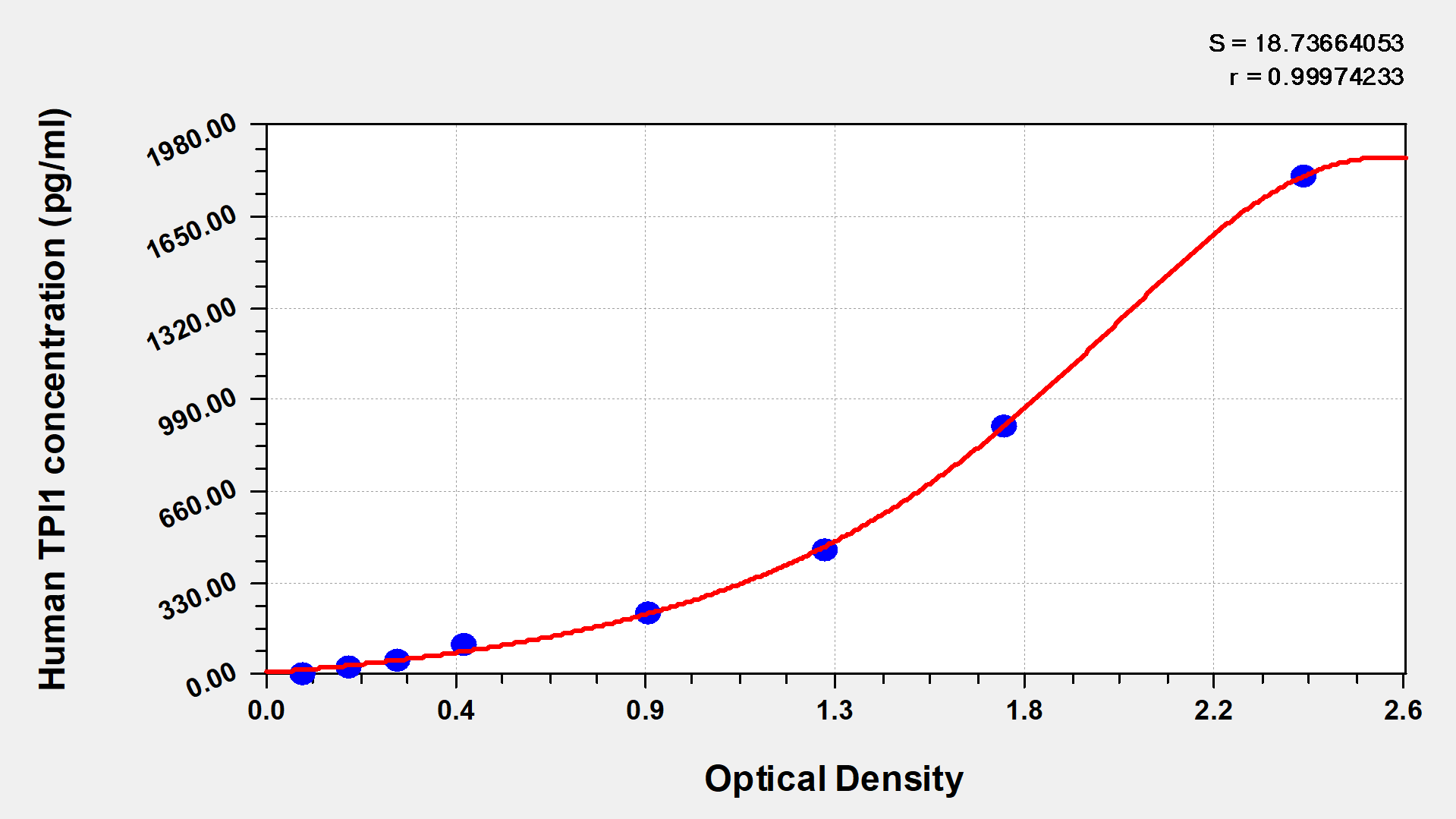
pg/ml
OD1
OD2
Average
Corrected
1800
2.377
2.433
2.405
2.308
900
1.646
1.774
1.710
1.613
450
1.312
1.285
1.299
1.202
225
0.857
0.922
0.890
0.793
112.5
0.465
0.470
0.468
0.371
56
0.322
0.300
0.311
0.214
28
0.203
0.204
0.204
0.107
0
0.094
0.099
0.097
-
數(shù)據(jù)處理:
-
貨期:3-5 working days
引用文獻(xiàn)
- Triose phosphate isomerase 1 in serum of women with breast cancer OA Jwameer, EA Hassan, FM Al-Abady,Revista de Senología y Patología Mamaria,2025
產(chǎn)品評價

相關(guān)產(chǎn)品
靶點詳情
-
功能:Triosephosphate isomerase is an extremely efficient metabolic enzyme that catalyzes the interconversion between dihydroxyacetone phosphate (DHAP) and D-glyceraldehyde-3-phosphate (G3P) in glycolysis and gluconeogenesis.; It is also responsible for the non-negligible production of methylglyoxal a reactive cytotoxic side-product that modifies and can alter proteins, DNA and lipids.
-
基因功能參考文獻(xiàn):
- Disease-associated variants change well-conserved residues in the protein's sequence and affect protein stability. PMID: 28341520
- A guide to the effects of a large portion of the residues of triosephosphate isomerase on catalysis, stability, druggability, and human disease has been presented. (Review) PMID: 28378917
- Results revealed that TPI expression might be considered as a novel prognostic factor to evaluate gastric cancer patients' survival PMID: 28489783
- TPI1 functions as a tumor suppressor in hepatocellular carcinoma and might serve as a potential therapeutic target for the treatment of HCC PMID: 27908734
- our findings are the first to identify, to our knowledge, a functional synaptic defect in TPI deficiency derived from molecular changes in the TPI dimer interface. PMID: 27031109
- Polyvinylpyrrolidone stabilised silver nanoparticles (60 nM; 2-6 nm diameter) selectively inhibited PfTIM with a 7-fold decrease in enzyme catalytic efficiency (K(cat)/K(m)) over hTIM. PMID: 26353595
- results suggest amyloid-beta oligomers induce neuronal death by triggering methylglyoxal(MG) production; increased release of MG is a direct consequence of triosephosphate isomerase nitrotyrosination due to amyloid-beta peptide action at the 2 tyrosines associated with the catalytic center PMID: 24614897
- TPI-PEP co-crystal structure, demonstrating that PEP directly binds into the catalytic pocket of TPI. PMID: 24598263
- E104D mutant is highly susceptible to proteolysis, which in all likelihood contributes to the pathogenesis of enzymopathy. In addition, the proteolysis data on wild type HsTIM illustrate an asymmetric conduct of the two monomers. PMID: 24056040
- Data suggest that exchange reactions during gluconeogenesis catalyzed by triose-phosphate isomerase and transaldolase do not differ between subjects with type 2 diabetes and control subjects under fasting or hyperglycemic conditions. PMID: 23736541
- we review the relationship between modified TPI and Alzheimer disease (AD), highlighting the relevance of this protein in AD pathology PMID: 23233058
- study found promoter SNPs of CKB and TPI1 were weakly associated with schizophrenia;in addition, IFNG polymorphisms were associated with schizophrenia; results suggest that IFNG and proteins affected by IFNG may play a role in the pathogenesis of schizophrenia PMID: 22623148
- [Review] The activity of glycolytic enzyme TPI reveals a mechanistic link between energy metabolism and age-related proteostatic dysfunction which can suppress generation of altered proteins that characterize the aged phenotype in cells and tissues. PMID: 21651995
- A patient with triosephosphate isomerase-deficiency was found to be homozygous for a Val231Met mutation. PMID: 21215915
- A proteomic approach for identification and localization of the pericellular components of chondrocytes. PMID: 21698479
- structural changes rather than abnormal catalysis may play an important role in the clinical manifestations of TPI deficiency; the postulated high aggregation ability of the unstable Glu104Asp mutant would lead to more serious symptoms PMID: 20546019
- TPI1 were up-regulated with the malignancy of prostate cancer cell lines and have their potential as serum biomarkers for indicating the developmental stage of prostate cancer. PMID: 20233700
- of two previously undescribed mutations: c.722 T>C (Phe240Ser) and c.28 insG; each of the two unrelated patients showed the new mutation in compound heterozygosity with the most common variant Glu104Asp, resulting in a very severe clinical pattern. PMID: 20374271
- the dimerization behavior of TPI is influenced by the particular mutations investigated, and by the use of a potential alternative translation initiation site in the TPI gene PMID: 17183658
- kinetic, thermodynamic, structural and ultrastructural data for characterization of mutant isomerase structures and for the TPI-related metabolic processes in normal and deficient cells PMID: 12023819
- Minor structural changes in a mutated human melanoma antigen (TPI) correspond to dramatically enhanced stimulation of a CD4+ tumor-infiltrating lymphocyte line. PMID: 12051920
- A patient with triosephosphate isomerase (TPI) deficiency exhibited worsening of abnormal involuntary movements of the dystonic type and developed psychiatric symptoms while on selegiline. PMID: 14743370
- IgG-type anti-TPI autoantibodies were detected in 24.7% of the serum samples and 24.1% of the synovial fluid samples from the patients with osteoarthritis PMID: 15146421
- anti-TPI antibodies are closely associated with neuropsychiatric lupus PMID: 15358119
- We found that a low TPI activity in the mutant cells (lower than predicted from the protein level and specific activity of the purified recombinant enzyme) is coupled with an increase in the activities of glycolytic kinases PMID: 16086671
- Mutations causing TPI deficiency in humans are characterized by progressive neurological dysfunction, neurodegeneration, and early death. PMID: 17008404
- TPI and GAPDH may be candidate Ags for an autoimmune response to neurons and axons in multiple sclerosis. PMID: 17015754
- anti-TPI form immune complexes in CSF and contribute to the pathogenesis of neuropsychiatric lupus by activating the complement system PMID: 17064784
- Triosephosphate isomerase (TPI), a glycolytic pathway enzyme, was identified as a downregulated protein in SGC7901/VCR cells PMID: 18309519
- TPI variants occur less frequent than expected and inactive alleles are not enriched in German centenarians PMID: 18510744
- human triosephosphate isomerase mutation E104D is related to alterations of a conserved water network at the dimer interface PMID: 18562316
- Population samples from Angola, Mozambique and S. Tome e Principe has 3 haplotypes of the TPI gene promoter variants -5A-8G-24T,-5G-8G-24T and -5G-8A-24T in malaria-infected individuals. PMID: 18792062
- This protein has been found differentially expressed in the Wernicke's Area from patients with schizophrenia. PMID: 19405953
顯示更多
收起更多
-
相關(guān)疾病:Triosephosphate isomerase deficiency (TPID)
-
亞細(xì)胞定位:Cytoplasm.
-
蛋白家族:Triosephosphate isomerase family
-
數(shù)據(jù)庫鏈接:
Most popular with customers
-
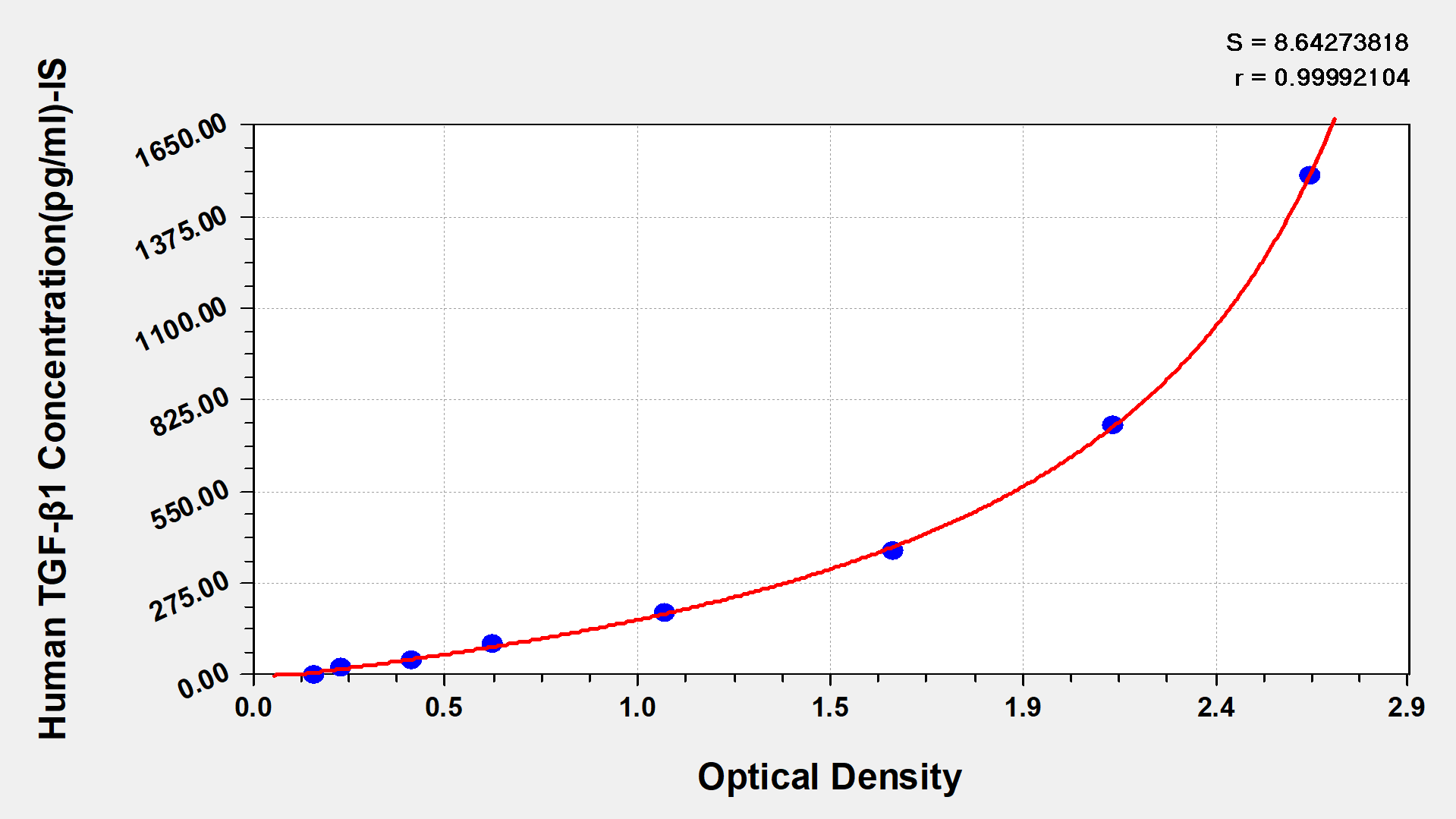
Human Transforming Growth factor β1,TGF-β1 ELISA kit
Detect Range: 23.5 pg/ml-1500 pg/ml
Sensitivity: 5.8 pg/ml
-
-
-
Mouse Tumor necrosis factor α,TNF-α ELISA Kit
Detect Range: 7.8 pg/ml-500 pg/ml
Sensitivity: 1.95 pg/ml
-
-
-
-